
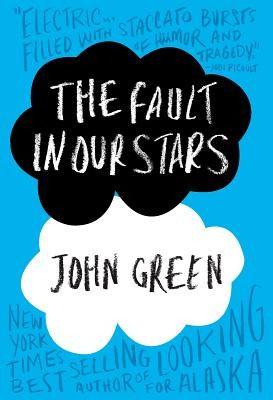
The Fault in Our Stars
Dutton Books · 2012 · 313 pages
ISBN: 9780525478812
Review Editor
Zoe Adler
How to Write About Dying Without Sentimentality
John Green opens The Fault in Our Stars with a disarmingly self-aware sentence: “I am not going to tell you our love story is unique or particularly special, or that it changed the world. I’m going to tell you what happened, which is what I do.” This is both a promise and a kind of dare. The premise – two teenagers with cancer fall in love – is inherently melodramatic, and Green knows it. His achievement is to write a novel about dying that is, first and most essentially, funny. Hazel Grace Lancaster and Augustus Waters are among the wittiest protagonists in YA fiction, and their wit is not a defense mechanism or a mask but a genuine mode of engagement with the world. Green trusts that intelligence and humor are compatible with grief, and that trust turns out to be correct.
Hazel and Gus: A Portrait of Exceptional Minds
Some readers have objected that Hazel and Gus are too articulate, too philosophically sophisticated for teenagers – that Green has written adults in adolescent bodies. This objection misunderstands the novel’s project. Hazel and Gus are exceptional not because they are teenagers but because illness has forced them into a confrontation with mortality that most people spend their lives avoiding. They speak the way they do because they have had to think the things they say – about infinity, about the significance of individual lives, about what it means to leave a mark on the world. Their language is how Green shows us the quality of their minds and the cost of what they have lived through.
The Amsterdam Sequence: Love and Loss in the Perfect City
The novel’s centerpiece is a trip to Amsterdam that Hazel and Gus take to meet Peter Van Houten, the reclusive author of Hazel’s favorite novel. Green orchestrates this sequence with extraordinary skill. The romantic scenes – the dinner, the Anne Frank House, the hotel room – are beautiful without being cloying, and the meeting with Van Houten himself is one of the great literary disappointments rendered on the page: the author is cruel, drunk, and dismissive, withholding the closure Hazel sought. That Van Houten is later explained (though not excused) adds depth rather than resolution. The trip gives both everything and nothing, which is exactly what life does.
The Philosophy of Infinity
One of the novel’s recurring obsessions is the concept of infinity – whether some infinities are larger than others, whether a short life can be as meaningful as a long one. This comes directly from mathematics (Cantor’s theorem, which Green has clearly read) but Green uses it emotionally: Hazel and Gus’s time together is finite, but so is everyone’s, and the question is what finitude means for value. Green does not resolve this question – the novel would be cheaper if it did – but he sits with it honestly, and Hazel’s final letter to Van Houten is as thoughtful a meditation on mortality as anything published in contemporary literary fiction, regardless of genre.
What the Novel Does With Cancer
Green is careful and deliberate about how he depicts illness. The cancer is not a metaphor or a noble martyrdom – it is a physical reality that involves oxygen tanks, port flushes, scan results, and the language of oncology. Hazel’s thyroid cancer has been managed by a miracle drug that keeps her alive longer than expected; Gus’s osteosarcoma has taken his leg and will take more. The medical details are accurate and handled with respect. Green never glamorizes or aestheticizes the illness, which is why the emotional payoffs feel earned. He also writes honestly about the way terminal illness warps family dynamics – Hazel’s parents’ devotion, her fear of becoming a grenade, their quiet acknowledgment that she will leave them.
Isaac and the Supporting Cast
The supporting characters are drawn with the same care as the principals. Isaac, Gus’s best friend who loses his eyes to cancer, provides both comic relief and an alternative perspective on loss. His rage at his ex-girlfriend, expressed through smashing trophies with Gus’s enthusiastic assistance, is genuinely funny and genuinely sad simultaneously. Hazel’s parents are rendered with enormous empathy – particularly her father, who weeps in private and tries to hide it, and whose love for his daughter is entirely without condition. Green understands that the people around a dying person are also suffering, and he gives them their full humanity.
Verdict
The Fault in Our Stars is a better novel than its popularity might suggest – not a tearjerker engineered for maximum emotional manipulation, but a genuinely philosophical love story that takes seriously the questions it raises. Green writes with wit, intelligence, and formal control, and the emotional impact of the book’s final act is earned rather than manufactured. It is, in the best possible sense, a novel about how to live, which is to say it is a novel about how to love, which is to say it is a novel about everything that matters.
What is The Fault in Our Stars about?
Sixteen-year-old Hazel Lancaster, living with terminal thyroid cancer, reluctantly attends a cancer support group where she meets Augustus Waters, a charming boy in remission from osteosarcoma who has lost his leg. They fall in love, share an obsession with a reclusive author’s novel, and travel to Amsterdam to find answers – only to discover that the answers they were looking for were not the ones they needed. The novel is a meditation on love, loss, infinity, and what it means to leave a mark on the world.
Is The Fault in Our Stars appropriate for teenagers?
The novel is marketed as YA and is suitable for readers fourteen and up. It contains no explicit sexual content and limited profanity, but it deals honestly and at length with terminal illness, death, and grief. Some parents of younger or more sensitive teenagers may want to read it first; most educators consider it entirely appropriate for high school and older middle school readers. Its emotional intensity is its point, not an accident.
How does the novel handle the death of a teenager?
With honesty and without melodrama. Green does not soften the reality of what is happening or offer false comfort. The death that occurs in the novel’s second half is handled with specificity and restraint – no dying speeches, no last-minute reconciliations engineered for maximum uplift. The grief that follows is depicted as messy and ongoing rather than resolved. This is part of what distinguishes the novel from lesser books about illness: Green respects his characters enough to let them die badly, which is the only way most people die.
What is An Imperial Affliction, the book within the book?
An Imperial Affliction is the fictional novel that Hazel obsesses over – a cancer narrative told by a protagonist who, like Hazel, lives with an oxygen tank and narrates with mordant wit. The novel ends mid-sentence, and Hazel desperately wants to know what happens to the secondary characters after the narrator dies. Van Houten, the novel’s fictional author, becomes a vehicle for Green to explore questions about narrative closure, authorial responsibility, and whether art can answer the questions life asks. The book-within-the-book is one of Green’s cleverest structural moves.
How does John Green write about cancer without being exploitative?
By keeping the medical reality specific and unglamorous while centering the consciousness and personhood of his characters rather than their illness. Hazel and Gus are not defined by their cancer even though their cancer shapes everything. Green consulted extensively with cancer patients and their families before writing the novel, and the accuracy of the medical detail – the port, the PICC line, the scan results – grounds the emotional material in physical truth. The illness is not a metaphor for adolescent suffering in general but a specific, real phenomenon with specific, real consequences.
What does the title mean?
The title comes from Shakespeare’s Julius Caesar: “The fault, dear Brutus, is not in our stars, / But in ourselves, that we are underlings.” Green inverts the sentiment – his characters’ fates are precisely in their stars, written in their DNA, beyond their control or fault. The title is both a literary allusion and a philosophical statement: Hazel and Gus did not choose their illness, did not earn it through weakness of character, and cannot overcome it through willpower. Some things simply happen, and the question is how to live with that truth.
How does The Fault in Our Stars compare to other John Green novels?
It is widely considered his best work, combining the wit and literary self-consciousness of his earlier novels (Looking for Alaska, An Abundance of Katherines, Paper Towns) with a more fully realized emotional register. The philosophical ambitions are more central and better integrated than in earlier books, and the characters are his most fully human. Looking for Alaska has its passionate advocates, and Turtles All the Way Down is arguably more formally adventurous, but The Fault in Our Stars is the novel that best demonstrates what Green can do.
Does the film adaptation capture the novel?
The 2014 film starring Shailene Woodley and Ansel Elgort is a faithful and well-made adaptation, and both leads give performances that honor the characters. The film loses some of Green’s narrative voice and the more explicitly philosophical passages, but captures the emotional arc of the novel effectively. It is worth watching for fans of the book, though the novel’s interiority – Hazel’s narration, her way of thinking through and around her situation – cannot be fully translated to screen. Read the book first.
Book Details
- Title
- The Fault in Our Stars
- Author
- John Green
- Genre
- Young Adult
- Publisher
- Dutton Books
- Year Published
- 2012
- Pages
- 313
- ISBN
- 9780525478812
- WritersReview Rating
- 5.0 / 5