
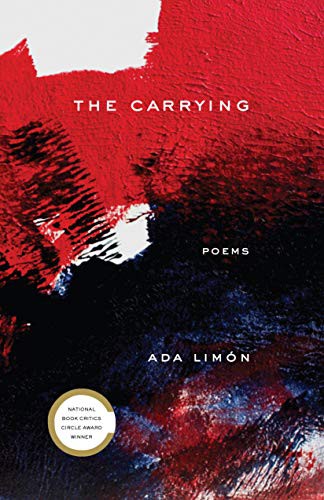
The Carrying
Milkweed Editions · 2018 · 96 pages
ISBN: 9781571315137
Review Editor
Clara Fontaine
The Body as Witness
Ada Limon’s The Carrying arrived in 2018 and immediately established itself as one of the essential American poetry collections of the decade. It was a finalist for the National Book Award in Poetry and won the National Book Critics Circle Award, but more importantly, it accumulated a genuine readership of people who do not normally read poetry and found in it something they had not known they were looking for: a voice that was fully present in the body, in the world, in the grief and beauty of ordinary life. Limon writes poems that are immediately accessible without being simple, that make feeling and thinking happen simultaneously in the reader’s body. This is a rare gift.
Grief and the Body
The Carrying is organized around loss – of a pregnancy, of her mother’s health, of beloved animals, of a sense of ease in the world – and Limon refuses to spiritualize or aestheticize that loss. The poems stay in the body: its weight, its disappointments, its continuing appetites despite everything. The miscarriage poems are among the most honest and the most technically accomplished in the collection. Limon does not offer consolation or meaning; she offers presence. The body goes on wanting things even when the heart is broken, and the poems register both the wanting and the breaking with equal fidelity.
The Natural World as Grammar
Limon is one of the most precise and loving observers of the natural world writing in American poetry today. Her poems are full of specific animals, specific plants, specific seasons – not as backdrop but as participants in the poem’s emotional life. The horses that appear throughout the collection are not symbols; they are themselves. The weeds and wild grasses that push through the cultivated garden are not metaphors for resilience; they are just weeds, and their insistence on being here is enough. This attention to the particular, to the thing-itself before it becomes symbol, is characteristic of Limon’s best work.
Home and Belonging
A central preoccupation of the collection is the question of where and how one belongs. Limon is Mexican-American, and her poems negotiate the complicated inheritance of that identity without reducing it to identity politics. She writes about her grandmother, about California and Kentucky, about what it feels like to be in a body that is read differently in different places. The political dimension of the collection is not polemical but atmospheric – it is present in the weight of certain words, in whose land certain fields are growing on, in the specific exhaustion of people who must always explain themselves.
The Craft of Accessibility
Limon’s apparent accessibility is achieved through considerable craft. Her lines are carefully calibrated – long enough to carry the weight of prose thought, short enough to maintain the tension of poetry – and her syntax moves between the discursive and the lyric with unusual fluency. She is a poet who has read deeply and absorbed those readings without displaying them. The poems do not ask you to recognize allusions or decode references; they ask you to be present with them. This simplicity of demand is harder to achieve than it looks and is part of what makes the collection remarkable.
The Final Poems: Carrying On
The collection’s final section modulates toward something like acceptance, though Limon is careful not to let it tip into uplift. The carrying of the title is both the grief and the continuation of life inside it – the child not born, the body that continues living, the act of holding something that is both weight and responsibility. The final poem, “The Conditional,” one of the most celebrated in the collection, imagines an alternative conditional life with such specificity and tenderness that its sadness is almost unbearable. But “almost” is exactly right: Limon finds a way to let the sadness be bearable, to let it be carried rather than crushing.
Verdict
The Carrying is the work of a poet fully in command of her gifts and willing to use them in the service of genuine feeling rather than performance. It is generous, honest, and technically accomplished, and it belongs in the conversation about what American poetry can do for readers who are not specialists. Read it, and read everything else Limon has written.
What is The Carrying about?
The Carrying gathers poems about grief – particularly the grief of infertility and pregnancy loss – alongside poems about family, animals, the natural world, and the experience of being a mixed-race woman in America. The collection does not organize its themes systematically but moves between them as a life does, with the body as constant reference point. The title refers to both the grief one carries and the pregnancy the speaker cannot complete.
Did Ada Limon win any awards for The Carrying?
The Carrying was a National Book Award finalist in Poetry for 2018 and won the National Book Critics Circle Award for Poetry in 2019. Limon has since published Bright Dead Things (2015), which was also a National Book Award finalist, and You Are Here (2023), written after she was named the 24th Poet Laureate of the United States in 2022.
Is Ada Limon the US Poet Laureate?
Limon was named the 24th Poet Laureate of the United States in 2022, serving through 2024. She was the first Latina Poet Laureate in US history. Her tenure included significant public engagement with poetry, including the initiative to place poems in national parks.
How accessible is The Carrying for readers new to poetry?
It is one of the most accessible serious poetry collections in recent American writing. Limon writes in complete sentences, uses familiar diction, and grounds her poems in physical and emotional experience that most readers will recognize. The poems do not require knowledge of literary tradition or the ability to decode allusions. Readers who find most contemporary poetry opaque or distant often find Limon’s work immediately comprehensible and moving.
What themes does The Carrying explore?
The collection’s central themes include grief and loss (particularly pregnancy loss and infertility), the relationship between humans and the natural world, questions of belonging and identity, love in the face of loss, the body as site of both pleasure and disappointment, and the specific experience of being a woman of color in the American landscape. These themes are not treated separately but woven together in the way that life actually weaves them.
How does The Carrying compare to Limon’s other collections?
The Carrying is widely considered her strongest collection to date, though Bright Dead Things (2015) has devoted advocates. Where Bright Dead Things is somewhat more formal and controlled, The Carrying feels more exposed and urgent – the stakes of the poems are higher because the losses are more recent and more specifically rendered. You Are Here (2023), her most recent collection, is somewhat more public in its address, reflecting her Poet Laureate role.
What is the significance of the horses in The Carrying?
Horses appear throughout the collection as figures of animal vitality, wildness that is also vulnerable, the body’s capacity for both power and suffering. Limon has spoken in interviews about her deep connection to horses and to the natural world generally. In the collection they resist symbolic reduction – they are present as themselves, not as stand-ins for anything else – and their presence alongside the speaker’s grief creates a kind of counterpoint: life going on in its animal fullness even in the midst of loss.
Where should I start with Ada Limon if I’m new to her work?
The Carrying is an excellent starting point, though you might also begin with Bright Dead Things, which has many of the same qualities and was her breakthrough collection. Either book is an excellent introduction. Limon’s poem “The End of Poetry” became widely read online and is a good introduction to her voice for readers who want a single poem before committing to a collection.