
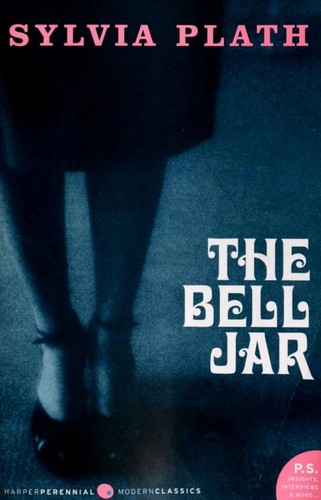
Sylvia Plath published The Bell Jar in January 1963 under the pseudonym Victoria Lucas, one month before her death. It was reissued under her own name in 1966 and has been in print ever since. The novel is one of the most widely read accounts of depression and mental illness in American literature, and one of the most formally accomplished – a book whose dark subject is rendered in prose that is funny, sharp, and exhilaratingly alive even when what it describes is not.
What Happens in The Bell Jar
Esther Greenwood is nineteen, from Massachusetts, brilliant, and the winner of a guest editorship at a New York fashion magazine. The novel opens in the summer of 1953, when the Rosenbergs were executed and Esther is in New York for her month at the magazine. The magazine world, which should be glamorous, feels hollow to Esther, who cannot find a reason to want any of the things it offers.
After returning home, Esther is rejected from the writing program she had planned to attend for the summer. With her plans collapsed and no structure to fill the space, she begins to deteriorate. She cannot sleep. She cannot read. She cannot write. The depression she has been living alongside for years moves into the foreground and takes over.
The novel follows Esther through a suicide attempt, hospitalization, electroconvulsive therapy, and gradual, incomplete recovery. It ends with her preparing to leave the hospital and resume her life, uncertain but alive. The ending is not triumphant; it is provisional and honest.
The Bell Jar as Image
The title refers to the experience of depression as Esther describes it: as being trapped under a glass bell jar, cut off from life, watching it continue outside through the glass without being able to participate in it. The air inside the jar is her own, recycled, increasingly stale. The image captures both the isolation of depression and its self-perpetuating quality: the depression makes the isolation worse, which makes the depression worse.
Plath uses this image sparingly; its power comes from the precision with which it names an experience that many readers recognize and that few accounts of depression had named so accurately before this novel.
Esther as Narrator
Esther narrates from a retrospective position, sometime after her recovery, looking back at the worst period of her life. This retrospective stance gives the narrative its particular quality: we know from the beginning that Esther survives, which transforms the reading experience from suspense to something closer to witnessing. The humor that runs through the novel comes from this distance; Esther can be funny about her past suffering in ways that are not disrespectful of it but are honest about the absurdity that accompanies catastrophe.
Her voice is one of the most distinctive in American fiction: observant, quick, capable of sudden precision, and interested in everything even when she cannot bring herself to care about anything.
Plath’s Prose
Plath was a poet, and the prose of The Bell Jar carries her poetic training in its imagery, its rhythms, and its capacity for the startlingly right description. She writes depression not as a gray undifferentiated fog but as something with specific textures, specific sensations, specific forms. This specificity is what makes the novel so valuable to readers who have experienced depression and so illuminating to those who have not.
Who This Book Is For
The Bell Jar is essential reading for anyone interested in mid-century American women’s experience, in the history of mental health treatment, in Plath’s work, or in any novel that confronts suffering without sentimentalizing it. It remains one of the most honest accounts of a mind at the edge of itself, and one of the most beautifully written.
Frequently Asked Questions
- Is The Bell Jar autobiographical?
- Very closely. Esther Greenwood’s experiences parallel Plath’s almost exactly: the New York internship (at Mademoiselle), the breakdown, the suicide attempt, the hospitalization, the ECT. Plath changed names and some details but not the essential truth of what happened.
- Why did Plath publish under a pseudonym?
- She was concerned about the novel’s effect on the real people whose lives she had drawn on, particularly her mother, who found the book painful. Publishing under a pseudonym allowed some initial distance, though the authorship became known quickly.
- Is The Bell Jar a young adult novel?
- It is widely assigned in high schools and is appropriate for mature teenage readers. However, it is not a YA novel in the contemporary sense; Plath was writing for adults and the book’s formal sophistication and thematic depth reward adult reading.
- How does Plath depict electroconvulsive therapy?
- Esther’s initial ECT is administered badly and without adequate preparation, and Plath renders it as traumatic. The novel reflects the practices of 1950s psychiatry rather than current ECT administration, which is significantly different. Readers should be aware of this historical context.
- Is the ending hopeful?
- It is honest rather than hopeful in a simple sense. Esther is leaving the hospital, uncertain. The bell jar could descend again; she knows this. The ending does not promise recovery; it acknowledges survival as its own kind of achievement.
- What does the novel say about women’s options in the 1950s?
- A great deal, explicitly. Esther is aware that the options available to her – marriage, motherhood, or the kind of career achievement that requires her to sacrifice everything else – are all different kinds of constriction. The Bell Jar is as much a social novel as a psychological one.
- Should I read The Bell Jar if I am currently struggling with depression?
- The novel has been both helpful and harmful to readers in this situation. Its accurate depiction of depression is validating for many people; its content is potentially difficult for others. The decision is individual. Readers who are currently in crisis should prioritize their own care.
- What other books should I read alongside The Bell Jar?
- Plath’s Collected Poems and her journals (The Unabridged Journals of Sylvia Plath) are essential companions. Anne Sexton’s poetry covers similar territory in a different register. Susanna Kaysen’s Girl, Interrupted offers a later account of women and psychiatric hospitalization that illuminates the period Plath describes.
Book Details
- Title
- The Bell Jar
- Author
- Sylvia Plath
- Genre
- Literary Fiction
- Publisher
- Harper Perennial
- ISBN
- 9780060837020
- WritersReview Rating
- 5.0 / 5