
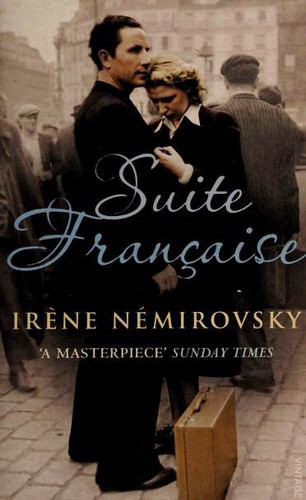
Suite Française
Vintage Books · 2007 · 516 pages
ISBN: 9780099507864
Review Editor
Eleanor Marsh
Suite Française arrives as an extraordinary document before it arrives as a novel. Irène Némirovsky began writing it in the autumn of 1940, in a French village where she was hiding with her family under German occupation. She completed the first two parts between then and the summer of 1942. In July of that year, French police arrested her at the request of the German occupiers; she was deported to Auschwitz, where she died five weeks later at the age of 39. The manuscript, believed by her daughter to be a personal diary and therefore too painful to read, sat in a suitcase for decades before Denise Epstein finally opened it in the 1990s and found a novel. It was published in France in 2004 and became an immediate sensation. Knowing all this is not separate from reading the book — it is the book’s inescapable context.
Character Arcs
Némirovsky’s method is the ensemble novel. “Storm in June,” the first part, follows dozens of Parisian characters across class lines as they flee south before the German advance: wealthy bankers, a single mother in a cheap boardinghouse, a provincial couple, a priest, a novelist consumed with self-regard. The effect is panoramic rather than intimate, with each character illuminating a different way that emergency strips people to their essential natures. “Dolce,” the second part, is more focused, centering on Lucile Angellier and the German officer Bruno von Falk, quartered in her mother-in-law’s house while Lucile’s husband is a prisoner of war. Their mutual attraction — never consummated, rarely spoken — shapes both of them in ways the novel handles with moral seriousness that resists easy judgments on either side.
Pacing
The two parts move very differently. “Storm in June” is energetic and frequently satirical — Némirovsky is merciless about the self-absorption of the wealthy, the cruelties of class in crisis, the gap between how people imagine they will behave and how they actually do when the stakes are personal. “Dolce” is slower, moving at the pace of occupied village life, which is a life of surface civility and subterranean tension. The tonal shift between parts is jarring at first, but Némirovsky was writing a symphonic novel in which different movements would create different emotional textures. The incompleteness of what survives — she planned five movements total — is felt in the absence of those later sections rather than in any roughness in what exists.
Thematic Depth
The novel’s circumstances make its ethical questions impossible to separate from its biography. Némirovsky was a Jewish woman writing about French accommodation with Germany while under German occupation — a position of extraordinary complexity, and she does not resolve that complexity into comfortable moral positions. She treats both French and German characters with what can only be called ruthless empathy: she doesn’t excuse collaboration, doesn’t sentimentalize resistance, and doesn’t reduce German soldiers to monsters. Bruno von Falk is cultured, sympathetic, and morally compromised, and Némirovsky makes you understand how Lucile could feel what she feels without endorsing it. This refusal to simplify is the novel’s most remarkable quality and its most demanding one.
Style and Voice
The prose is dense and controlled, building character and atmosphere through precision rather than accumulation. Némirovsky’s Chekhovian eye for how people reveal themselves through small gestures and trivial choices — what they take with them when they flee, how they speak to servants, whether they share food — is the novel’s great strength. Sandra Smith’s English translation reads fluidly without feeling simplified. Some of the most devastating observations are delivered with complete deadpan, which gives them more force than outrage would. The appendix, which includes Némirovsky’s planning notes for the unwritten sections and her correspondence from the period, is essential reading rather than supplementary material.
Verdict
Suite Française is a brilliant and genuinely powerful novel — and also an incomplete one, its later movements cut short by murder. What exists is extraordinary: the savage, panoramic sweep of “Storm in June,” the subdued moral complexity of “Dolce.” The novel asks what people owe each other in conditions specifically designed to make obligation impossible, and it asks without sentimentality or false consolation. The circumstances of its writing and survival are themselves part of what makes reading it such an unusual experience, not as a distraction from the work but as an intensification of it.
Rating: 4.0 out of 5
Book Details
- Title
- Suite Française
- Author
- Irène Némirovsky
- Genre
- Literary Fiction
- Publisher
- Vintage Books
- Year Published
- 2007
- Pages
- 516
- ISBN
- 9780099507864
- WritersReview Rating
- 4.0 / 5