
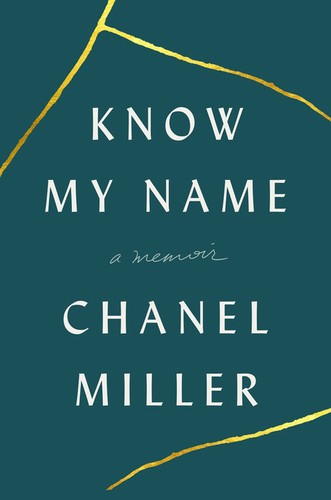
Chanel Miller’s Know My Name begins with a woman who has lost herself and does not yet know how to say so. It opens in the aftermath of January 17, 2015, the night Miller was sexually assaulted behind a dumpster at a Stanford fraternity party by Brock Turner, a swimmer at the university. For three years following the assault, she was known to the public only as “Emily Doe,” a name assigned by the court system to protect her privacy, a name that also stripped her of the thing she wanted most: to be seen as a real person with her own name, history, and work. This memoir is what those years cost her, and what she reclaimed from them.
Miller grew up in the Bay Area, the daughter of a Chinese immigrant mother and an American father, raised on art, food, language, and the texture of a bicultural childhood. She was 22 years old when the assault happened, a year out of college, working odd jobs, figuring out what came next. The night of the party, she had driven her younger sister Tiffany to a Stanford campus event and stayed. She woke up in a hospital. What happened between those two moments was witnessed by two Swedish graduate students who pulled Turner off her body and held him until police arrived. What followed over the next two years, the investigation, the six-day trial, the three-month sentence Turner ultimately served, became one of the defining public arguments of that decade about campus assault, judicial failure, and who gets believed. But Know My Name is not primarily about any of that. It is about what it costs a person to navigate all of it while also simply trying to get back to their life.
Published in September 2019, the book is at once a legal memoir, a coming-of-age story, a meditation on art and survival, and one of the most precise accounts of trauma and its aftermath that American nonfiction has produced in years. Miller is a visual artist, and her eye shows up in the writing: she notices the specific, the concrete, the moment that contains everything else. You are in good hands from the first page, even when what those hands are holding is very difficult to hold.
Character Arcs and Development
The memoir’s emotional center is Miller herself, and watching her change over the book’s three-year arc is what elevates it beyond a straightforward account of injustice. The Chanel Miller we meet early on is raw, dissociated, doing her best to make coffee and get through workdays while simultaneously preparing for a trial that asks her to relive the worst night of her life in a public room. She is also, unexpectedly, funny. Her humor is dry and precise and feels entirely genuine rather than performed. She notices the absurdity of her situation with an artist’s eye, and that noticing is one of the ways she stays whole.
Her relationship with her mother, Feeling, is one of the most beautiful things in the book. Her mother is fierce, practical, and does not process her own grief easily, channeling it instead into action: cooking elaborate meals, attending every court date, finding ways to hold the family together. There is a scene where the two of them sit in a car after a particularly brutal day in court, and Miller notices her mother’s hands on the steering wheel, and the full weight of what they are surviving together sits in that single observation. No drama, just seeing. It is the kind of writing that stays with you.
Her sister Tiffany is a constant presence, a grounding force. Their relationship reads as entirely believable, which is rarer in memoir than it should be. They fight, pull away, come back. They share the shorthand of siblings who grew up in the same house. Miller’s boyfriend Lucas is also present throughout: a partner who shows up, and also sometimes fails, and is written with the same honesty as everyone else. She does not heroize the people who love her, which makes the love more convincing.
Pacing
The book moves in spirals rather than in strict chronological order, which takes some adjustment but ultimately serves the material well. Trauma is not linear, and the way certain moments recur across the book, a detail from the trial resurfacing later in a dream or an ordinary conversation, mirrors the actual texture of memory after catastrophe. Miller earns this structural choice because her prose is precise enough that each return to familiar territory feels like new ground rather than repetition.
There is a long section dealing with the trial itself, and here the pacing slows deliberately. The grinding quality is intentional: the trial was grinding and dehumanizing, and Miller asks you to feel some of that rather than letting you observe from a comfortable distance. The cross-examination passages are rendered in real detail and are genuinely difficult to read, which is the point. The final third opens up considerably once Miller’s victim impact statement begins its global journey, and the pace quickens in ways that feel earned by everything that came before. The last chapter is among the most carefully made passages in recent American memoir.
Deeper Thematic Exploration
The question at the center of this book is deceptively simple: what does it mean to be known as a person?
For the duration of the legal proceedings, Miller was “Emily Doe” in all public documents. The press covered the case extensively while knowing almost nothing about her. She was reduced, in media framing and courtroom argument, to a body: what condition was it in, how much had it consumed, what did it consent to. The defense attorney’s questions tried to construct a version of her that was irresponsible, unknowing, and therefore not fully a victim. The prosecution’s strategy required her to be victimized enough to be credible. Neither version had much room for an actual person.
Miller writes about this with remarkable clarity and without sentimentality. She describes the experience of reading court documents about her own assault that referred to her in the third person, documents she was not permitted to see until the trial itself. The legal system has its own grammar, and that grammar does not accommodate the full humanity of the people who move through it. This is not a new observation, but Miller makes it freshly by showing rather than stating, by giving you her specific bewilderment rather than a general argument.
Race runs through the book in ways that deserve more attention than public conversation about the case typically gave them. Miller is Chinese American, and she writes about the experience of navigating a justice system built without her in mind, about the way her community processed the assault differently than the national media did, about her mother’s particular grief: watching her daughter be reduced and publicly discussed in ways that cut against every instinct of privacy and dignity her mother had carried from a different cultural context. These passages add a dimension that keeps the book from feeling like a simple story about a single crime.
Art runs through everything. Miller is a visual artist and her descriptions of her own creative work, and of how making things became a way to survive the years of the trial, are some of the richest passages in the book. She returns to drawing and painting as a way of making something when everything else feels taken. The connection between creativity and survival is not stated as a thesis; it accumulates through the texture of her days.
There is also a sustained meditation on what it means to become a public symbol of something. When Miller’s victim impact statement was published in full in June 2016, it was read by millions of people in a matter of days. She writes about watching that happen from the inside: the strange experience of having her most private words become collective property, the way strangers claimed kinship with her, the weight of being asked to represent something larger than herself. She does not resent this, exactly, but she examines it with the same rigor she brings to everything else.
Style and Voice
Miller’s prose is the kind that makes you stop and reread sentences not because they are difficult but because they are so close to perfectly made. She has an eye for the concrete detail that carries an entire emotional state: a pile of dishes her mother will not let anyone else wash, a pair of shoes she cannot remember buying, the specific blue of a courtroom wall. The sentences are controlled, and occasionally funny in a way that is genuinely earned rather than deployed for relief. The voice is not the voice of someone performing resilience. It is the voice of someone still inside the difficulty, reaching for language precise enough to hold it.
The narrative stays in Miller’s point of view throughout, even when it describes public events or legal proceedings. This is a memoir and it never pretends otherwise. When it zooms out, it maintains her angle of vision rather than reaching for false objectivity. The result is a book that reads as thoroughly trustworthy, which is no small thing in nonfiction about contested events.
Verdict
If you read one memoir this year, read this one. It is not an easy book. The trial sections are demanding, some passages ask you to sit with feelings you might prefer to avoid, and the injustice at its core is genuine and unresolved. But Know My Name rewards patience and attention in full, and Miller’s writing is precise and alive in ways that make even the hardest chapters worth returning to.
This is a book that will change how you think about the law, about privacy, about what we ask of survivors, and about what it costs a person to reclaim their own name from institutions that would rather reduce them to a category. If you come to it expecting only suffering, you will be surprised by how much humor and life it contains. If you come expecting a simple story, you will find something considerably more complicated and more human. The readers most likely to love it are those who want to be both challenged and moved, people who believe that how a thing is written matters as much as what it is about. For those readers, it is essential.
Frequently Asked Questions about Know My Name
What is Know My Name by Chanel Miller about?
Know My Name is Chanel Miller’s memoir about the years following her sexual assault at a Stanford fraternity party in January 2015. For the duration of the legal case, she was known publicly only as “Emily Doe.” The book tells the story of the investigation, the trial, and her own effort to reclaim her identity, her voice, and her life. It is also a book about art, family, community, and what the legal system costs the people who move through it.
Who is Chanel Miller and why was she anonymous for so long?
Chanel Miller is a Chinese American writer and visual artist from the Bay Area of California. She was assigned the pseudonym “Emily Doe” by the court system to protect her identity during the Brock Turner case. She remained anonymous throughout the proceedings and for several years afterward, finally revealing her name when Know My Name was published in September 2019. Before the memoir, she was known to most readers only through the 7,000-word victim impact statement she wrote and read at Turner’s sentencing, which spread widely online in 2016.
What are the main themes in Know My Name by Chanel Miller?
The central themes include identity and the struggle to be known as a full person rather than a legal placeholder, the limitations of the criminal justice system for sexual assault survivors, the intersection of race and gender in how survivors are treated and perceived, art and creativity as forms of healing and resistance, and the complicated weight of becoming a public symbol of something deeply private. The book is also deeply concerned with family, particularly Miller’s relationships with her mother and sister, and with what love looks like when it is tested by sustained crisis.
How long is Know My Name and is it a difficult read?
The book is 368 pages. It is not difficult in a literary or stylistic sense, as Miller’s prose is accessible and often beautiful. It is emotionally demanding in places, particularly the chapters that cover the trial and cross-examination. Miller writes with enough dark humor and precision, however, that the reading experience never becomes purely draining. Many readers report finishing it in two or three sittings despite the weight of the subject matter.
What awards did Know My Name win?
Know My Name won the National Book Critics Circle Award for Nonfiction in 2019, the Dayton Literary Peace Prize in 2020, the Ridenhour Book Prize, and the California Book Award. It was a New York Times bestseller and was named a best book of the year by Time, NPR, The Washington Post, the Chicago Tribune, and many other outlets. Kirkus Reviews gave it a starred review and called it a “stunning debut.”
Is Know My Name based on a true story?
Yes, it is a memoir, meaning it is entirely nonfiction. Miller recounts the events of January 2015 and the years that followed, including the trial of Brock Turner, his conviction on three counts of sexual assault, and the six-month sentence he received, of which he served three months. All events described are real. Miller has said that writing the book was a way of finally telling her own story in her own words, after years of having it described by others.
How does Know My Name compare to other sexual assault memoirs?
Know My Name stands apart from most books in this space because of the quality of Miller’s writing. She is a trained visual artist as well as a writer, and her prose has a texture and specificity that most memoir does not. Unlike books structured primarily around accusation or advocacy, this one stays inside the experience of a single person with unusual fidelity, and the result is more intimate and more lasting. It compares favorably to Carmen Maria Machado’s In the Dream House in its formal ambition and to Mary Karr’s memoirs in its control of voice.
Should I read Know My Name and is it worth it?
Yes, without reservation, as long as you are in a place to engage with difficult material. Know My Name is the kind of book that changes how you see things, and not just the specific things it is about. Miller writes about what it means to be seen and named and known, and those questions extend well beyond the events that prompted them. If you are concerned the book will be too painful, know that it is also frequently funny, that it contains some of the most beautiful writing about family and art published in recent years, and that it ends in something that genuinely resembles wholeness.
Book Details
- Title
- Know My Name
- Author
- Chanel Miller
- Genre
- Biography
- Publisher
- Viking
- Year Published
- 2019
- Pages
- 368
- ISBN
- 9780735223714
- WritersReview Rating
- 4.7 / 5