
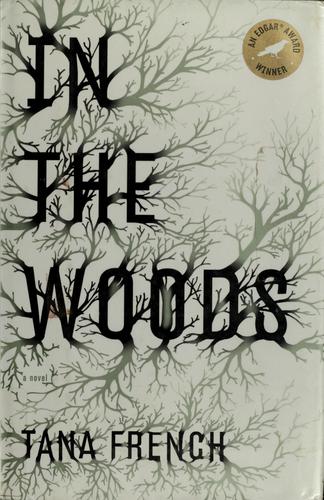
In the Woods
Viking Press · 2007 · 429 pages
ISBN: 9780670038602
Review Editor
James Voss
Tana French published In the Woods in 2007 as her debut novel, and it arrived fully formed: a literary mystery set in the suburbs of Dublin that announced a writer who cared more about character and atmosphere than about the mechanics of the puzzle. The book is the first entry in French’s Dublin Murder Squad series, which now runs to six novels, each focused on a different member of the same elite police unit. This one belongs to Detective Rob Ryan, and the central question French asks about him isn’t whether he can solve the case in front of him. It’s whether he can survive the case.
Rob leads the investigation into the murder of twelve-year-old Katy Devlin, whose body turns up on the altar stone of an archaeological dig at Knocknaree, a suburb southwest of Dublin. The site sits in the middle of a political fight: a planned motorway would run through the dig, and the archaeologists are racing to document what they can before the earthmovers arrive. Katy was a promising ballet student, the oldest of three children, and the daughter of a man who organized local opposition to the road. Her death is complicated from the start.
What Rob keeps to himself is that Knocknaree is also where he grew up. Twenty years earlier, when he still went by his real name Adam Ryan, he and his two best friends vanished into those same woods one summer afternoon. He was found days later, shoes filled with blood, with no memory of what happened. His friends were never found. Rob has reinvented himself entirely since then, a new name, a new city, a new professional identity built on wit and composure. He tells no one in the department about his connection to the case, not even Cassie Maddox, his partner and closest friend. He is certain he can handle it. He is wrong.
Character Arcs and Development
Rob Ryan is the kind of narrator who generates real affection before he shows you exactly what he’s capable of. He is funny in the self-deprecating way of people who use humor as armor. He is perceptive about everyone except himself. His arc across the novel is not a journey toward healing or resolution but something more honest: a demonstration of how far a person can go to avoid confronting the defining wound of their life, and what the avoidance costs. He makes a specific choice partway through the book that damages his relationship with Cassie in a way that’s very hard to forgive. French doesn’t ask you to forgive it. She shows you how it happens and leaves you to sit with it.
Cassie Maddox is, for many readers, the more compelling figure. She is physically capable, emotionally intelligent, and loyal in a way that Rob consistently fails to deserve. Their friendship is the emotional center of the book: two detectives who work in extraordinary sync, who finish each other’s thoughts, who are each other’s most reliable person in a job that brutalizes most relationships. Watching that friendship endure pressure and then fracture is the story’s real engine. The secondary cast, including the Devlin family, a persistent journalist, and the archaeologist who runs the dig, are drawn precisely enough to feel real without ever stealing the frame from the two leads.
Pacing
The novel runs 429 pages and French earns most of them. The first third sets up Knocknaree, the political context of the investigation, and the texture of Rob and Cassie’s partnership with real confidence. The middle section interweaves the murder investigation with Rob’s deteriorating sense of stability, and the two tracks reinforce each other well. Where readers sometimes run out of patience is in the final movement, where French refuses a certain kind of closure. She withholds something the novel has spent significant time building toward, and the choice is deliberate and thematically justified, but it requires genuine goodwill from the reader. If you’re reading this book primarily for the puzzle, part of the ending will feel like a breach of contract. If you’re reading it as a character study, it will feel exactly right.
French’s pacing within scenes is excellent. Interrogations feel tense without feeling theatrical. Quiet moments between Rob and Cassie land with weight because she has built the relationship so carefully. The Knocknaree sections, where Rob’s unraveling bleeds into his actual work, are handled with particular skill: the seams between personal and professional never quite hold, and French renders that slow collapse in careful increments rather than sudden lurches. There’s a patience to her plotting that rewards readers willing to slow down for it. She trusts that the texture of daily police work, the interviews, the evidence, the politics of the station, will accumulate into something more than the sum of its parts.
Deeper Thematic Exploration
Beneath the murder plot, In the Woods is a novel about the impossibility of outrunning your past. Rob’s missing memories are not a puzzle to solve. They are a condition to survive, a gap in his history that he has organized his entire adult life around not looking at directly. The woods in the title function as an image of the inaccessible past: you can stand at the edge of it, walk through it, even conduct a forensic investigation in it. But you cannot go back to what you were before you came out alone.
French sets her story in Celtic Tiger Dublin, the period of rapid economic growth that transformed Ireland in the 1990s and early 2000s. The planned motorway through the Knocknaree dig stands in for the broader pressure to sacrifice history for speed and development. The archaeologists trying to document what’s there before the excavators arrive mirror, at a social level, what Rob is attempting at a personal level: to recover something before it disappears permanently. That the motorway plot is partly driven by corruption and political pressure adds another layer. The past doesn’t just fade. It gets actively destroyed.
The book thinks carefully about male friendship, or rather about male failure at friendship. Rob’s two lost childhood companions, Jamie and Peter, exist in his memory as something close to an ideal of intimacy he has never again found. His relationship with Cassie is the adult version of that, and what he does to that relationship reveals how thoroughly trauma can prevent someone from sustaining what they most need. French doesn’t pity Rob. She explains him, which is more uncomfortable.
There’s also a class dimension that runs quietly through the book. Rob’s reinvention involved a social and geographic move away from a suburban Irish childhood that he treats with irony but never quite examines critically. The Devlin case returns him to the world he escaped, and some of his unease in Knocknaree is about class as much as memory. He has become someone his childhood self wouldn’t recognize, and the book asks, gently but persistently, whether that transformation was growth or just flight.
Style and Voice
French’s prose is immediately recognizable. The sentences have weight without heaviness. She writes physical setting with unusual precision: the smell of an excavation site in summer heat, the particular flatness of a Dublin suburb, the quality of light in dense woodland in August. These details accumulate into something that functions less like scene-setting and more like world-building, creating a Dublin that feels specific and atmospheric without ever feeling like a postcard.
Rob’s first-person narration is where the novel lives or dies, and it delivers. He is self-aware in some ways and comprehensively blind in others, which is exactly the right construction for what French is doing. There are passages where his narration is so controlled and sardonic that you can see him actively constructing himself sentence by sentence, choosing which version of himself to present. That quality never becomes a tic because French anchors it in specific emotion. When his composure fractures, you feel it. The shift from his usual voice to the sections where memory and present start to bleed together is managed with real skill.
Verdict
If you read mysteries because you want prose that takes the language seriously and characters who feel like actual people rather than plot mechanisms, In the Woods belongs on your list. If you read mysteries primarily for the satisfaction of a clean resolution, some of French’s choices here will leave you genuinely frustrated, and that frustration is not unreasonable. Both reactions are built into the book.
The novel works best when you take it on its own terms: not a mystery about who killed Katy Devlin, though that question is answered, but a portrait of a man who built an entire life on the condition that he never confront the most significant thing that ever happened to him. The investigation breaks that condition. What follows isn’t resolution. It’s revelation, and revelation of the painful kind that doesn’t make everything clear so much as it shows you precisely where the edges of a person’s capacity are.
Cassie Maddox returns as the lead in The Likeness, the second Dublin Murder Squad novel, which many readers consider French’s best. Start here. You’ll want to see where Cassie begins before you follow where she goes.
Frequently Asked Questions about In the Woods
What is In the Woods by Tana French about?
In the Woods is a 2007 mystery novel set in Dublin about Detective Rob Ryan, who investigates the murder of a twelve-year-old girl at an archaeological site in a suburb called Knocknaree. The twist is that Knocknaree is the same woods where Rob, as a child, survived a mysterious incident in which his two best friends disappeared. Rob has no memory of what happened. The novel follows both the current murder investigation and Rob’s deteriorating relationship with his own past.
Is In the Woods part of a series, and do I need to read them in order?
Yes, In the Woods is the first book in Tana French’s Dublin Murder Squad series, which runs to six novels. Each book focuses on a different detective from the same unit, so the series can be read out of order without too much confusion. That said, starting with In the Woods makes the most sense: Rob’s partner Cassie Maddox becomes the lead of the second book, The Likeness, and knowing their history together makes her story hit harder.
What awards did In the Woods by Tana French win?
In the Woods won four major mystery awards in 2008: the Edgar Award for Best First Novel (from the Mystery Writers of America), the Anthony Award for Best First Novel (from Bouchercon), the Barry Award for Best First Novel, and the Macavity Award for Best First Mystery Novel. Winning all four of the major debut prizes in the same year is extremely rare and reflects the exceptional reception the book received from both critics and the mystery community.
Does In the Woods have a satisfying ending?
That depends on what you want from it. The murder investigation does reach a resolution: the question of who killed Katy Devlin is answered. However, French does not resolve the other central mystery, the one involving what happened to Rob and his friends in the woods twenty years earlier. This choice is intentional and thematically consistent with the novel’s concerns about memory and the limits of what we can recover. Readers who come expecting every thread to tie up are often frustrated; readers who are comfortable with ambiguity tend to find it one of the book’s great strengths.
What are the main themes in In the Woods by Tana French?
The book’s central themes include the impossibility of recovering a lost past, the way trauma shapes adult identity, and the fragility of close friendship under extreme pressure. French also explores class mobility and the costs of self-reinvention, using Celtic Tiger Ireland’s rapid development as a backdrop for questions about what gets sacrificed in the rush toward the future. The archaeological dig at the center of the plot functions as a literal image of the tension between preservation and destruction.
How long is In the Woods and is it a difficult read?
The novel runs to 429 pages in the US hardcover edition. It’s not a fast-paced thriller in the conventional sense: French writes literary fiction with a mystery plot, so if you’re expecting the breathless pace of an airport page-turner, you may find the early sections slow. The prose is clear and engaging rather than dense or difficult. Most readers who give it a hundred pages find themselves committed. It’s appropriate for adult readers and more demanding older teenagers.
Is there a movie or TV adaptation of In the Woods by Tana French?
Yes. Dublin Murders, a crime drama series created by Sarah Phelps, aired in 2019 on RTÉ One in Ireland, BBC One in the UK, and Starz in the US. The eight-episode series adapts the first two Dublin Murder Squad novels, In the Woods and The Likeness, interweaving their storylines. Killian Scott plays Rob Ryan and Sarah Greene plays Cassie Maddox. Reaction to the adaptation was mixed: many viewers found the performances strong but felt the series compressed and altered the books significantly.
Should I read In the Woods, and how does it compare to Tana French’s other books?
If you’re new to Tana French, In the Woods is the right place to start, both because it’s first in publication order and because it introduces Cassie Maddox, who becomes even more central in subsequent books. French’s later novels, particularly The Likeness and In the Woods’ spiritual companion The Witch Elm, are arguably more polished. But this debut has a rawness and emotional intensity that’s particular to it. For readers who like literary crime fiction in the tradition of Kate Atkinson or Donna Tartt, In the Woods is an essential read.
Book Details
- Title
- In the Woods
- Author
- Tana French
- Genre
- Mystery & Thriller
- Publisher
- Viking Press
- Year Published
- 2007
- Pages
- 429
- ISBN
- 9780670038602
- WritersReview Rating
- 4.2 / 5