
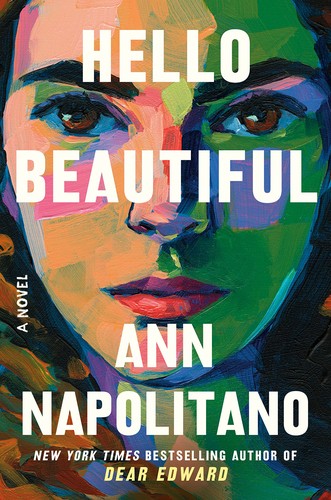
Hello Beautiful
The Dial Press · 2023 · 416 pages
ISBN: 9780593243732
Review Editor
Priya Nair
Hello Beautiful is Ann Napolitano’s fourth novel, published by The Dial Press in March 2023. It won the Pulitzer Prize for Fiction later that year, and Oprah Winfrey chose it as her 100th Book Club selection, both of which accurately describe the novel’s cultural reach and, quietly, its ambitions. This is a book that sets out to cover significant territory: eight decades, four generations of a Chicago family, the ways that damage travels down a bloodline, and whether that transmission can finally be interrupted. Napolitano largely succeeds.
The Padavano family begins with Rose and Charlie, Italian immigrants settled on the North Side of Chicago in the early twentieth century. They have four daughters: Julia, the eldest, driven and precise; Sylvie, a romantic who eventually finds her home in a library; and twins Cecelia and Emeline, one an artist and the other a devoted nurturer. The sisters are each other’s foundation, and the early pages of the novel have a warmth that is easy to sink into. Into this world comes William Waters, a young man with a basketball scholarship to Northwestern University and a history that explains, though it does not excuse, what he will eventually do. William’s older sister died in her crib when he was six days old. His parents were unable to move past that loss, and growing up essentially invisible to two people who were physically present, William learned early that grief can hollow a person out from the inside.
Julia marries William. They have a daughter, Alice. William’s depression, hidden from Julia and from himself, deepens after a knee injury ends his athletic career. One day, he walks away from his family. He ends up in Lake Michigan and is pulled out alive. Sylvie, who has understood William in ways Julia never did, falls in love with him during his long recovery. When Julia discovers this, she cuts Sylvie from her life and moves with Alice to New York, where she builds a career and a life around a lie: she tells Alice that her father died in a car accident. The rift between Julia and Sylvie lasts 25 years. It is the wound the novel spends its length slowly, carefully closing.
Character Arcs and Development
The book’s deepest sympathy is with Sylvie, who loves William without deceiving herself about what he is. She knows he is wounded, knows he has failed his daughter, and loves him anyway, not naively but with open eyes. Her choice to stay with him is presented as a form of courage rather than weakness, and Napolitano makes this legible without demanding that readers endorse it. Sylvie is the character who carries the moral intelligence of the novel: she understands people, forgives them for what they cannot help, and refuses to pretend that understanding means excusing.
Julia is harder to love and more interesting to follow. She is correct about most things and wrong about what matters most. She confuses certainty with understanding, and her 25-year silence costs both her and Alice far more than any of William’s failures ever did. Napolitano is careful not to let Julia become a simple antagonist. She gives her reasons, grants her grief, and shows how the same capacity for focus that let Julia build a successful life also prevented her from seeing the people standing right beside her. This balance is one of the novel’s genuine achievements.
Alice, who grows up carrying a lie at the center of her identity, is compelling in the novel’s second half. Her gradual movement toward the truth about her father and her family gives the later sections their forward momentum. The twins, Cecelia and Emeline, serve primarily as warmth and continuity, the Padavano household’s living proof that not everyone inherits the same damage in the same way. They are drawn with enough specificity that the family feels inhabited rather than assembled for thematic purposes.
Pacing
The novel covers eight decades in just over 400 pages, which requires moving through time with purpose. Napolitano’s strategy is to write in alternating summary and scene, advancing quickly through years and pausing for the moments that carry the most weight. This mostly works. The early sections establishing Rose and Charlie, and the childhood of the Padavano sisters, feel fully inhabited. The central rupture, William’s departure and its immediate aftermath, unfolds with precision and emotional honesty.
The novel loses some momentum in its middle sections, where Alice’s adolescence and early adulthood in New York is handled more briskly than the character deserves. She is vivid and interesting, but the novel is in a hurry to reach the reunion, and some of her interior life arrives as summary rather than lived experience. Readers who prefer deep, sustained immersion in a single consciousness may find this portion thin. The final act, Sylvie’s terminal diagnosis, Julia’s secret visits to Chicago, and the eventual funeral that brings the family together, earns its emotion without straining for it. The ending rewards the patience the novel asks of you.
Deeper Thematic Exploration
The novel’s central argument is that damage travels across generations, and the question is whether it must always do so. William’s parents were destroyed by grief and turned that grief outward as neglect, leaving William with a hollow interior that no achievement could fill. William carried that emptiness into his marriage and then into his abandonment of Alice. Alice, raised on a lie, carries the weight of not knowing where she came from or whether she deserved to be known by her father. Each generation inherits the failure of the one before it.
Napolitano’s answer is that this inheritance is neither fate nor simple choice. Sylvie chooses to love William while fully aware of what he costs. Alice chooses to pursue the truth even when the lie would have been easier to keep. Julia chooses, eventually and with great difficulty, to return. The novel does not suggest that these choices erase the damage, only that they interrupt its forward transmission. There is something genuinely humane in this framework: it holds people accountable without pretending that accountability means freedom from the past.
The novel also has things to say about what women carry for their families and what they pass to each other across generations. Rose’s shame about her own teenage pregnancy shapes her cruelty toward Cecelia when Cecelia becomes pregnant at 17 and refuses to marry. Cecelia’s choice to raise her daughter Izzy openly, without apology, is partly a rejection of that inheritance and partly its own kind of repetition. The book’s treatment of female solidarity, fractured and repaired across time, is one of its most satisfying threads.
The deliberate echo of “Little Women” gives the novel an additional dimension. The Padavano sisters compare themselves to the March sisters throughout, and they always argue about who is Jo: each of the eldest two claims the title and, as the novel notes, they are both right. This is more than a literary reference. It is the novel asking whether a borrowed story can help you understand your own life or whether it only shapes your life in ways you cannot see. Napolitano turns that question into something genuinely interesting.
Style and Voice
Napolitano writes clean, confident prose that favors clarity and emotional directness over ornament. Her sentences are shaped to carry feeling without announcing it. There are passages of real beauty, particularly in Sylvie’s sections, where Napolitano captures the interior life of a woman who loves books and people with equal attention, and who reads both with the same care. The novel’s point of view shifts among characters and across decades, which creates a panoramic quality: you see the Padavano family from multiple angles, and what reads as selfishness from one perspective reads as survival from another.
This shifting perspective also creates occasional distance. Readers who prefer deep and sustained immersion in a single consciousness may find the novel frustratingly aerial at times. This is a deliberate structural choice, not a failure of execution, and it serves the novel’s architecture. But it means that individual scenes sometimes feel observed rather than fully inhabited. What Napolitano does exceptionally well is the dialogue of families: the things that are said and the things that remain unsaid, the moments when a conversation stops because someone has said something too true, and the way that families carry their entire history in the precise way they address each other across a dinner table.
Verdict
Hello Beautiful earns its Pulitzer. It is not a quiet or modest book, despite the clean prose: it carries real emotional weight, builds to a climax of genuine power, and leaves readers with something worth sitting with long after the last page. The multigenerational structure asks for patience, and readers who bring that patience will find the investment worthwhile.
The book suits readers who love family sagas with literary ambitions. If you have read and loved Elena Ferrante’s Neapolitan novels, or found something close to your own family in the pages of “Pachinko” or “The Corrections,” you will feel at home in the Padavano household. Readers who prefer tightly focused psychological portraits may find the aerial structure frustrating. Those who want tidy resolutions should know the ending delivers something more complicated and more honest than a clean reconciliation. You should read this book if you care about what families do to each other over time, and about whether love, slow and imperfect as it often is, can eventually be enough.
Frequently Asked Questions about Hello Beautiful
What is Hello Beautiful by Ann Napolitano about?
Hello Beautiful is a multigenerational family saga set in Chicago, following the Padavano family across roughly eight decades. The story centers on four sisters, particularly Julia, the eldest, and her marriage to William Waters, a man whose depression and unresolved grief leads him to abandon his wife and daughter. When Julia’s sister Sylvie falls in love with William, a 25-year family rift begins. The novel traces the damage this separation causes and the long, difficult process of healing it.
Did Hello Beautiful win any awards?
Yes. Hello Beautiful won the Pulitzer Prize for Fiction in 2023, one of the most prestigious awards in American literature. It was also selected as Oprah Winfrey’s 100th Book Club pick, debuted as a New York Times bestseller, and was named one of the best books of the year by outlets including The New York Times, The Washington Post, NPR, Time, and Amazon. It was longlisted for the 2024 Dublin Literary Award.
What are the main themes in Hello Beautiful by Ann Napolitano?
The novel’s primary themes are generational damage and whether it can be interrupted, family loyalty and the costs of its betrayal, and the long work of forgiveness. It also explores how women carry and transmit both strength and harm across generations, and asks whether the stories we inherit, including literary ones like “Little Women,” shape our lives in ways we cannot fully see. Identity, silence, and the particular damage of being abandoned by a parent are woven throughout.
How long is Hello Beautiful and is it a difficult read?
Hello Beautiful is 416 pages. The language is clear and accessible, and Napolitano avoids the density or formal experimentation that can slow some literary novels. The difficulty, if any, is structural: the novel spans eight decades and shifts between multiple perspectives and time periods. Readers who prefer tight, single-consciousness narratives may need some adjustment. For most readers of literary fiction, it moves at a comfortable pace, and the final act in particular is hard to put down.
Is Hello Beautiful based on a true story?
No, Hello Beautiful is not based on a true story. Ann Napolitano has said the novel was inspired partly by her grief after her father’s death, and that the father figure in the book, Charlie Padavano, reflects something of that loss. The Padavano sisters were inspired by her fascination with a real group of sisters from her best friend’s family. The novel’s structure and its emotional notes echo Louisa May Alcott’s “Little Women,” which Napolitano has named as a deliberate inspiration.
Is there a movie or TV adaptation of Hello Beautiful?
As of the time this review was written, no film or television adaptation of Hello Beautiful had been announced or released. Given the novel’s multigenerational scope and its Pulitzer Prize status, an adaptation remains plausible over time. Napolitano’s previous novel, “Dear Edward,” was adapted as an Apple TV+ series in 2023, which may increase interest in adapting her subsequent work.
How does Hello Beautiful compare to Ann Napolitano’s other books?
Hello Beautiful is Napolitano’s fourth novel and the most ambitious in scope. Her previous book, “Dear Edward” (2020), is a more contained story about a boy who survives a plane crash that kills everyone else on board, including his family. Both novels are concerned with grief, family, and how people survive catastrophic loss. Readers who loved “Dear Edward” for its emotional depth and precise character work will find much to appreciate in Hello Beautiful, though the multigenerational structure makes it a bigger, more layered read.
Should I read Hello Beautiful and is it worth it?
Yes, particularly if you enjoy literary family sagas and novels that take the long view of how families damage and repair each other. The novel asks real patience of its readers and rewards it fully by the end. It is not a comfortable read in places: the abandonment of Alice, and Julia’s long refusal to see past her own wound, are genuinely painful to follow. But the emotional payoff is proportional to what the novel asks of you. If you want a book that takes seriously what families do to each other across time, Hello Beautiful delivers.
Book Details
- Title
- Hello Beautiful
- Author
- Ann Napolitano
- Genre
- Biography
- Publisher
- The Dial Press
- Year Published
- 2023
- Pages
- 416
- ISBN
- 9780593243732
- WritersReview Rating
- 4.4 / 5