
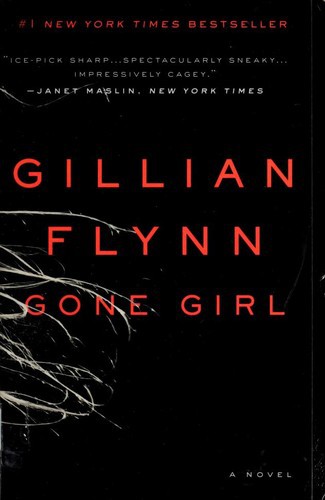
Gone Girl
Crown Publishers · 2012 · 422 pages
ISBN: 9780307588371
Review Editor
James Voss
The Marriage as Crime Scene
Gillian Flynn’s Gone Girl opens on the morning of Nick and Amy Dunne’s fifth wedding anniversary, the day Amy disappears. The setup is genre-familiar: missing wife, suspicious husband, media frenzy. What Flynn does with this premise is anything but familiar. She dismantles the domestic thriller from the inside out, using the form’s conventions against themselves to produce one of the most disturbing and compulsively readable novels of the past two decades.
The novel alternates between Nick’s present-tense narration – his increasingly desperate attempts to manage the investigation and public perception – and Amy’s diary entries from the years before her disappearance. Both voices are exceptional. Nick is unreliable in the way most unreliable narrators are: he withholds, he minimizes, he edits his presentation for an imagined audience. Amy’s diary voice is something else: hyper-articulate, self-deprecating in ways that seem calculated, and gradually revealed to be something other than what it appears.
The Twist and What It Means
The novel’s pivot – and almost every review discusses it, because it is revealed at the novel’s midpoint – recontextualizes everything that came before. Without spoiling the specific mechanics: Flynn uses the thriller’s convention of the unreliable narrator to make a structural argument about performance, marriage, and the stories we tell about ourselves. The twist is not just a plot device; it is the novel’s thesis delivered as narrative shock.
After the twist, Gone Girl becomes a different kind of book. The first half is a mystery; the second half is a black comedy about power. Flynn’s interest is in the way relationships become contests for narrative control – who gets to tell the story of the marriage, who gets to be the sympathetic figure, who wins. The thriller mechanics are scaffolding for a genuinely dark examination of contemporary domesticity and the performance of selfhood.
The Cool Girl Monologue
The novel’s most celebrated passage is Amy’s “Cool Girl” monologue, in which she articulates the performance required of women who want to be liked by men: the woman who eats junk food without gaining weight, watches football without boredom, has sex without insecurity. Flynn writes with a precision that has the quality of testimony. Whether or not the monologue’s particular argument is accurate, it captures something real about the exhaustion of female social performance and the resentment it can produce.
Flynn’s Craft
The writing is excellent throughout. Flynn has a dark comedian’s gift for the perfect specific detail – the brand of wine Nick drinks, the particular condescension of a certain kind of Midwestern politeness. Her dialogue is unnervingly accurate. The pacing is relentless: even readers who know the twist tend to report reading the second half in a single sitting.
The novel is disturbing in ways that extend beyond its plot. It is disturbing because Flynn seems to enjoy her characters’ worst qualities, because she refuses to condemn what should be condemned, and because the reader enjoys being disturbed. That moral discomfort is part of the point.
Verdict
Gone Girl is the rare thriller that justifies its enormous popularity. It is a masterclass in unreliable narration, a genuinely sharp examination of gender and performance, and an utterly gripping read. Not for readers who require sympathetic protagonists – but essential for anyone who wants to understand what literary crime fiction can do.
Frequently Asked Questions
Is Gone Girl a mystery or a thriller?
It operates in both genres. The first half functions as a mystery – who took Amy, and why? The second half is closer to a psychological thriller, focused less on whodunit and more on the contest of wills between two fully drawn, deeply unreliable characters.
Should I know the twist before reading?
The twist is revealed at the novel’s midpoint, and the book is structured to be re-read knowing it. First-time readers who encounter the twist fresh will have a different experience than those who know it in advance, but the novel rewards both readings.
How does the book compare to the film adaptation?
David Fincher’s 2014 film is faithful and excellent, but the novel’s first-person voices – particularly Amy’s – do things that film cannot easily reproduce. Flynn wrote the screenplay herself, and the adaptation is one of the better book-to-film translations of recent years. Readers who have seen the film first will still find the novel worthwhile.
What is the Cool Girl monologue about?
It is Amy’s extended meditation on the performance required of women who want to be attractive to a certain kind of man – specifically, the “cool girl” who is effortlessly beautiful, sporty, low-maintenance, and enthusiastic about male interests. Flynn frames this performance as exhausting, inauthentic, and ultimately resentment-producing.
Is Gone Girl feminist?
It is a question the novel deliberately refuses to answer. Flynn does not give readers a sympathetic female character to root for, which frustrated some feminist readers and delighted others. The book is more interested in diagnosing the performance of gender than in prescribing alternatives.
Why does the ending feel unresolved?
The ending is deliberately unsettling rather than resolved. Flynn is not interested in reassurance. The ambiguity is the point: the novel ends where it begins, in a marriage that is also a battle, with no resolution in sight.
What other books are similar to Gone Girl?
Flynn’s own Dark Places and Sharp Objects share her interest in female interiority and dark psychology. Tana French’s Dublin Murder Squad series offers similarly literary crime fiction. The Silent Patient by Alex Michaelides is often recommended alongside Gone Girl for its structural use of unreliable narration.
Who should read Gone Girl?
Readers who enjoy psychological thrillers with literary ambition, those interested in gender dynamics and performance, and anyone looking for a genuinely surprising plot that also has something to say. Not recommended for readers who find morally complex or unsympathetic protagonists alienating.
Book Details
- Title
- Gone Girl
- Author
- Gillian Flynn
- Genre
- Mystery & Thriller
- Publisher
- Crown Publishers
- Year Published
- 2012
- Pages
- 422
- ISBN
- 9780307588371
- WritersReview Rating
- 5.0 / 5