
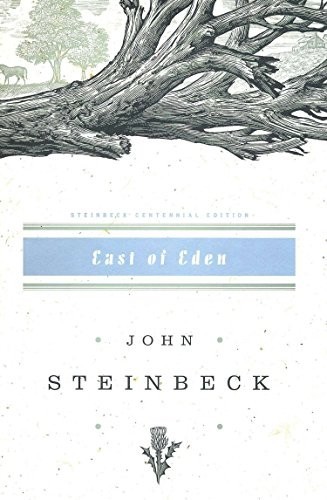
East of Eden
Penguin Books · 1952 · 601 pages
ISBN: 9780142004234
Review Editor
Eleanor Marsh
John Steinbeck called East of Eden his “big book” and “the book I have always wanted and was afraid to write.” Published in 1952, it is indeed his most ambitious work: a multigenerational family saga set in California’s Salinas Valley from the Civil War through the First World War, consciously modeled on the Genesis story of Cain and Abel. That Steinbeck wore his source material so openly-characters named Adam and Charles, their descendant sons named Caleb and Aron-is either a sign of remarkable artistic confidence or recklessness. Reading the novel, one concludes it was confidence.
The novel’s philosophical and moral center is the word “timshel”-a Hebrew word from Genesis that Steinbeck renders as “thou mayest,” as against the King James Bible’s “thou shalt” and some translations’ “thou wilt.” This interpretation-that the command to master sin is not prophecy or command but possibility-grounds the novel’s argument about free will and human dignity. The Chinese character Lee, who spends years researching this single word, delivers Steinbeck’s theme in an extended monologue that is simultaneously on the nose and oddly moving.
The book’s great set pieces-Adam Trask’s failed attempt to farm the valley, the devastation wrought by the sociopathic Cathy Ames, the brothers’ rivalry played out across generations-are written with a confidence of execution that justifies the novel’s reputation as Steinbeck’s masterpiece. If it occasionally strains under the weight of its allegorical intentions, those moments are outweighed by scenes of raw narrative power.
East of Eden is a long novel that asks for a patient reader, but it rewards that patience with something few novels of its length can claim: it earns its ambitions.
Book Details
- Title
- East of Eden
- Author
- John Steinbeck
- Genre
- Literary Fiction
- Publisher
- Penguin Books
- Year Published
- 1952
- Pages
- 601
- ISBN
- 9780142004234
- WritersReview Rating
- 5.0 / 5