
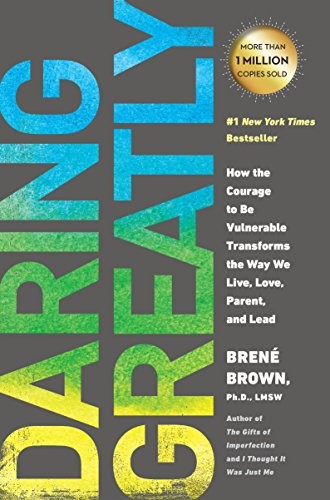
Brené Brown spent years as a research professor studying shame and vulnerability before she became one of the most watched TED Talk speakers in history. Daring Greatly is her attempt to translate that research into something accessible and applicable — an argument that the willingness to be vulnerable is not a weakness but the precondition for meaningful connection, creativity, and courage. The title comes from Theodore Roosevelt’s “Man in the Arena” speech, and Brown uses it to argue that showing up fully, even at the risk of failure and judgment, is the fundamental act of a wholehearted life. The book is less rigorous than Brown’s academic work and more prescriptive than the complexity of shame research allows, but it is also genuinely useful in ways that a lot of popular psychology books are not.
Character Arcs
Brown positions herself throughout the book as someone who has struggled with the material she researches — a recovering perfectionist and control enthusiast who had what she calls a “breakdown spiritual awakening” when her research led her somewhere she wasn’t ready to go. This self-disclosure is central to her argument about vulnerability, and it gives the book an authenticity that armchair prescriptions lack. Her case studies are drawn from her research interviews and presented anonymously. She is skilled at choosing examples that make abstract emotional dynamics concrete, though the case studies occasionally feel curated to confirm rather than complicate her framework.
Pacing
The book moves through vulnerability, shame, disengagement, and wholehearted living in a progression that builds on itself. The early chapters establishing the core argument are the strongest; the later chapters applying the framework to parenting, schools, and workplaces are more variable. The sections on parenting are particularly well-developed — Brown connects her research on shame and vulnerability to specific parenting behaviors with more precision than the culture-and-workplaces sections achieve. The book could be tighter, and some chapters repeat the central argument more than extend it, but the overall architecture is clear.
Thematic Depth
Brown’s central distinction between vulnerability and weakness is the book’s intellectual core and its strongest contribution. She argues, drawing on her research, that people who live with more connection and joy are not those who have found ways to avoid vulnerability but those who have embraced it as necessary. Shame — the fear of being unworthy of connection — is what drives the armor we build to avoid vulnerability, and that armor is what prevents the very connection it’s meant to protect us from. This is a genuine insight with real research behind it, and Brown explains it clearly. Where the book is less satisfying is in its prescriptive sections — the lists of practices for “wholehearted living” feel more aspirational than actionable.
Style and Voice
Brown writes with warmth, directness, and a willingness to admit confusion and failure that matches her argument about vulnerability. The prose is accessible and engaging, though it occasionally tips into repetition when making key points. Her background as a researcher gives her a useful habit of specifying what she means by terms that people use imprecisely — shame vs. guilt, vulnerability vs. oversharing — and these distinctions are genuinely useful. The book is also genuinely funny in places, which is unusual in books about shame and worth noting.
Verdict
Daring Greatly is a useful book that occasionally overpromises. The core research on shame and vulnerability is real and important, and Brown translates it into terms that are accessible without being dishonest about the underlying complexity. The prescriptive sections are the weakest parts, offering practices that are harder to implement than to describe. But the book’s central contribution — taking vulnerability seriously as a precondition for meaningful living rather than a failure of self-management — is worth the reading time, and Brown’s willingness to apply her own framework to herself makes the argument more credible than most self-help manages.
Rating: 4.0 out of 5
Book Details
- Title
- Daring Greatly
- Author
- Brene Brown
- Genre
- Self-Help
- Publisher
- Avery
- Year Published
- 2012
- Pages
- 320
- ISBN
- 9781592408412
- WritersReview Rating
- 4.0 / 5