
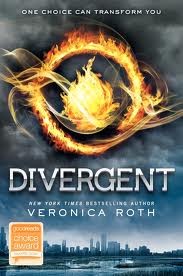
Divergent
Katherine Tegen Books · 2011 · 487 pages
ISBN: 9780062024039
Review Editor
Zoe Adler
The Faction System: Worldbuilding with Intent
Veronica Roth published Divergent in 2011, in the immediate wake of The Hunger Games, and comparisons were inevitable and not entirely fair. Where Collins built a world rooted in political economy and media spectacle, Roth constructed something more psychological: a Chicago divided into five factions defined by virtue – Abnegation (selflessness), Dauntless (bravery), Erudite (intelligence), Amity (peacefulness), Candor (honesty). Every citizen is sorted into a faction at sixteen; family ties are secondary to faction loyalty. It is a world organized around the premise that human conflict arises from moral deficiency, and that society can be perfected by channeling people into roles that match their essential natures. The dystopian irony, of course, is that this premise is precisely wrong.
Tris Prior: A Protagonist Who Earns Her Choices
Beatrice “Tris” Prior is born into Abnegation but discovers, at her Choosing Ceremony, that she does not fit any single faction – she is Divergent, a threat to the system’s stability. Her choice to transfer to Dauntless sets the plot in motion, but more interesting than what she chooses is how she lives with it. Tris’s relationship to selflessness and courage is genuinely complicated – she struggles with whether her bravery is authentic or performative, whether she has abandoned her family or found herself. Roth does not let these questions resolve easily, which gives the character more depth than the genre standard. The training sequences in Dauntless initiation are gripping partly because Tris’s survival there is not guaranteed.
The Dauntless Training Arc: Pure Momentum
Much of the novel’s first half is occupied by Dauntless initiation, and Roth paces this section with impressive control. The tests are inventive – jumping onto moving trains, simulations designed to trigger fear responses, combat training that is genuinely physical and consequential – and the social dynamics among the initiates are well-observed. Eric, the cruel instructor, is a recognizable type but rendered with enough specificity to feel real. The rankings system that threatens to eliminate the lowest-placed initiates creates genuine stakes, and Roth is smart enough to make Tris’s performance uncertain rather than triumphant throughout.
Four: The Love Interest Done Right
The love interest in YA dystopia has a tendency to serve primarily as motivation and emotional reward for the protagonist. Four (Tobias Eaton) is a better-constructed character than this pattern suggests. He is Tris’s instructor, then her ally, then her partner, but Roth takes the time to give him his own history and psychology – his abusive father, his choice of faction, the specific nature of his fears. The relationship develops gradually and is built on mutual respect as much as attraction. Four’s Divergence, revealed later in the novel, turns the relationship into something more than a conventional romance.
The Political Thriller in the Second Half
When the novel shifts in its final third to a political conspiracy – Erudite’s plan to use Dauntless as weapons to destroy Abnegation – the tone changes significantly. Roth is less assured here than in the initiation sequences; the plot moves quickly but sometimes too quickly, and certain revelations feel compressed. The action climax is visceral and emotionally costly, however, and Roth makes a notable choice in having Tris commit a violence she cannot take back, one that haunts the sequels. This willingness to let her protagonist carry genuine damage into the next volume is a sign of a writer thinking beyond the immediate book.
What Works and What Strains
The faction system is both the novel’s greatest strength and its central vulnerability. As a piece of social criticism – the reductiveness of sorting people by a single virtue, the violence that results from a society built on ideological purity – it works well. As a realistic prediction of how societies might actually organize themselves, it requires more suspension of disbelief than Collins’s Panem, which feels more grimly plausible. Roth compensates with the quality of her protagonist and the propulsive energy of her plotting, and the novel works more often than not. The occasional logical gaps are the cost of the world’s conceptual ambition.
Verdict
Divergent is a strong debut with a genuinely interesting premise, a compelling protagonist, and the kind of pacing that makes it difficult to put down. It does not reach the political sophistication of The Hunger Games, but it has a psychological depth of its own, particularly in Tris’s conflicted relationship to identity and belonging. The sequels become progressively more ambitious and uneven; the first novel stands as the best of the trilogy and one of the more solid entries in the post-Hunger Games YA dystopia wave.
What is Divergent about?
In a future Chicago, society is divided into five factions, each dedicated to a different virtue. Sixteen-year-old Beatrice Prior chooses to leave her family’s faction and join the brave, reckless Dauntless. During initiation, she discovers she is “Divergent” – she doesn’t fit neatly into any single faction, which makes her a target. As she fights to survive Dauntless training, she begins to uncover a conspiracy that threatens to destroy the life she has chosen and the family she left behind.
How does Divergent compare to The Hunger Games?
Both are YA dystopias with female protagonists navigating dangerous systems, but they are quite different in their concerns. The Hunger Games is primarily about political economy and media spectacle; Divergent is more focused on psychological identity and the question of whether virtue can be isolated and cultivated. Collins’s world is more politically plausible; Roth’s protagonist is arguably more psychologically complex. The novels are best understood as companions rather than competitors – each does something the other doesn’t.
Is Divergent suitable for teenagers?
Yes – the novel is appropriate for readers thirteen and up. It contains violence (combat training, action sequences) and some romantic content but nothing explicit. The themes – belonging, identity, loyalty, courage – are directly relevant to adolescent experience. The pacing and readability make it an excellent choice for reluctant readers who like action-forward fiction.
What are the five factions in Divergent?
Abnegation values selflessness and serves the government; Dauntless values bravery and acts as the city’s military and police; Erudite values intelligence and produces scientists and scholars; Amity values peace and manages the city’s agriculture; Candor values honesty and serves as the legal system. Each faction is designed to address what its founders saw as the primary cause of human conflict. The irony the novel develops is that each faction’s extreme devotion to a single virtue produces its own distinctive moral failures.
Why is Tris considered Divergent?
Most citizens show aptitude for only one faction during the aptitude test – a simulation that reveals which virtue their instincts most naturally express. Tris shows aptitude for three factions: Abnegation, Dauntless, and Erudite. This means her mind does not fit neatly into the system’s categories, which makes her both dangerous and nearly immune to faction-specific serums designed to control behavior. Divergence is essentially the embodiment of human complexity in a society that demands simplicity.
Does Divergent have a happy ending?
The first novel ends on a note of qualified hope – Tris and Four survive, the conspiracy is stopped, and they are on their way to what they hope will be safety. But the ending is explicitly not a resolution: the larger conflict continues, lives have been permanently lost, and Tris carries grief that will shape the sequels. Roth is honest about cost in a way that distinguishes the series from more comfort-focused YA dystopias.
Should I read the sequels?
Insurgent and Allegiant continue and complicate the story. Allegiant in particular takes a bold narrative risk that divided readers sharply at publication and remains one of the more controversial YA endings. If you are invested in the world and the characters, the sequels are worth reading; if you prefer to leave Tris’s story on the relatively hopeful note of the first novel, that is also a reasonable choice. The first book is the strongest of the three.
How does the film adaptation compare?
The 2014 film starring Shailene Woodley is a competent if somewhat flattened adaptation. Woodley is well-cast as Tris and the initiation sequences are well-realized, but the film loses some of the novel’s internal complexity in favor of action spectacle. It is worth watching for fans of the book but not a substitute for it. The film franchise was eventually abandoned before completing the final adaptation, leaving the story incomplete on screen.
Book Details
- Title
- Divergent
- Author
- Veronica Roth
- Genre
- Young Adult
- Publisher
- Katherine Tegen Books
- Year Published
- 2011
- Pages
- 487
- ISBN
- 9780062024039
- WritersReview Rating
- 4.0 / 5