
The Idea That Started It All
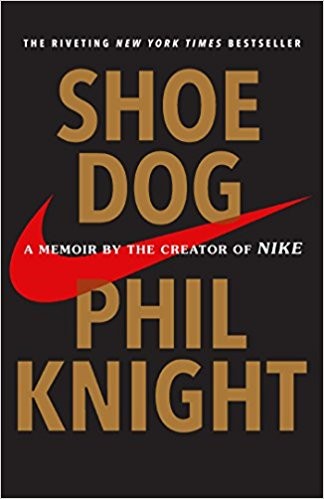
Phil Knight graduated from Stanford Business School in 1962 and, instead of taking a job, spent a year traveling the world. In Japan, he visited the Onitsuka Tiger factory and, on an impulse, told the manufacturer he represented a company called Blue Ribbon Sports. He had no such company. He came home and started one. Shoe Dog is the story of the thirty years that followed – the story of how Blue Ribbon became Nike, told in the closest thing to a first-person novel that business memoir has produced.
The book is a surprise on multiple levels. Knight is a famously private man who has spent decades cultivating the mystique of corporate inscrutability. Here he is honest, funny, self-deprecating, and willing to acknowledge both the luck and the mistakes that shaped Nike’s history. He describes almost losing the company a half-dozen times, alienating people he loved, and making decisions that in retrospect were reckless and that, in retrospect, worked. The book does not read like a business case study. It reads like a confession.
The Craft of the Writing
Knight collaborated with J.R. Moehringer, the ghostwriter who also wrote Andre Agassi’s memoir Open, and the literary quality shows. The prose is genuinely good – muscular, specific, and occasionally beautiful. The story of the early days with Bill Bowerman, the eccentric Oregon track coach who became Nike’s co-founder and chief innovator, is told with real affection and precision. Bowerman experimenting with his wife’s waffle iron to create a new sole design is one of business history’s great origin stories, and Moehringer gives it the treatment it deserves.
The Near-Death Experiences
Nike came close to dying so many times that the narrative generates genuine suspense. The company’s dependence on Japanese financing through Nissho Iwai, its constant brushes with bankruptcy from rapid growth outpacing cash flow, its legal battle with the U.S. Customs Service over millions in unpaid duties, the treachery of some partners and the loyalty of others – Knight does not soften any of it. He describes making payroll by borrowing against his house and spending nights genuinely unsure whether the company would survive the week.
This relentless financial precarity is one of the book’s most valuable things for aspiring entrepreneurs to understand. Nike, at the time, was not a plucky underdog making steady progress; it was a company perpetually on the edge of insolvency that happened to have the right product at the right time and a team that refused to quit. The luck is everywhere in the story, and Knight is honest about it.
The People
The employees Knight gathered around him in the early days – the “Buttfaces,” as they called themselves – are drawn with genuine warmth. Jeff Johnson, the first employee, sends Knight letters so frequently that Knight stops reading them. Bob Woodell, confined to a wheelchair after a gymnastics accident, runs operations with unfailing calm. Bowerman is demanding, idiosyncratic, and irreplaceable. These are real people, not archetypes, and their individuality makes the company feel earned rather than invented.
The Moral Complexity
Knight is not entirely a sympathetic narrator. His treatment of his family – his wife Penny, his sons – is honest enough to be uncomfortable. He acknowledges that he was largely absent as a father, absorbed in a company he loved more than he loved most people. He describes the death of his son Matthew in a diving accident and the grief that followed with a restraint that is more affecting than sentiment would have been. The book does not excuse its subject; it just renders him truthfully.
Verdict
Shoe Dog belongs on the short list of business memoirs that deserve to be read regardless of interest in business. It is a book about obsession, risk, friendship, and the strange luck that separates successful from unsuccessful entrepreneurs – and it is written with the care and honesty that those subjects deserve. One of the best business memoirs ever published.
Frequently Asked Questions
Is Shoe Dog a reliable account of Nike’s history?
Knight is notably candid about mistakes, failures, and luck, which gives the account more credibility than most corporate histories. Some participants in the story have given different accounts of certain events, and Knight’s perspective is obviously partial. But the book is unusually honest for a founder’s memoir.
How does Phil Knight describe Bill Bowerman?
As the essential creative force behind Nike’s product innovation and as a demanding, sometimes difficult mentor. Bowerman was the University of Oregon track coach who became Knight’s business partner and whose obsessive tinkering with shoe design – including the famous waffle sole – defined Nike’s early product identity.
What was Nike’s biggest near-death experience?
Multiple candidates, but the legal dispute with the U.S. Customs Service over unpaid duties on Nylon Cortez shoes is perhaps the most dramatic – the company faced a potential bill in the tens of millions that would have bankrupted it outright. Knight describes the resolution, which involved a creative financial restructuring, as one of the closest calls in the company’s history.
What is the significance of the Nike name?
Knight had reservations about the name – he preferred something else – but employee Jeff Johnson had a dream about the Greek goddess of victory and proposed it the night before a deadline. Knight agreed with mild enthusiasm. The name has obviously endured, but the story captures the improvisational quality of so many of Nike’s early decisions.
How does Shoe Dog address Nike’s manufacturing practices?
The book focuses primarily on the early years before the full scale of Nike’s overseas manufacturing drew scrutiny. Knight acknowledges some of the later controversies in passing but does not engage them in depth. Readers interested in a critical examination of Nike’s labor practices will need to look elsewhere.
What can entrepreneurs learn from Shoe Dog?
That successful companies are built on more luck than most founder narratives acknowledge, that financial precarity is normal even for companies that ultimately succeed spectacularly, and that the quality of the people you work with matters more than almost anything else. Knight’s account of the “Buttfaces” is essentially an argument for building a company of people who are genuinely committed to something larger than any of them.
How does Shoe Dog compare to other founder memoirs?
It is generally regarded as the best of its genre, alongside Howard Schultz’s Pour Your Heart Into It and Ben Horowitz’s The Hard Thing About Hard Things. Knight’s willingness to be honest about failure, luck, and personal cost sets it apart from the triumphalist narratives that characterize most CEO memoirs.
Who should read Shoe Dog?
Anyone interested in entrepreneurship, business history, or just a well-told story about building something from nothing. It is required reading for anyone starting a company, not for the tactical lessons but for the emotional preparation – understanding what it actually feels like to make payroll by luck, not skill.
Book Details
- Title
- Shoe Dog
- Author
- Phil Knight
- Genre
- Business
- Publisher
- Scribner
- Year Published
- 2016
- Pages
- 400
- ISBN
- 9781501135927
- WritersReview Rating
- 5.0 / 5