
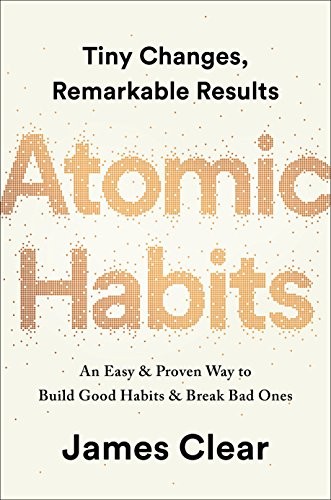
The Compound Interest of Self-Improvement
James Clear opens Atomic Habits with a story about the British cycling team, which went from decades of mediocrity to dominating the Tour de France after their new coach introduced the concept of marginal gains: improving every measurable aspect of performance by just one percent. The story is almost too perfect, and Clear knows it. He uses it not to promise magic but to illustrate a mathematical principle: small changes, compounded over time, produce remarkable results. It is the controlling metaphor of a book that earns its bestseller status through clarity of thought and practical rigor.
Clear’s central argument is that we focus too much on goals and too little on systems. Goals are outcomes we want to achieve; systems are the processes that lead to those outcomes. Winners and losers often have the same goals, he points out. The difference is the daily behavior that gets them there. This reframing is genuinely useful: it shifts attention from the destination to the journey, and from willpower to design.
The Four Laws of Behavior Change
The book’s intellectual spine is the Four Laws framework, which Clear derives from B.F. Skinner’s habit loop and Charles Duhigg’s earlier popularization in The Power of Habit. Clear refines the model into four laws for building habits: make it obvious, make it attractive, make it easy, make it satisfying. Each law has a corresponding inversion for breaking bad habits. The framework is not original, but Clear’s presentation is more systematic and actionable than most predecessors.
What distinguishes Atomic Habits is the density of usable tactics within each law. Implementation intentions (deciding in advance when and where you will perform a habit) reduce the friction of starting. Habit stacking (attaching a new behavior to an existing one) leverages existing neural pathways. The two-minute rule (scaling any habit down to a version that takes under two minutes) addresses the procrastination built into ambitious goals. These are not folk wisdom; Clear grounds them in behavioral research, and the citations hold up.
Identity as the Foundation
Clear’s most original contribution is his emphasis on identity. Most habit advice focuses on outcomes (lose twenty pounds) or processes (exercise three times a week). Clear argues for a third layer: identity (I am a person who moves their body). Habits become expressions of who we are rather than tasks we have to complete. This shift makes behavior change more durable because it aligns action with self-concept rather than fighting against it.
The identity argument is compelling, though it raises questions Clear gestures toward without fully answering. What do you do when the identity you want conflicts with the community you belong to? How do you adopt an identity before you have evidence for it without shading into self-deception? Clear addresses these briefly, but readers who find themselves resisting certain habit changes for social or psychological reasons may want more.
Writing and Accessibility
Clear writes with the clean efficiency of a good blogger, which makes sense: Atomic Habits grew from his popular newsletter. Each chapter opens with a story, delivers its point in clear prose, and closes with a summary. There is almost no wasted language. The book moves fast. Some readers may find this approach slightly thin on intellectual texture – there is little of the philosophical depth that distinguishes, say, William James on habit – but for a practical guide, the tradeoff is justified.
What It Does Not Cover
Two limitations are worth naming. First, the book is almost entirely focused on individual behavior change. The social and environmental factors that shape habits – income, community, institutional context – appear briefly but are not seriously engaged. A person whose environment makes healthy choices difficult will find the advice harder to apply than Clear implies. Second, Atomic Habits says little about motivation: what to do when you do not want to build the habit in the first place. Clear assumes the reader has already chosen their goal; the hard question of how to find meaningful goals is outside his scope.
Verdict
Atomic Habits is the best practical guide to habit formation currently available. Its framework is rigorous enough to be useful and accessible enough to be applied without a psychology degree. Clear’s insistence on systems over goals, and identity over outcomes, gives the book a philosophical grounding that most self-help writing lacks. It will not transform every reader’s life – no book can – but it gives serious readers a set of tools they will actually use. Highly recommended.
Frequently Asked Questions
What is the core idea of Atomic Habits?
That small, consistent behaviors compound into remarkable results over time. Clear argues that focusing on the system of daily habits, rather than on specific goals, is the most reliable path to lasting change.
How does Clear define a habit loop?
Clear builds on earlier research to describe habits as a four-stage loop: cue, craving, response, and reward. His Four Laws of Behavior Change map onto each stage and give practical tools for building or breaking habits at each point.
What is habit stacking?
Habit stacking means attaching a new behavior to an existing one. The formula is: after I do X (established habit), I will do Y (new habit). This leverages existing neural pathways and removes the need to rely on reminders or willpower.
What is the two-minute rule?
Any habit can be started by scaling it down to a version that takes two minutes or less. Instead of “read for an hour each evening,” start with “open a book.” The rule reduces the friction of beginning, which Clear identifies as the main obstacle to habit formation.
How does identity relate to habits in this book?
Clear argues that the most effective habit change works from the inside out: instead of focusing on what you want to achieve, focus on who you want to become. Habits are votes for your identity, and sustainable behavior change requires aligning your actions with your self-concept.
How does Atomic Habits compare to The Power of Habit by Charles Duhigg?
Both books cover the habit loop, but Clear’s is more prescriptive and action-oriented, while Duhigg’s is more narrative and organizational in scope. They complement each other well; readers interested in the science will appreciate Duhigg, while those wanting implementation tactics will find Clear more immediately useful.
Is the book backed by research?
Yes. Clear draws on behavioral psychology, neuroscience, and sociology, citing studies throughout. The research is accurately represented, though as with most popular science writing, individual studies are sometimes presented with more certainty than the field would endorse.
Who should read Atomic Habits?
Anyone seeking a practical, evidence-based framework for changing behavior. It is especially useful for people who have tried and failed with goals-based approaches and want to understand why systems work better. Managers and coaches who help others develop new behaviors will also find it valuable.
Book Details
- Title
- Atomic Habits
- Author
- James Clear
- Genre
- Business
- Publisher
- Avery
- Year Published
- 2018
- Pages
- 320
- ISBN
- 9780735211292
- WritersReview Rating
- 5.0 / 5