Phil Knight
Philip Hampson Knight was born on February 24, 1938, in Portland, Oregon, the son of a newspaper publisher. He ran track at the University of Oregon under the legendary coach Bill Bowerman, who would later become his business partner, and graduated in 1959 with an accounting degree. After a year in the United States Army, Knight enrolled at Stanford Graduate School of Business, where he wrote a seminal paper arguing that high-quality, low-cost Japanese running shoes could disrupt the German brands like Adidas and Puma that dominated the American athletic footwear market.
Armed with that insight and fifty dollars from his father, Knight traveled to Japan in 1962 and met with executives at Onitsuka Tiger, a Japanese shoe manufacturer, convincing them to let him distribute their Tiger running shoes in the United States. He began selling them from the trunk of his car at track meets, running up and down the West Coast and generating a passionate following among serious runners who appreciated the quality and affordability of the product. In 1964 he formalized the business as Blue Ribbon Sports with Bowerman, who contributed his technical expertise in shoe design, including the famous waffle sole he created by pouring rubber into a waffle iron.
Blue Ribbon Sports transitioned into Nike in 1971—named for the Greek goddess of victory—and began manufacturing its own shoes after the relationship with Onitsuka Tiger became untenable. The company grew explosively through the 1970s and 1980s, driven by relationships with athletes including Steve Prefontaine, whose death Knight mourned deeply, and eventually Michael Jordan, whose Air Jordan line transformed both Nike’s fortunes and the relationship between sports, celebrity, and consumer culture. Nike went public in 1980 and became one of the most valuable consumer brands in the world.
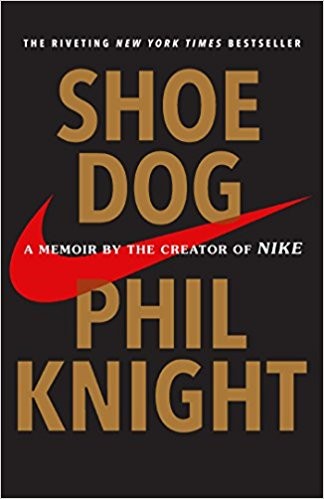
Knight’s memoir, Shoe Dog: A Memoir by the Creator of Nike, published in 2016, recounted the first two decades of Nike’s history with a candor and literary ambition unusual in business memoir. Writing with vulnerability about his fears, mistakes, and the near-death experiences that repeatedly threatened the company, Knight produced a book that critics and readers recognized as genuinely literary—a portrait of entrepreneurial obsession and its personal costs as much as a business success story. It spent more than a year on the New York Times bestseller list and won widespread praise as among the finest memoirs by a business figure ever written.
Phil Knight retired as Nike’s chairman in 2016, having built the company into a global enterprise with revenues exceeding thirty billion dollars. He has since focused on philanthropy, donating hundreds of millions of dollars to the University of Oregon, Stanford University, and medical research institutions. Shoe Dog endures as a testament not just to Nike’s origins but to the peculiar blend of passion, stubbornness, and willingness to embrace uncertainty that distinguishes those who build enduring enterprises from those who merely imagine them.