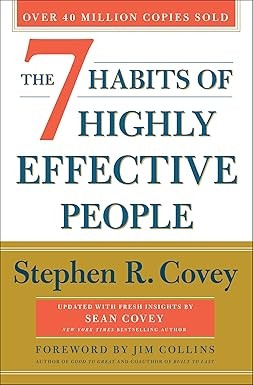
Stephen R. Covey
Stephen Richards Covey was born on October 24, 1932, in Salt Lake City, Utah, into a family that prized education and service. He earned a Bachelor of Science in Business Administration from the University of Utah, an MBA from Harvard Business School, and a Doctor of Religious Education from Brigham Young University, where he later served as a professor and assistant to the president. His academic and spiritual formation gave him a distinctive lens through which to examine human effectiveness—one grounded equally in timeless principles and practical application.
Covey spent decades teaching, consulting, and writing before distilling his ideas into The 7 Habits of Highly Effective People, published in 1989. The book became one of the most influential business and self-development titles ever written, selling more than 40 million copies worldwide and appearing on virtually every list of essential reading for leaders and professionals. Covey argued that lasting success comes not from personality-based shortcuts but from character ethics—a set of internalized principles such as proactivity, beginning with the end in mind, and seeking first to understand before being understood. These habits, he contended, form a sequential framework moving from personal independence to interpersonal effectiveness to continuous renewal.
His work extended well beyond the page. In 1984, Covey co-founded the Covey Leadership Center, which merged in 1997 with Franklin Quest to form FranklinCovey Co., a global consultancy and training organization that has reached millions of people in business, education, government, and healthcare. He advised leaders at every level, from Fortune 500 executives to heads of state, always returning to the same core conviction: that principle-centered leadership, rooted in integrity and service, is the only durable foundation for personal and organizational achievement.
Covey followed The 7 Habits with several other significant works, including Principle-Centered Leadership (1991), First Things First (1994, co-authored), and The 8th Habit: From Effectiveness to Greatness (2004), in which he argued that the demands of the knowledge economy require an additional habit—finding one’s voice and inspiring others to find theirs. His son Sean Covey extended the franchise with adaptations for children and teens, cementing the family’s legacy in character education.
Stephen R. Covey received the Thomas More College Medallion for continuing service to humanity, was recognized by Time magazine as one of the 25 most influential Americans in 1996, and received the Fatherhood Award from the National Fatherhood Initiative. He passed away on July 16, 2012, at age 79, following injuries from a cycling accident, leaving behind a body of work that continues to shape how individuals and organizations think about purpose, discipline, and effectiveness.