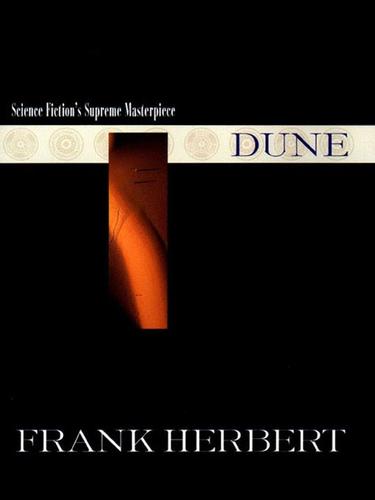
Frank Herbert
Frank Patrick Herbert Jr. was born on October 8, 1920, in Tacoma, Washington. He grew up in a working-class household in the Pacific Northwest and showed an early appetite for reading and ideas that outpaced his formal schooling. He began his career as a journalist, working for newspapers in the Pacific Northwest, and studied at the University of Washington without completing a degree. His journalism trained him in research and synthesis — skills that would prove essential to the architecturally complex world-building for which he became famous. He was deeply interested in ecology, psychology, religion, and politics from an early age, interests that would converge in his masterwork.
Herbert spent six years researching and writing the novel that would become Dune, initially publishing sections as two serials in Analog Science Fiction magazine in 1963 and 1965. The completed novel was rejected by more than twenty publishers before Chilton Books — best known for automobile manuals — accepted it in 1965. Dune went on to win both the Hugo and Nebula Awards for Best Novel and is now widely acknowledged as the best-selling science fiction novel of all time. Its influence on the genre and on popular culture more broadly has been immeasurable.
Dune is set in the distant future on the desert planet Arrakis, the sole source of the most valuable substance in the universe: the spice melange, which extends life, enables space navigation, and expands consciousness. The novel follows young Paul Atreides as his noble family is drawn into a lethal political trap, stripped of power, and forced to survive among the planet’s indigenous Fremen people. Herbert wove together themes of ecology, messianic religion, colonial exploitation, and the dangers of charismatic leadership into a narrative of staggering scope and depth. The five sequels Herbert wrote, including Dune Messiah, Children of Dune, and God Emperor of Dune, extended and complicated his vision, consistently questioning the heroic mythology his first novel had appeared to celebrate.
Herbert’s prose is dense, allusive, and philosophically demanding, drawing on Jungian psychology, Zen Buddhism, Islamic tradition, and systems ecology. He was among the first science fiction writers to place ecological systems at the center of a narrative, and Arrakis remains one of the most fully realized imaginary environments in all of fiction. His Appendices, glossary, and ecological notes transformed Dune into something resembling a primary source rather than a novel — a world one could study as well as inhabit.
Frank Herbert died on February 11, 1986, in Madison, Wisconsin, from complications of pancreatic cancer, leaving a sixth Dune novel unfinished. His son Brian Herbert and author Kevin J. Anderson have continued the series using his notes. Dune‘s influence extends far beyond the genre: it shaped the conception of George Lucas’s Star Wars, James Cameron’s Avatar, and innumerable other works of speculative fiction. Denis Villeneuve’s acclaimed film adaptations (2021, 2024) introduced Herbert’s vision to new generations of readers and viewers, confirming Dune‘s status as one of the defining myths of the modern imagination.