
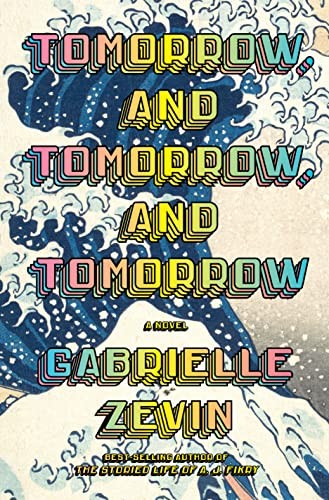
Tomorrow, and Tomorrow, and Tomorrow
Knopf · 2022 · 401 pages
ISBN: 9780593321201
Review Editor
Eleanor Marsh
Summary
Gabrielle Zevin’s Tomorrow, and Tomorrow, and Tomorrow is a novel about video games that is not really about video games. It is about friendship, creativity, grief, jealousy, and the particular intimacy of making something with another person across decades. It spent over a year on the New York Times bestseller list after its July 2022 publication, reached readers who had never touched a controller in their lives, and left most of them weeping. This is no small achievement.
Sam Masur and Sadie Green meet as children in a hospital in Los Angeles, where Sam is recovering from a car accident that injured his foot, and they bond over video games. They lose touch, reconnect by chance at Harvard, and decide to make a game together. That game, Ichigo, becomes a massive success. What follows is thirty years of collaboration, competition, love (never quite romantic, never quite not), creative partnership, and the inevitable frictions that come when two people bind their creative identities together so completely.
The novel is also about their producer and Sam’s college roommate, Marx Watanabe, who is one of the most genuinely good people in recent fiction. It spans from the early 1990s to the mid-2000s, covering the golden age of independent game development. But you do not need to know anything about video games to love this book; the games are a language for speaking about making things, about what it means to build worlds, and about the relationship between creator and creation.
Character Arcs and Development
Sam and Sadie are two of the most fully realized characters in recent literary fiction. Sam is prickly, guarded, and carrying a specific grief; his physical disability and his complicated relationship with his mother have made him simultaneously harder and more vulnerable than he appears. Sadie is driven in a way that conceals loneliness; she needs to be the best in the room, and this need creates the fissures in her relationships even as her talent creates the connections. Their dynamic is not the conventional romantic will-they-won’t-they, even though the novel plays with that possibility; it is something more complicated and more interesting, a love story between two people who define each other without being able to fully belong to each other.
Marx is the novel’s greatest gift. He is a man of genuine generosity and good sense who loves both Sam and Sadie without needing anything from them in return. In a novel this interested in the complications of creative partnership, his straightforwardness is both a relief and a structural necessity; he is the person who can see the situation clearly. What happens to Marx in the novel’s second half is the source of its most devastating emotional blow, one that the book earns completely.
Pacing
At 400 pages across three decades, the novel moves with an ease that belies its scope. Zevin has an exceptional sense of when to linger and when to accelerate, and she handles the passage of time with the confidence of someone who has been planning this story for a long time. The novel’s structure mirrors game design: it has chapters that function almost like levels, each with its own rules and challenges, and the final act brings you to a place that feels both inevitable and surprising.
The middle section of the book, which introduces complications that test both the Sam-Sadie relationship and the reader’s sympathies, is the most difficult stretch, and deliberately so. Zevin is not interested in making her characters likable at all times; she is interested in making them real, which means showing them at their worst as well as their best. This section may test some readers’ patience, but it is essential to the novel’s emotional architecture.
Deeper Thematic Exploration
The title, taken from Macbeth, points to the novel’s central preoccupation: time, impermanence, and what we do with the time we have. Sam and Sadie make games, which are by definition temporary experiences; they create worlds that exist only while someone is playing them. The novel is interested in whether the things we make outlast us in any meaningful sense, and what it costs to make them.
The book is also, at its deepest level, about what Zevin calls “play” as a category of human activity that is neither work nor leisure but something else: the fully committed engagement with a set of rules that transforms both the participant and the world they inhabit. The best games, the novel suggests, are acts of love – for the players, for the medium, for the collaborator on the other side of the screen. Sam and Sadie’s games are love letters to each other that neither of them can quite bring themselves to send in any other form.
The novel’s handling of identity is also quietly sophisticated. Sam is half Korean and the grandson of immigrant survivors; Sadie is Jewish; Marx is Japanese-American. The book never makes a grand project of these identities but it never lets you forget them either, weaving them into the texture of how each character moves through the world and what obstacles they meet.
Style and Voice
Zevin’s prose is warm and intelligent, with a dry wit that keeps even the heaviest emotional passages from becoming sodden. She writes about video games with genuine expertise and affection, and the descriptions of Sam and Sadie’s games are among the novel’s most inventive sections; she is able to convey the experience of playing something without making the reader feel like they are reading a manual. Her dialogue is sharp and distinctly characterized; you can always tell who is speaking without dialogue tags.
The novel has the quality of great conversation, the kind where you don’t notice how much time has passed until it’s gone. Zevin is a generous writer who trusts her readers to follow her where she leads, including through material that is morally uncomfortable, and this trust creates a reading experience that feels like genuine intimacy.
Verdict
Tomorrow, and Tomorrow, and Tomorrow is exactly the kind of novel that comes along rarely: one that takes a subject you might not expect to care about and uses it to say something true about the things you care most about. It is a book about love that refuses the reductive conventions of romantic fiction, about creativity that doesn’t romanticize the artist at the expense of the art, and about friendship that takes seriously the possibility that some of the most important loves of our lives are not romantic ones.
Read it if you want to laugh and then cry and then sit with the ending for a while. Read it if you have ever cared deeply about making something with another person. Read it even if you have never played a video game in your life. It will meet you wherever you are.
Frequently Asked Questions about Tomorrow, and Tomorrow, and Tomorrow
What is Tomorrow, and Tomorrow, and Tomorrow by Gabrielle Zevin about?
The novel follows Sam Masur and Sadie Green, two game designers who meet as children and collaborate across thirty years, from the early 1990s to the mid-2000s. It traces their friendship, creative partnership, and the complicated love between them through the video games they make together, the successes and failures of their careers, and the losses they share along the way.
Do I need to know about video games to enjoy Tomorrow, and Tomorrow, and Tomorrow?
Not at all. The novel uses video games as a language for talking about creativity, collaboration, and love, and the gaming world is rendered so vividly and warmly that readers with no gaming background consistently report loving it. The games Sam and Sadie make are described in terms of how they feel to play and what they mean to their creators, not as technical exercises.
Is Tomorrow, and Tomorrow, and Tomorrow a romance novel?
It resists easy categorization. Sam and Sadie’s relationship is central to the book and contains elements of romantic love, but the novel deliberately declines to resolve it in the conventional romantic direction. It is interested in arguing that some of the most profound loves of our lives are not romantic, and the relationship it depicts is richer and more complicated than most love stories.
What does the title Tomorrow, and Tomorrow, and Tomorrow mean?
The title comes from Macbeth’s famous soliloquy, which contemplates the relentless passage of time and the question of whether life has meaning. Zevin uses it to frame her novel’s central concerns: what we do with the time we have, what we make and whether it lasts, and the relationship between creation and impermanence.
How long is Tomorrow, and Tomorrow, and Tomorrow?
The novel is about 400 pages and covers roughly thirty years, from 1987 to 2008. It reads quickly despite its length because of Zevin’s confident pacing and engaging prose. Most readers finish it in three to five sittings.
What are the main themes in Tomorrow, and Tomorrow, and Tomorrow?
The central themes are creativity and collaboration, the nature of play, friendship versus romantic love, grief and loss, identity and belonging, and what it means to make something that outlasts the moment of its creation. The novel also explores ambition, jealousy, disability, and the specific complications of being a woman in a male-dominated industry.
Is Tomorrow, and Tomorrow, and Tomorrow sad?
Yes, in parts, and the sadness is earned. The novel contains a significant loss that arrives partway through and reshapes everything that follows. But it is not a relentlessly sad book; it is also funny, warm, and celebratory of the things that make life worthwhile. The ending is bittersweet in a way that most readers find deeply satisfying rather than simply painful.
Should I read Tomorrow, and Tomorrow, and Tomorrow?
Yes. It is one of the most talked-about and loved novels of recent years for very good reasons. It is smart, funny, moving, and structurally accomplished, and it manages to be a big-hearted crowd-pleaser without sacrificing literary ambition. If you want a novel that will make you think about creativity, love, and time, and also make you cry, this is the one.
Book Details
- Title
- Tomorrow, and Tomorrow, and Tomorrow
- Author
- Gabrielle Zevin
- Genre
- Literary Fiction
- Publisher
- Knopf
- Year Published
- 2022
- Pages
- 401
- ISBN
- 9780593321201
- WritersReview Rating
- 5.0 / 5