
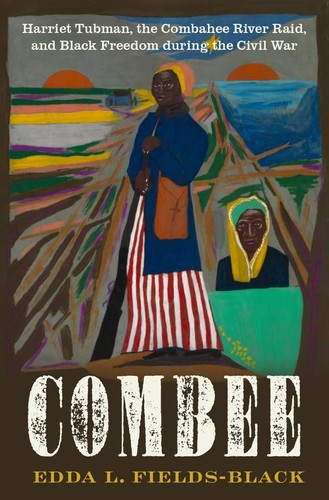
Combee: Harriet Tubman, the Combahee River Raid, and Black Freedom During the Civil War
Oxford University Press · 2024 · 776 pages
ISBN: 9780197552797
Review Editor
History Editor
Edda L. Fields-Black’s Combee is the kind of history book that reshapes how you understand a figure you thought you already knew. Harriet Tubman occupies a fixed place in American memory: conductor of the Underground Railroad, liberator of enslaved people, icon of courage. But Fields-Black, a historian at Carnegie Mellon University, pulls back the curtain on a chapter of Tubman’s life that most readers have never encountered in depth. The June 1863 Combahee River Raid, in which 300 Black Union soldiers liberated 756 enslaved people from seven rice plantations in South Carolina’s Lowcountry, becomes the axis around which Fields-Black builds a sweeping, meticulous, and deeply human narrative.
What makes Combee remarkable is not simply the recovery of a dramatic military episode. It is the way Fields-Black centers the enslaved people themselves. Drawing on more than 175 U.S. Civil War pension files, she reconstructs the lives of individuals who labored on the Combahee River rice plantations before the raid, who fled to Union gunboats during it, and who built new lives in its aftermath. These are not anonymous masses. They are named, described, and given the fullness of biography that archival detective work can provide. The result is a book that functions simultaneously as military history, social history, and a meditation on what freedom meant to the people who seized it.
Winner of the 2025 Pulitzer Prize for History and the Gilder Lehrman Lincoln Prize, Combee has earned its accolades through sheer scholarly ambition and narrative power. At 776 pages, it demands commitment from the reader, but the payoff is substantial: a transformed understanding of the Civil War, of Tubman, and of the community that called itself “Combee” long after the guns fell silent.
Key Figures and Arguments
The book’s central argument is deceptively simple: the Combahee River Raid was not merely a military operation but a transformative event that created a community. The enslaved people who escaped during the raid carried with them a shared identity rooted in the rice plantations where they had labored. Over time, they became the “Combee” people, a group whose distinct cultural practices and institutions would later be recognized as part of what outsiders called “Gullah” culture. Fields-Black traces this evolution with care, showing how bonds forged under enslavement persisted and adapted in freedom.
Harriet Tubman herself emerges as a more complex figure than popular mythology allows. Fields-Black documents her service as a Union spy and scout in the Department of the South, her intelligence-gathering operations among enslaved communities, and her role in planning the raid. But Tubman shares the stage with dozens of other individuals: the Black soldiers of the 2nd South Carolina Volunteers, the enslaved rice workers who made split-second decisions to flee, and the Union officers whose cooperation made the operation possible. Colonel James Montgomery, who led the raid, receives careful treatment, as do the plantation owners whose wealth the raid destroyed (an estimated $6 million in property).
Fields-Black also makes a compelling case about the nature of rice cultivation itself. The Lowcountry rice economy was uniquely brutal; mortality rates on rice plantations were roughly twice those of cotton plantations. The specialized knowledge that enslaved Africans brought from West African rice-growing regions made the industry possible, and Fields-Black connects these agricultural roots to the cultural identity that survived emancipation. This transatlantic dimension gives the book a scope that extends far beyond a single military engagement.
Structure and Pacing
At 776 pages, Combee is not a quick read. Fields-Black organizes the book into sections that move chronologically: the world of the rice plantations before the war, the buildup to the raid, the raid itself, and its long aftermath. The early chapters on rice cultivation and the enslaved community’s daily life are dense with detail. Some readers may find the pace deliberate in these sections, but the groundwork Fields-Black lays proves essential. When the raid finally arrives, the accumulated knowledge of individual lives transforms what could be a straightforward action sequence into something emotionally charged and specific.
The post-raid chapters, which follow formerly enslaved people through Reconstruction and beyond, are among the book’s strongest. Fields-Black uses pension files not as dry bureaucratic records but as windows into the struggles and achievements of people navigating a new world. The pacing here quickens, driven by the momentum of lives unfolding in freedom.
Deeper Thematic Exploration
Combee operates on several thematic levels at once. The most prominent is the question of agency. Fields-Black consistently resists the temptation to portray enslaved people as passive recipients of liberation. The men and women who boarded Union gunboats on the Combahee River made active choices, often at tremendous risk. Some left family members behind. Others carried children through swamps under fire. The raid was a military operation, yes, but it was also 756 individual acts of self-liberation.
A second theme concerns the construction of identity. The “Combee” identity that emerged after the raid was not inevitable. It was built through shared institutions, mutual aid networks, churches, and the collective memory of a defining experience. Fields-Black argues that this community-building process was itself an act of resistance, a refusal to let the trauma of enslavement be the final word. The fact that “Combee” identity persisted into the late nineteenth century, eventually flowing into the broader Gullah cultural tradition, speaks to its depth and resilience.
There is also a powerful undercurrent about historical methodology. Fields-Black is transparent about the challenges of reconstructing Black lives from archives created by white institutions. Pension files, military records, and plantation ledgers all carry biases and silences. The book models how a careful historian can read against the grain of these sources, extracting meaning from fragments and cross-referencing testimony to build reliable narratives. For readers interested in how history gets made, this methodological layer adds considerable richness.
Style and Voice
Fields-Black writes with scholarly precision and occasional eloquence. Her prose is clear and direct, favoring concrete detail over abstraction. When she describes the tidal rice fields, you can almost feel the mud; when she recounts the chaos of the raid, the pacing tightens to match the urgency. She avoids the trap of overwrought emotion, trusting the material to carry its own weight. The result is a voice that feels authoritative without being cold, engaged without being sentimental. Academic readers will appreciate the rigorous documentation, while general readers will find the narrative accessible and compelling.
Verdict
Combee is a landmark work of Civil War history that earns every one of its 776 pages. Fields-Black has produced something rare: a book that is simultaneously a major scholarly contribution and a deeply moving human story. It will change how you think about Harriet Tubman, about the Combahee River Raid, and about the meaning of freedom itself. If you have any interest in American history, the Civil War, or the African American experience, this book belongs on your shelf. It requires patience and attention, but it rewards both generously.
Frequently Asked Questions about Combee: Harriet Tubman, the Combahee River Raid, and Black Freedom During the Civil War
What is Combee by Edda L. Fields-Black about?
Combee tells the story of the June 1863 Combahee River Raid, in which 300 Black Union soldiers liberated 756 enslaved people from rice plantations in South Carolina’s Lowcountry. Using more than 175 Civil War pension files, Fields-Black reconstructs the lives of the enslaved individuals before, during, and after the raid, and traces how they formed a distinct community identity known as “Combee.”
Did Combee by Edda Fields-Black win the Pulitzer Prize?
Yes, Combee won the 2025 Pulitzer Prize for History. It also won the 2025 Gilder Lehrman Lincoln Prize, one of the most prestigious awards in Civil War scholarship. The book was recognized for its groundbreaking research and its centering of enslaved people’s perspectives in Civil War history.
How long is Combee by Edda L. Fields-Black?
Combee is 776 pages in hardcover, published by Oxford University Press. It is a substantial work of scholarship that covers the history of rice cultivation in the Lowcountry, the Combahee River Raid, and the post-war lives of the people who were liberated. Despite its length, the narrative is accessible to general readers.
What was the Combahee River Raid during the Civil War?
The Combahee River Raid took place on June 1-2, 1863, along the Combahee River in South Carolina. Led by Colonel James Montgomery and guided by intelligence gathered by Harriet Tubman, 300 Black soldiers of the 2nd South Carolina Volunteers destroyed seven rice plantations, caused an estimated $6 million in property damage, and liberated 756 enslaved people who escaped on Union gunboats.
What role did Harriet Tubman play in the Combahee River Raid?
Harriet Tubman served as a spy and scout for the Union Army’s Department of the South. She gathered intelligence from enslaved communities along the Combahee River, identifying Confederate positions and planning escape routes. Her work was essential to the raid’s success, making it one of the first major U.S. military operations planned with intelligence provided by a woman.
What does the word “Combee” mean in the book’s title?
In the book, “Combee” refers to the identity adopted by formerly enslaved people who were liberated during the Combahee River Raid. These individuals identified themselves as “Combee” people through the end of the nineteenth century, forming a distinct community with shared institutions and cultural practices. Over time, this community became part of what outsiders recognized as Gullah culture.
Is Combee by Edda Fields-Black suitable for general readers or only academics?
While Combee is a work of rigorous scholarship with extensive documentation, it is written in clear, narrative prose that general readers can follow. Fields-Black brings individual stories to life through pension files and other archival sources. The book does require patience given its 776-page length, but readers with an interest in American history, the Civil War, or African American history will find it rewarding.
How does Combee compare to other books about Harriet Tubman?
Combee differs from most Tubman biographies by focusing specifically on her Civil War service rather than her Underground Railroad work. It also distinguishes itself by centering the enslaved people she helped liberate, rather than treating them as a nameless collective. The book’s use of pension files to reconstruct individual lives sets it apart methodologically from earlier works on Tubman and the Combahee River Raid.
Book Details
- Title
- Combee: Harriet Tubman, the Combahee River Raid, and Black Freedom During the Civil War
- Author
- Edda L. Fields-Black
- Genre
- History
- Publisher
- Oxford University Press
- Year Published
- 2024
- Pages
- 776
- ISBN
- 9780197552797
- WritersReview Rating
- 4.7 / 5