Tara Westover
Tara Westover was born on September 27, 1986, in Clifton, Idaho, the youngest of seven children in a survivalist family that operated largely outside mainstream American society. Her father, a fervent believer in government conspiracies and the imminent end of the world, kept his children away from public schools and hospitals. Westover grew up working in her family’s junkyard and attending a fundamentalist Mormon household where formal education was minimal and medical care was distrusted. This extreme upbringing, defined by isolation, physical danger, and religious absolutism, would become the raw material for one of the most remarkable memoirs of the twenty-first century.
Without ever having attended school, Westover taught herself enough mathematics and grammar to pass the ACT exam and gain admission to Brigham Young University in 2008. The intellectual awakening she experienced there was transformative and disorienting in equal measure. She went on to earn a Master of Philosophy from Trinity College, Cambridge, and later a PhD in history from the same institution. Her academic work focused on the intellectual history of Mormonism and the philosophy of history, and she was awarded a Gates Cambridge Scholarship as well as a fellowship from Harvard’s Radcliffe Institute for Advanced Study. These extraordinary achievements, accomplished by a woman who had no formal schooling until her late teens, speak to both her exceptional intelligence and the sheer force of her will.
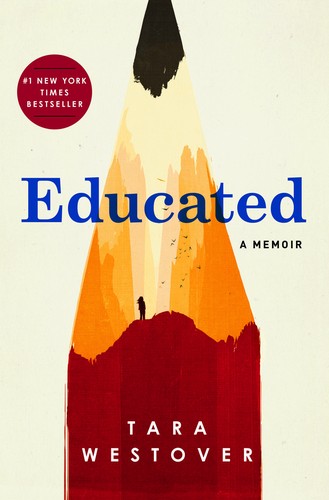
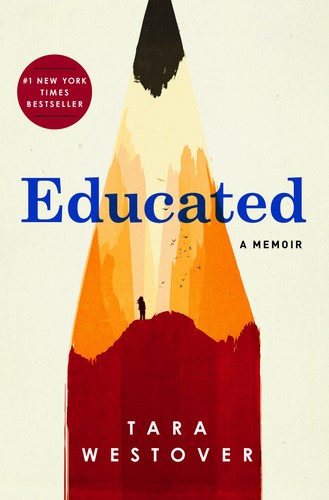
Westover’s memoir Educated, published in 2018, recounts her journey from the mountains of Idaho to the halls of Cambridge with unflinching candor and remarkable literary skill. The book traces not merely her educational ascent but the profound psychological and familial ruptures that accompanied it—her gradual recognition of the abuse she had suffered, her estrangement from much of her family, and her painstaking construction of a self built on knowledge rather than received doctrine. Educated became an immediate cultural phenomenon, spending more than 200 weeks on the New York Times bestseller list and selling millions of copies worldwide. It was selected as a book of the year by numerous publications and received the Carnegie Medal for Excellence in Nonfiction.
As a writer, Westover demonstrates a striking capacity for narrative restraint and emotional precision. Her prose is luminous and controlled, capable of conveying terror and wonder in the same sentence. She is unflinching in her portrayal of violence and psychological manipulation, yet she never succumbs to melodrama or self-pity. The memoir’s power derives in large part from her willingness to hold her own perceptions up to scrutiny, to question memory itself, and to resist tidy moral resolution. This epistemological honesty—rooted in her training as a historian—gives the book a philosophical depth that elevates it well beyond the confessional genre.
Tara Westover’s impact on contemporary literature and public discourse about education, family, and identity has been profound. Educated prompted widespread conversations about the costs of ideological extremism, the nature of self-determination, and the transformative power of knowledge. Westover has spoken widely about her experiences, though she guards her private life carefully and has been judicious about public engagement. Her work stands as a testament to the human capacity for reinvention and the enduring, sometimes painful, necessity of truth.