
Summary
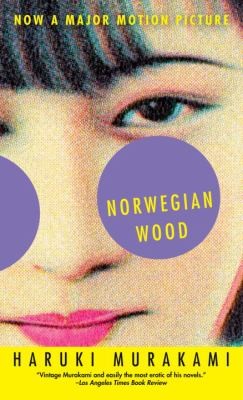
Norwegian Wood is the novel Haruki Murakami wrote to prove he could do something different. His earlier work had leaned into fantasy and surrealism. This one is set entirely in the real world, in Tokyo in the late 1960s, and it is about grief so direct it is almost uncomfortable to look at.
Toru Watanabe is nineteen when the novel’s central events begin. His best friend Kizuki has killed himself, and Kizuki’s girlfriend Naoko has disappeared. When Toru arrives in Tokyo for university, he finds Naoko there, fragile and disconnected, struggling to function. They spend time together. Their relationship becomes romantic, briefly and painfully. Naoko deteriorates and enters a sanatorium in the mountains outside Kyoto.
Toru visits, writes letters, and waits. He also meets Midori, who is his opposite in almost every way: loud, alive, honest about desire and death in a way that makes conversation with her feel like breathing after holding your breath. The novel’s tension is whether Toru can honor his devotion to Naoko while also choosing life, which means choosing Midori.
Character Arcs and Development
Toru is a devoted character: devoted to Naoko, to Kizuki’s memory, to a kind of loyalty that keeps him anchored in loss. His development is not dramatic. He gradually becomes able to reach toward Midori without abandoning what he felt for Naoko.
Naoko is one of the more carefully drawn characters in Murakami’s work. Her damage is not explained by any single cause. Her letters to Toru are lucid about her own condition in a way that makes her situation more rather than less heartbreaking. Midori is Murakami’s most vivid female character – a person who has decided to live with intention, which is harder than it sounds.
Themes and Symbolism
The novel’s central argument is announced in its first pages: death is not the opposite of life, but a part of it. Kizuki’s suicide does not end when Kizuki dies. It travels through Naoko and into Toru, reshaping both of them in different directions.
The title comes from the Beatles song, which appears early in the novel and persists as a kind of emotional signature – shorthand for a particular texture of loss: intimate, quietly devastating, hard to describe to anyone who hasn’t felt it.
Writing Style and Craft
This is Murakami at his most restrained. There is no magical realism here, no fish raining from the sky, no alternate worlds. The prose is clean and precise, the emotion contained rather than amplified. The letters between Toru and Naoko are among the best things in the novel – the particular quality of letters between people who are trying to be honest without causing harm.
Final Assessment
Norwegian Wood is the novel to give someone who loves Murakami but wants to understand what he looks like without the machinery of surrealism. It is also the novel to give someone who loved another Murakami and wants to see his range. It will not work for readers who need plot in the conventional sense. But it is honest about grief and the difficulty of returning from it, and there are not many novels that do this as well.
FAQ
- Is Norwegian Wood appropriate for young adults?
- It contains sexual content and deals with suicide and depression directly. It is appropriate for older teenagers and adults who are ready for that content. Its treatment of mental illness and loss is careful rather than sensationalized.
- Does Norwegian Wood have a happy ending?
- It ends with hope rather than happiness. Toru makes a choice that points toward life, but the novel is honest about the cost of that choice and does not deliver resolution it hasn’t earned.
- How is Norwegian Wood different from other Murakami novels?
- It is entirely realistic. There is no magic realism, no surreal events, no alternate worlds. It is Murakami stripped of his most distinctive formal moves, which makes it either his most accessible novel or his least characteristic, depending on what you came for.
- Why is Norwegian Wood so popular?
- It is direct in a way that Murakami’s other novels are not. The grief is immediate and recognizable. Readers who have lost someone, or been caught between grief and life, tend to find it speaks to them very precisely.
- What does the title Norwegian Wood refer to?
- It is the title of a Beatles song from Rubber Soul (1965). In the novel, Toru hears the song on a plane thirty years after the events and begins to remember. Murakami uses it to establish the emotional register of the novel: intimate, bittersweet, slightly disorienting.
- Should I read Norwegian Wood or Kafka on the Shore first?
- If you want realistic fiction, start with Norwegian Wood. If you want the full Murakami experience with magical realism, start with Kafka on the Shore. Both are excellent entry points but they are very different reading experiences.
- Is Norwegian Wood sad?
- Yes. It is a novel about surviving loss and the ways in which grief deforms and redirects a life. It is not hopeless, but it is honest about how long grief can last and how much it costs.
Book Details
- Title
- Norwegian Wood
- Author
- Haruki Murakami
- Genre
- Literary Fiction
- Publisher
- Vintage Books USA
- ISBN
- 9780307744661
- WritersReview Rating
- 4.0 / 5