
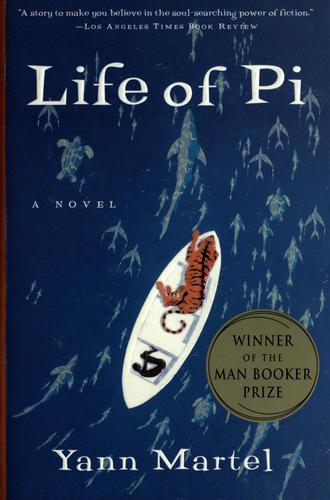
Life of Pi
Harvest Books · 2003 · 401 pages
ISBN: 9780156030205
Review Editor
Eleanor Marsh
Pi Patel grows up in Pondicherry, India, the son of a zookeeper who tends a menagerie of animals that will later save his son’s life — and nearly end it. Pi is an endlessly curious boy who practices Hinduism, Christianity, and Islam simultaneously, to the mild bafflement of everyone around him. When his family emigrates to Canada aboard a Japanese cargo ship, the vessel sinks in a Pacific storm. Pi survives on a lifeboat with a 450-pound Bengal tiger named Richard Parker. What follows is 227 days of open-ocean survival that tests everything Pi knows about faith, fear, and what it costs to stay alive.
Character Arcs
The relationship between Pi and Richard Parker is the novel’s engine. Martel frames it as a practical contract rather than a friendship: Pi stays alive partly by keeping the tiger fed and partly by maintaining psychological dominance through careful conditioning. Richard Parker never becomes companionable. He remains dangerous, unpredictable, and indifferent to Pi’s survival as such — he simply doesn’t kill him when other food is available. That grimness is exactly right. Pi’s transformation is not from boy to man in any sentimental sense, but from someone shaped by civilization to someone who understands, from the inside, what it takes to eat and not be eaten. His earnest religious practice and his capacity for brutal pragmatism coexist in ways the novel refuses to resolve into contradiction.
Pacing
The Pondicherry chapters take their time, and some readers lose patience with Pi’s extended meditations on religion and zoo management before the ship goes down. That setup is doing necessary work — building the intellectual and spiritual framework Pi will draw on at sea — but it requires patience. Once the storm hits, the novel accelerates into something relentless and absorbing. The lifeboat sequences are often brutally practical: what Pi eats, how he manages thirst, how he constructs shelter and a raft tether to maintain a survivable distance from Richard Parker. That specificity transforms what could have been allegory into something grounded and physically real.
Thematic Depth
The novel’s central argument arrives in the final pages, when Pi offers two versions of his survival: one populated by animals, one by humans. Both explain the same sequence of events. The investigators listening to his story, and the reader with them, prefer the version with animals — and Martel wants us to sit with what that preference reveals. He is writing about how narrative functions as a survival mechanism, how the stories we construct to make trauma bearable are not less true for being constructed. The religious themes, which some readers find heavy-handed, are integral to this point: Pi’s multi-faith practice is another form of choosing the more beautiful story over the merely factual one.
Style and Voice
Martel’s prose is clean and deliberate, and Pi’s voice is convincingly earnest — he lectures on animal behavior and theology with the same unselfconscious thoroughness, which grounds the fantastical scenario in a credibly curious mind. In the lifeboat sections, the prose gets starker as the days accumulate. The most striking passages are almost clinical: inventory of supplies, fishing records, water calculations. That precision is what gives the philosophical scaffolding something solid to stand on, and it keeps the novel from floating off into fable when it needs to stay anchored.
Verdict
Life of Pi is a genuinely unusual novel — part survival story, part philosophical fable, part argument about what stories do for us and why we need them. The first section drags, and the religious meditation occasionally tips into earnestness, but the book’s central conceit is brilliant, and Martel has the patience and craft to execute it. This rewards a second reading, when you can watch him lay the groundwork knowing where it leads. For readers willing to meet it on its own terms, it delivers something few novels attempt and fewer achieve.
Rating: 4.1 out of 5
Book Details
- Title
- Life of Pi
- Author
- Yann Martel
- Genre
- Literary Fiction
- Publisher
- Harvest Books
- Year Published
- 2003
- Pages
- 401
- ISBN
- 9780156030205
- WritersReview Rating
- 4.1 / 5