
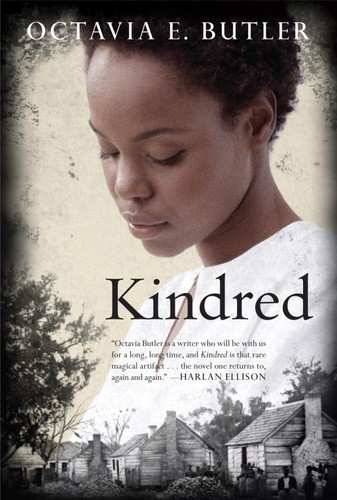
Octavia Butler published Kindred in 1979, and the novel has never gone out of print, never stopped being urgently relevant, and never been fully categorized. It is science fiction in that it involves time travel; it is a slave narrative in that it depicts the antebellum South with historical precision; it is a contemporary novel in that its narrator is a Black woman from 1970s California who cannot escape the country’s past no matter how far she gets from it. Butler called it her tribute to her ancestors, and it reads like one.
What Happens in Kindred
Dana Franklin is a Black woman writer living in Los Angeles in 1976, recently married to a white man named Kevin. On her twenty-sixth birthday, she finds herself transported without warning to an antebellum Maryland plantation, where a red-haired white boy is drowning in a river. She pulls him out. He is Rufus Weylin, who turns out to be Dana’s ancestor.
The time travel mechanism in Kindred is purely functional: Dana is pulled back whenever Rufus’s life is in danger, and she returns to 1976 when her own life is threatened. Over the course of the novel she makes multiple trips, spending increasing amounts of time in the nineteenth century as Rufus grows older. She must keep Rufus alive long enough to father a child with a woman named Alice Greenwood – a child who will eventually become Dana’s ancestor. If Rufus dies before that child is born, Dana ceases to exist.
This is the novel’s central moral trap, and Butler constructs it with complete seriousness. Dana must protect a man who is capable of great violence against Black people, who enslaves the woman he claims to love, who represents everything she finds most contemptible in American history. She must do this to survive. The novel does not let her out of the trap, and it does not let the reader out of it either.
Dana and Rufus
The relationship between Dana and Rufus is the novel’s most complex and disturbing element. Rufus is not a simple monster. He grows up with Dana’s influence, receives genuine care from her across years of childhood, and develops something that functions like affection for her while simultaneously being fully capable of what his world requires of him: owning people, controlling them, doing violence to them. Dana’s relationship to him is similarly complicated. She cares for him in ways she cannot always explain and cannot fully trust.
Butler is doing something specific here: showing how slavery shaped the relationships between enslaved people and enslavers across generations, how the system created bonds that were not freely chosen and were never equal, and how those bonds required the people inside them to compromise their own understanding of themselves in order to survive.
The Plantation as Reality
Butler researched the antebellum South extensively, and the plantation in Kindred is rendered with specificity and without the sanitizing that often attends historical representations of slavery in American culture. The work is hard, the punishments are specific, the degradation is documented in its daily texture rather than through dramatic peaks. Dana’s modern consciousness gives the reader a calibration point; she is as shocked as the reader would be, and her shock does not diminish.
Kevin, her white husband, accompanies her on one trip and is stranded for years. The novel uses his experience to examine how white people accommodated themselves to slavery: not through dramatic commitment to evil, but through gradual adjustment to conditions that seemed intractable, through the small compromises that accumulate into complicity.
Butler’s Achievement
Kindred does what only the best speculative fiction does: it uses an impossible premise to make real things visible. The time travel is a device for what Butler actually wants to show, which is that the past is not past – that the history of American slavery continues to structure the present in ways that are as coercive as any plantation’s rules. Dana cannot escape the nineteenth century because Americans cannot escape what the nineteenth century made.
Who This Book Is For
Every reader should read Kindred. It is among the most important American novels of the twentieth century, and its specific achievement – making the experience of slavery viscerally comprehensible to contemporary readers – is one that no other novel has accomplished in quite the same way.
Frequently Asked Questions
- Is Kindred science fiction?
- Butler called it a “grim fantasy” and was ambivalent about the science fiction label. The time travel mechanism is never explained; there is no scientific or technological apparatus around it. It functions more like a fairy tale device in the service of realist argument.
- Is Kindred suitable for high school students?
- Yes, and it appears frequently on high school and college syllabi. The violence and sexual content are not graphic, but they are frank. The novel treats its difficult material with seriousness and requires the same from readers.
- Why does Dana have to protect Rufus?
- Dana must protect Rufus because he is her ancestor. If he dies before fathering her ancestor, she ceases to exist. This is the novel’s central moral dilemma: Dana’s survival depends on preserving a man who embodies everything she opposes.
- What happens at the end of Kindred?
- The ending is violent and permanent in ways that connect the past and present physically. Dana returns to 1976 with a lasting injury that makes the novel’s argument concrete: the past does not release people cleanly.
- Is Alice Greenwood based on a historical person?
- She is fictional, though Butler drew on the documented histories of enslaved people to construct her character and circumstances.
- How does Kindred relate to other neo-slave narratives?
- Kindred predates the genre it helped create. Toni Morrison’s Beloved (1987) is the other canonical work in this tradition; the two novels are frequently read together. Kindred is more accessible and more plot-driven; Beloved is more formally experimental and more concerned with the psychological aftermath of slavery than with its practice.
- Is Kevin a good character?
- He is a well-intentioned character whose intentions are tested by conditions that expose their limits. Butler is careful about Kevin: she does not make him a villain, but she does not let him be simply good either. His experience of accommodation in the nineteenth century is the novel’s most direct examination of white complicity.
- What is the significance of the title?
- The word kindred refers to family, to relatives by blood. Dana’s relationship to Rufus is one of kindred – he is her ancestor – and the novel asks what it means to be kin to someone whose actions are monstrous, to be bound to a history one did not choose.
Book Details
- Title
- Kindred
- Author
- Octavia Butler
- Genre
- Literary Fiction
- Publisher
- Beacon Press
- Year Published
- 2004
- Pages
- 287
- ISBN
- 9780807083697
- WritersReview Rating
- 5.0 / 5