
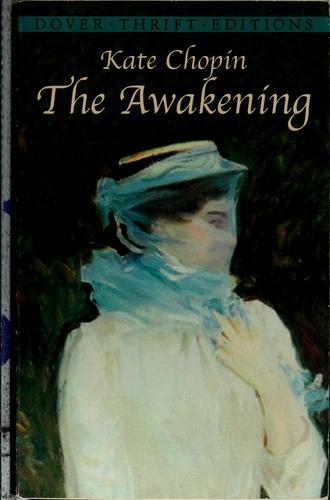
The Awakening
Bantam Classics · 1899 · 123 pages
ISBN: 9780553213454
Review Editor
admin
Kate Chopin published The Awakening in 1899 and watched it destroy her career. Critics found it immoral; she was essentially blacklisted from the literary society that had welcomed her earlier, safer work. The novel was largely forgotten until the 1960s and 1970s, when feminist scholars recovered it as a foundational text of American women’s literature – a novel that had said, sixty years before the second wave, what it was like to be a woman in possession of desires that her society had not given her permission to have.
What Happens in The Awakening
Edna Pontellier is the wife of a prosperous Louisiana Creole businessman, Leonce Pontellier, and the mother of two young sons. In the summer of 1899, the family is vacationing on Grand Isle, a resort on the Gulf of Mexico. There, Edna begins to wake up to herself: to her capacity for sensation, to her own desires, to the constriction of the role that her marriage and her society have assigned her.
The awakening has multiple catalysts. Robert Lebrun, a young Creole man who makes a practice of summer attachments to married women and then withdraws before anything inappropriate can happen, attaches himself to Edna and discovers, to his alarm, that she takes it seriously. Mademoiselle Reisz, a pianist whose artistic commitment has made her a social outcast, becomes Edna’s model of a woman who lives by her own internal law. Alcee Arobin, a man of dubious reputation, becomes her lover.
Edna begins to refuse her social role. She stops receiving callers on her reception day. She moves out of her husband’s house into a small cottage she calls the pigeon house. She takes up painting. She refuses to explain herself to anyone. And she finds, ultimately, that the freedom she can claim within her society’s limits is not the freedom she wants, and that the freedom she wants is not available to her.
Edna and the Sea
The sea in the novel is freedom and dissolution simultaneously. Edna learns to swim during the novel’s opening section, and this moment of physical autonomy – of moving through water by her own power – is the beginning of her awakening. The sea recurs throughout as the novel’s primary symbol, calling to her, promising something beyond the limits of her defined life.
The ending, in which Edna walks into the sea, has been interpreted as suicide, as liberation, as the only exit available to a woman who cannot live within the terms her world offers and cannot survive outside them. Chopin does not specify; she renders Edna’s final experience with a lyricism that refuses to assign it a moral.
What the Novel Does
Chopin writes Edna’s interior life with a precision and sympathy that was unprecedented in American fiction of the period. Edna is not a saint and not a martyr. She is a person becoming aware of herself as a person – aware of her desires, her boredom, her capacity for both cruelty and love – and discovering that this awareness is not welcome in the world she inhabits. The novel does not argue that she makes correct choices. It argues that she is entitled to make choices at all.
Chopin’s Prose
Chopin writes with a lyricism that reflects the Gulf Coast landscape and Edna’s awakening sensuality. Her sentences have a warmth and a rhythmic quality that suits the novel’s concern with physical sensation and desire. The Louisiana Creole culture she describes with affection and precision is one she knew well from her years in New Orleans.
Who This Book Is For
Readers interested in the history of women’s literature, in the American South, in novels about self-discovery and its costs, or in any novel that remains genuinely difficult to categorize morally will find The Awakening essential. It is 116 pages long and contains more sustained argument about the condition of women than most novels ten times its length.
Frequently Asked Questions
- Is The Awakening a feminist novel?
- It is proto-feminist in that it takes seriously a woman’s desire for selfhood and refuses to punish that desire morally. Chopin did not use the word feminist, and the novel predates modern feminist theory, but it has been central to feminist literary scholarship since the 1970s.
- Does Edna commit suicide?
- She walks into the sea at the novel’s end and does not swim back. Whether Chopin intends this as suicide, liberation, or an act whose moral category the novel refuses to assign is deliberately ambiguous. The prose of the final passage is lyrical rather than tragic or triumphant.
- Why was The Awakening scandalous in 1899?
- The novel depicts a married woman pursuing sexual desire, leaving her husband and children, taking a lover, and ultimately refusing to subordinate herself to social expectation. All of these were violations of the norms that governed respectable women’s behavior and respectable fiction’s treatment of women’s behavior.
- Who is Mademoiselle Reisz?
- She is the novel’s most important secondary figure: a pianist of genuine talent who lives entirely according to her own values and pays the social cost of this without apparent regret. She is the alternative model of womanhood that Edna cannot quite reach.
- Is the novel set in New Orleans?
- It begins on Grand Isle, a resort island in the Gulf of Mexico popular with Creole families, and moves to New Orleans for its later sections. Both settings are rendered with great specificity drawn from Chopin’s own experience of Louisiana life.
- Is Robert Lebrun the love of Edna’s life?
- He is the object of Edna’s romantic feeling, but the novel is careful about what this means. Robert is also embedded in his society’s norms, and his eventual withdrawal reflects his inability to match Edna’s capacity for defiance. Edna’s love for Robert is real; whether he is fully worth it is another question.
- How does The Awakening relate to other nineteenth-century novels about women?
- Chopin was aware of and in conversation with Flaubert’s Madame Bovary and Tolstoy’s Anna Karenina. Like those novels, The Awakening follows a woman who transgresses social limits. Unlike those novels, it does not punish its heroine’s transgressions in moralistic terms – the ending’s ambiguity is a refusal of the conventional lesson.
- What does the title mean?
- The awakening refers to Edna’s gradual awareness of herself as a person with desires, with interiority, with a life that cannot be fully contained in the roles assigned to her. The novel tracks this awakening through multiple stages – artistic, sexual, philosophical – and its title names the process rather than its outcome.
Book Details
- Title
- The Awakening
- Author
- Kate Chopin
- Genre
- Literary Fiction
- Publisher
- Bantam Classics
- Year Published
- 1899
- Pages
- 123
- ISBN
- 9780553213454
- WritersReview Rating
- 4.0 / 5