
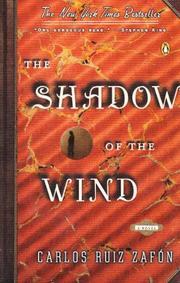
The Shadow of the Wind
Penguin Books · 2001 · 487 pages
ISBN: 9780143034902
Review Editor
admin
Carlos Ruiz Zafon’s The Shadow of the Wind is the kind of novel that makes readers want to cancel their plans. Published in Spain in 2001 and translated into English in 2004, it sold twenty million copies worldwide and established Zafon as one of the great popular storytellers of his generation. Set in post-Civil War Barcelona, it is a Gothic mystery, a love story, and a sustained act of literary devotion – to books, to cities, and to the idea that the past never fully releases its grip on the living.
What Happens in The Shadow of the Wind
In 1945, a ten-year-old boy named Daniel Sempere accompanies his father, a bookseller, to a secret place called the Cemetery of Forgotten Books – a vast underground library where rare and out-of-print volumes are preserved. Each visitor to the Cemetery must choose one book to take home and protect. Daniel chooses a novel called The Shadow of the Wind by an obscure author named Julian Carax. He reads it overnight and falls under its spell.
He soon discovers that someone has been systematically destroying every copy of Carax’s work. This discovery sends Daniel on a decade-long investigation into Carax’s life: who he was, what happened to him, why his books are being hunted, and why the story of Carax’s life seems to rhyme so precisely with Daniel’s own.
The investigation unfolds through Barcelona’s postwar years, taking Daniel into the lives of Carax’s former friends, lovers, and enemies. The city itself – its fog, its cramped apartments, its cafes, its secret histories – is as much a character as any of the people Daniel meets. Zafon constructs a Barcelona that feels haunted by the Civil War without making the politics the novel’s central concern; the war is context and wound rather than subject.
Characters and Atmosphere
Zafon’s cast has the slightly larger-than-life quality of great popular fiction. Inspector Fumero, the novel’s villain, is a Francoist policeman whose sadism has a personal history behind it. Fermin Romero de Torres is a former intelligence agent turned bookshop assistant, one of the funniest and most lovable supporting characters in recent fiction. Clara Barcelo is the beautiful blind woman who gives Daniel his first experience of longing and his first lesson in its inadequacy.
The mystery plot is genuinely clever, and the solution does not feel arbitrary. Zafon plants his clues carefully, and the revelation of who has been burning Carax’s books – and why – connects to the themes of the novel in ways that feel earned rather than convenient.
A Novel About Books and Readers
At its core, The Shadow of the Wind is an argument for what books do: how they create relationships between authors and readers across time, how they preserve lives that would otherwise be forgotten, how reading the right book at the right moment can shape a person’s entire subsequent history. These are not new arguments, but Zafon makes them with such warmth and conviction that the novel functions as a love letter to the act of reading itself.
The Cemetery of Forgotten Books is the novel’s presiding image: a place where books that the world has lost interest in are kept alive by the care of their custodians. It is a fantasy, but a useful one – a way of asking what it would mean if every book that has ever existed still survived somewhere, waiting for the reader who needed it.
Zafon’s Style
Zafon writes with the confidence of a natural storyteller. His prose, in Lucia Graves’s English translation, moves quickly and carries a Gothic warmth that makes even the darker passages feel pleasurable. He borrows from Dickens’s social comedy, from Dumas’s swashbuckling momentum, from the ghost story’s careful management of dread. The mixture is his own, and it works.
The novel is not attempting the psychological depth of Ishiguro or the structural ambition of Pynchon. It is attempting to tell a great story about books and cities and love and loss, and it succeeds at this on every page.
Who This Book Is For
Any reader who loves books about books, who responds to atmospheric historical fiction, or who simply wants a long novel that delivers sustained pleasure will find The Shadow of the Wind exactly right. It rewards readers who bring patience and willingness to lose themselves in a world that Zafon has built with evident love. It is the ideal companion for a long weekend or a slow train journey.
Frequently Asked Questions
- Is The Shadow of the Wind part of a series?
- Yes. It is the first volume in the Cemetery of Forgotten Books series, followed by The Angel’s Game, The Prisoner of Heaven, and The Labyrinth of the Spirits. All four are set in the same Barcelona and share characters and locations, though each stands alone as a complete novel.
- Do I need to know about the Spanish Civil War to enjoy the book?
- No. The novel provides enough context for readers unfamiliar with Spanish history. Knowledge of the Civil War and the Franco dictatorship adds resonance, but the mystery plot and the characters do not require this background.
- Is the Cemetery of Forgotten Books a real place?
- No, it is Zafon’s invention. Several bookshops in Barcelona have created their own versions in tribute to the novel, and the city has embraced the book as a kind of literary landmark.
- How long is The Shadow of the Wind?
- Approximately 487 pages in most English editions. It reads faster than its length suggests because Zafon’s pacing rarely flags.
- Is the book appropriate for younger readers?
- It contains violence, sexual content, and mature themes. It is appropriate for adults and mature older teenagers, but not for younger readers.
- Who translated the novel into English?
- Lucia Graves, daughter of the poet Robert Graves, translated the novel. Her translation is widely praised for capturing Zafon’s atmospheric prose without sacrificing readability.
- Is it better to read the series in order?
- Yes, starting with The Shadow of the Wind. While each novel is self-contained, reading in order allows full appreciation of how Zafon layers his world across the four volumes.
- What makes The Shadow of the Wind so popular?
- The combination of a genuinely gripping mystery, a richly realized setting, characters who are easy to love, and an emotional investment in the importance of books creates a reading experience that satisfies on multiple levels simultaneously. Zafon understood that great popular fiction does not require the reader to choose between pleasure and meaning.
Book Details
- Title
- The Shadow of the Wind
- Author
- Carlos Ruiz Zafon
- Genre
- Literary Fiction
- Publisher
- Penguin Books
- Year Published
- 2001
- Pages
- 487
- ISBN
- 9780143034902
- WritersReview Rating
- 5.0 / 5