
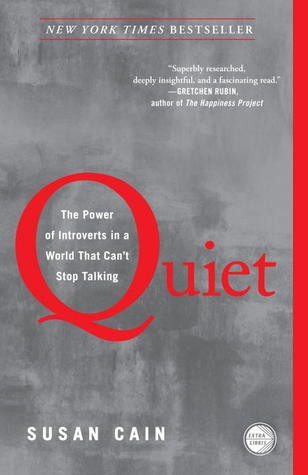
Quiet: The Power of Introverts in a World That Can’t Stop Talking
Broadway Books · 2012 · 368 pages
ISBN: 9780307352156
Review Editor
Sofia Reyes
Susan Cain’s argument in Quiet is both simple and, when published in 2012, genuinely countercultural: that introversion is not a defect to be overcome but a personality type with genuine strengths, and that American culture has built institutions — schools, offices, social rituals — around extrovert values in ways that systematically disadvantage the roughly one-third to one-half of the population who are introverts. The book draws on neuroscience, psychology, history, and biography to make its case, and while it covers a lot of ground for a popular psychology book, it covers most of it with care. More than a decade after publication, Quiet has influenced how schools design classrooms, how managers think about teams, and how introverts narrate their own experience. That kind of durable cultural impact is unusual and suggests Cain identified something genuinely underacknowledged.
Character Arcs
Cain weaves her own story through the book — a self-identified introvert who spent years as a Wall Street lawyer and negotiator, performing extroversion in a culture that demanded it, before writing this book. Her personal presence is lighter than in many books of this type, which serves the material. The more compelling portraits are of the introverts she profiles: Rosa Parks, whose famous refusal Cain argues was partly a function of introvert temperament; Eleanor Roosevelt, who found the capacity to lead from a fundamentally private sensibility; and various scientists and engineers whose best work required the sustained solitary attention that introvert cultures enable. These portraits are well-chosen and prevent the book from becoming purely abstract.
Pacing
Quiet moves between neuroscience, cultural history, and practical advice, and the transitions are generally smooth. The early chapters establishing the cultural argument — tracing the shift from a “Character Culture” valuing inner virtue to a “Personality Culture” valuing external presentation — are the most historically interesting. The middle sections on neuroscience (high-reactive babies, introverts’ arousal thresholds) are the most rigorously grounded. The later practical chapters are useful but less distinctive. The book is occasionally repetitive in its core argument, and some chapters could be tighter, but the overall construction is more careful than most popular psychology manages.
Thematic Depth
The book’s best contribution is its cultural history of extroversion — the argument that American culture specifically developed a worship of the gregarious personality through the self-help movement, advertising, and the emergence of the office as the dominant work environment. This isn’t a new observation in sociology, but Cain makes it accessible and applies it to specific institutions. She’s particularly good on schools: the shift toward open-plan classrooms, mandatory group work, and participatory learning has been driven by assumptions about learning that may not apply to introvert learners. The neuroscience sections are solid — Cain draws on real research rather than pop psychology — though critics have noted she occasionally overgeneralizes from studies of high-reactivity in infants to claims about adult introversion.
Style and Voice
Cain writes with precision and restraint — the voice of someone who did her research and trusts it to make the argument without needing to oversell. She is far more rigorous than most popular psychology, and the book rewards careful reading. The prose is occasionally dry, and some of the more technical sections require more active engagement than the genre usually demands. But Cain takes her readers seriously, and the book feels like an honest attempt to explain something complex rather than a simplified product built for maximum accessibility at minimum cognitive cost.
Verdict
Quiet is one of the better popular psychology books of the past decade — genuinely researched, carefully argued, and addressing a phenomenon that is real and underanalyzed. Its cultural history of extroversion is original and persuasive. Its neuroscience is responsibly handled. Its practical advice is secondary to the explanatory project but useful. The book’s most important achievement is giving introverts a framework for understanding their own experience and a vocabulary for explaining it to the extrovert-normed institutions they inhabit.
Rating: 4.3 out of 5
Book Details
- Title
- Quiet: The Power of Introverts in a World That Can’t Stop Talking
- Author
- Susan Cain
- Genre
- Self-Help
- Publisher
- Broadway Books
- Year Published
- 2012
- Pages
- 368
- ISBN
- 9780307352156
- WritersReview Rating
- 4.3 / 5