
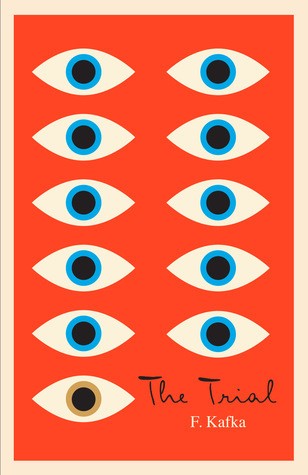
The Trial
Schocken Books · 1925 · 255 pages
ISBN: 9780805209990
Review Editor
Eleanor Marsh
Franz Kafka never completed The Trial, and his instructions to Max Brod were to burn the manuscript. Brod published it instead in 1925, the year after Kafka’s death, and literary history is in his debt. The novel-fragmentary, nonlinear, deliberately incomplete-has become one of the founding texts of twentieth-century literature, and the adjective derived from its author’s name (“Kafkaesque”) has entered the language to describe a mode of experience that Kafka was the first to render precisely.
Josef K. is a bank official who, on the morning of his thirtieth birthday, is arrested by agents of a court whose jurisdiction, charges, and procedures he cannot discover. The rest of the novel follows his attempts to navigate this legal system that operates according to rules he cannot learn, through lawyers who cannot help him, before officials who deny any wrongdoing while manifestly making his life impossible.
The novel reads as political allegory, as existentialist fable, as bureaucratic satire, and as psychological study-and resists none of these readings while being reducible to none of them. Kafka’s great insight, which the twentieth century confirmed with terrible thoroughness, was that power can be simultaneously arbitrary and systematic, that a procedure can be both meaningless and inescapable, that innocence is not a defense.
The prose is Kafka’s signature instrument: precise, formal, slightly affectless, rendering events of surpassing strangeness in a tone of clerical ordinariness. This tonal disproportion-not the events but how they are narrated-is the source of the specifically Kafkaesque horror, which is the horror of things being simultaneously absurd and completely serious.
Book Details
- Title
- The Trial
- Author
- Franz Kafka
- Genre
- Literary Fiction
- Publisher
- Schocken Books
- Year Published
- 1925
- Pages
- 255
- ISBN
- 9780805209990
- WritersReview Rating
- 4.0 / 5