
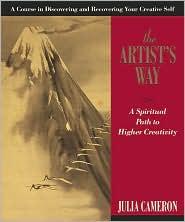
The Artist’s Way
J.P. Tarcher/Putnam · 1992 · 237 pages
ISBN: 9781585421466
Review Editor
Sofia Reyes
Julia Cameron published The Artist’s Way in 1992 with a premise that felt counterintuitive to many readers then and still does now: most people who consider themselves non-creative are not lacking talent but recovering from creative injury. Subtitled “A Spiritual Path to Higher Creativity,” the book is structured as a twelve-week program designed to help readers identify, confront, and move past the internal and external blocks that prevent them from making the work they actually want to make.
Cameron came to this work through her own story. A writer, filmmaker, and poet, she spent years struggling with creative blocks amplified by alcoholism. Her recovery led her to develop what became the Morning Pages and the Artist’s Date, the two cornerstone practices of the book. She first taught these methods in workshops before gathering them into a book that has since sold over five million copies and generated a global community of practitioners. It is used in university courses, therapy practices, church groups, and corporate training programs, a reach that says something about how widely its core diagnosis lands.
The book unfolds week by week, each chapter addressing a different dimension of creative recovery. Week one focuses on safety, week two on identity, week three on power. By the time readers reach week twelve, they have worked through fear, perfectionism, envy, dependency, and self-doubt. Each chapter includes explanatory text, personal stories drawn from Cameron’s own experience and from her students, weekly tasks, and check-in questions. The tasks range from writing letters to your childhood self to taking yourself on a solo “date” to somewhere that genuinely delights you.
Character Arcs and Development
In a conventional sense, The Artist’s Way has no characters. But Cameron populates the book with archetypes that feel recognizable and specific: the shadow artist who becomes a critic or teacher rather than make art herself; the creative skeptic who insists the whole program is nonsense while secretly hoping it works; the blamer who traces every creative failure to circumstances or other people. These aren’t fictional inventions. They’re behavior patterns Cameron has observed across decades of teaching, and most readers will recognize themselves in at least one of them without being asked to.
The real arc in the book belongs to the reader. Cameron designs it that way. Each week is calibrated to dissolve a layer of resistance. Week one’s work feels approachable enough that skeptics stay on board. By weeks three and four, when Cameron addresses power and integrity, the exercises start to sting in useful ways. By weeks seven and eight, on connection and strength, many readers report genuine breakthroughs. The journal questions and creative tasks are arranged to produce discomfort before resolution. When the program works as intended, the progression feels like therapy done with paper and a timer.
Cameron also writes with unusual directness about her own creative injuries. She describes relationships that depleted her, long periods of non-productivity she mistook for failure, and the specific fear that made her feel fraudulent. That willingness to be personal keeps the book from reading like a manual. It reads more like a letter from someone who has been where you are and made it through.
Pacing
The twelve-week structure gives the book a natural rhythm, but individual weeks feel uneven. The early chapters move with clarity and momentum. The middle sections, particularly weeks five and six on possibility and abundance, occasionally become repetitive. Cameron returns to the same core ideas, sometimes in slightly reframed language, and readers who have absorbed the morning pages routine by week three may feel they’re covering familiar territory. The book could be meaningfully shorter without losing its argument.
The later weeks recover that momentum. Weeks nine through twelve, addressing self-protection, autonomy, and faith, feel newly energized, partly because Cameron has been building toward them all along. If you’ve been doing the weekly tasks seriously, the final chapters hit differently than they would if read in isolation. The tasks compound on each other. That’s the structural logic of the book, and when readers follow it, the pacing makes sense. When they dip in selectively, it can feel meandering.
Deeper Thematic Exploration
The central claim of The Artist’s Way is more radical than it first appears. Cameron argues that creativity is not a talent distributed unevenly at birth but a universal human capacity that has been damaged, often in childhood, by criticism, comparison, or neglect. The child who was told her drawing was wrong, or that writing poetry wouldn’t pay the bills, or that only geniuses made real art, grew up into an adult who has stopped trying. The book’s job is to invite that adult back.
This connects to what Cameron calls the “shadow artist”: a person who hovers near the arts (becoming an arts critic, an arts administrator, a music teacher) without committing to making art themselves. The shadow artist role feels safer because it keeps creativity in view without demanding the vulnerability of actually creating and being judged for it. Cameron treats this pattern with more compassion than condemnation, but she is clear that shadow artistry is a form of avoidance. Recognizing it in yourself is one of the book’s more uncomfortable moments, and one of its more productive ones.
The spiritual dimension of the book will be its most divisive element. Cameron makes no apology for framing creativity as a form of divine collaboration. In her view, creative impulses are transmissions from a higher source, and the work of the artist is partly to get the ego out of the way so that source can come through. She isn’t prescribing a specific religion, but she also isn’t being vague about the metaphysics. If you are deeply uncomfortable with language like “God” or “higher power,” the book will require some mental substitution. Cameron acknowledges this and gives readers permission to substitute whatever term works for them. It helps, but only partially.
What saves this frame from being merely pious is the precision of Cameron’s practical tools. The Morning Pages, in particular, are a genuinely ingenious invention. Three pages of longhand, stream-of-consciousness writing done immediately upon waking, before the inner critic has fully assembled itself, before the day’s obligations crowd in. They’re not meant to be good. They’re not meant to be read (Cameron suggests not rereading them for at least eight weeks). Their function is to externalize the mental chatter that otherwise runs as background noise through every creative hour. Many practitioners report that within a few weeks of daily practice, morning pages have cleared enough mental space that the rest of the day feels qualitatively different. The exercise costs nothing and takes about thirty minutes, which makes it easy to test without committing to the full program.
The Artist’s Date, the book’s second major tool, is less universally adopted but equally well thought through. Once a week, you take yourself somewhere you’ve been curious about, alone, with no agenda except to replenish your creative wellspring. The solo requirement is not negotiable in Cameron’s view. She argues that bringing a companion activates your social self and crowds out the quieter, more vulnerable voice the date is designed to reach. The exercises surrounding it are designed to produce feelings that most adults have largely stopped allowing themselves: wonder, delight, silliness, and playful incompetence in a domain where no one is grading you.
Style and Voice
Cameron writes with warmth and no condescension. She assumes her readers are capable of doing the work and treats resistance as information rather than character flaw. Her prose is conversational and occasionally lyrical, reflecting her background as a writer and poet. She doesn’t pad the book with academic citations or celebrity testimonials. The authority comes from having lived through the process and having watched thousands of students do the same.
The blend of memoir, instruction, and reflection is one of the book’s real strengths. Cameron knows when to step back and let a student’s story carry the point better than her analysis would. She’s also clear about what the book can’t do: it won’t resolve grief, repair relationships, or manufacture talent where none exists. It’s a clearing exercise, and it works at that scale. Readers looking for more than that will need to bring their own follow-through.
Verdict
If you have a creative project you’ve been deferring for years and can’t fully explain why, The Artist’s Way is worth twelve weeks of genuine effort. The commitment is real: morning pages require getting up earlier, and the weekly tasks add real time to an already busy schedule. But for people who follow through, the book consistently delivers what it promises, which is the experience of taking your creative life seriously, possibly for the first time as an adult.
It is not the right book for everyone. If you’re already actively making work and looking for craft instruction, look elsewhere. If the spiritual vocabulary irritates you past a certain point, you may spend more energy arguing with the framing than engaging with the tools. And if you’re expecting a revelation in week one, the book will disappoint you. The payoff is cumulative and arrives slowly. But for the person who has spent years saying they’re “not really creative” while secretly drafting novels in their head, taking photographs no one ever sees, or humming melodies they never bother to write down, this book was built for you. Cameron has been making that case for over thirty years, and millions of people have found it persuasive enough to act on.
Frequently Asked Questions about The Artist’s Way
What is The Artist’s Way by Julia Cameron about?
The Artist’s Way is a twelve-week self-help program designed to help people recover and develop their creativity. Published in 1992, it argues that most people aren’t untalented but creatively blocked, often by early criticism or neglect. The program uses two primary tools: Morning Pages (three pages of daily longhand writing) and the Artist’s Date (a weekly solo outing to nurture creative curiosity). Cameron draws on her own experience as a writer and filmmaker recovering from creative blocks.
What are Morning Pages in The Artist’s Way?
Morning Pages are three pages of longhand, stream-of-consciousness writing done first thing each morning. They’re not meant to be literary, polished, or even coherent. Cameron calls them a “brain drain,” a daily practice for clearing out mental noise before the inner critic fully wakes up. They are not a journal, not a to-do list, and not intended to be read back right away. Most people who stick with the practice for several weeks report that it quiets persistent self-doubt and creates more mental space for actual creative work during the rest of the day.
How long does The Artist’s Way program take to complete?
The program is structured as twelve weeks, with each chapter covering one week’s worth of reading, tasks, and reflection. If you do the morning pages daily and complete the weekly tasks, expect to spend 30 to 45 minutes each morning on pages plus several additional hours per week on exercises. The book itself is around 240 pages depending on the edition. Most people find the daily habit of morning pages the biggest time commitment, not the reading.
Do I need to be religious to benefit from The Artist’s Way?
No, but you’ll need some tolerance for spiritual language. Cameron frames creativity as a form of divine collaboration and uses words like “God” and “higher power” throughout. She explicitly invites readers to substitute whatever term works for them, whether that’s the universe, nature, the unconscious, or simply “a higher creative force.” Secular readers who can make that mental swap consistently tend to get as much from the program as anyone else. Readers who find the framing actively alienating may struggle to stay engaged past the first few weeks.
What are the main themes in The Artist’s Way?
The book’s core themes are creative recovery, the inner critic, spiritual openness, and self-care as a creative practice. Cameron explores the idea that most adults carry creative wounds from childhood that quietly sabotage their work decades later. She examines the “shadow artist” (someone who lives near art but avoids making it), the perfectionism that blocks first drafts, and the scarcity mindset that tells people their creative needs aren’t worth meeting. Abundance, play, and trust in the creative process run through the entire twelve weeks.
Is The Artist’s Way only for professional artists or people who want to be artists?
Cameron’s definition of creativity is unusually broad. The book has found a large readership among people who would never call themselves artists: executives using it to think more originally, teachers using it to reconnect with their work, retirees picking up instruments for the first time, and people in personal transitions trying to figure out what they want next. The tools are designed for anyone who feels creatively stuck, regardless of whether they want to exhibit paintings or write novels. You don’t need an artistic goal to benefit from the program.
How does The Artist’s Way compare to Julia Cameron’s other books?
Cameron has written several follow-up books in the same territory, including The Vein of Gold, Walking in This World, and Finding Water, all of which continue the recovery framework with additional tools. Most readers treat the original as the essential text and the others as optional companions. The Artist’s Way Workbook (2006) provides additional exercises for people who want more structured practice. If you finish the twelve weeks and want to continue the work, Walking in This World is the most commonly recommended next step. None of the sequels have matched the reach or reputation of the original.
Should I read The Artist’s Way, and is it worth the commitment?
If you’ve been putting off creative work and can’t quite explain why, yes. The morning pages practice alone is worth testing for a month to see if it does anything for you. The twelve-week structure is demanding if you take it seriously, but the book rewards that investment. It will not work as a quick read: this is a program, not a pep talk. If you’re willing to show up for the daily practice and sit with uncomfortable questions about why you’re not making the work you want to make, The Artist’s Way delivers on its premise far more often than most books in this genre.
Book Details
- Title
- The Artist’s Way
- Author
- Julia Cameron
- Genre
- Self-Help
- Publisher
- J.P. Tarcher/Putnam
- Year Published
- 1992
- Pages
- 237
- ISBN
- 9781585421466
- WritersReview Rating
- 4.1 / 5