
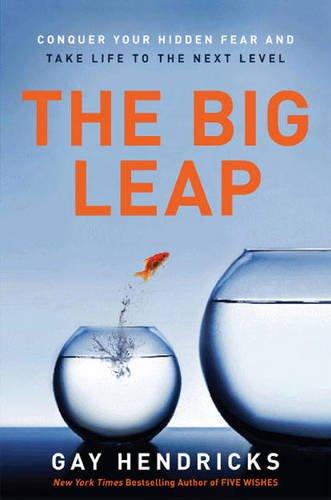
Gay Hendricks spent more than four decades working as a psychologist and executive coach before writing The Big Leap. In that time he worked with Olympic athletes, corporate executives, and couples on the edge of divorce, and he kept noticing the same pattern: people who had every resource available to them seemed to hit an invisible ceiling, and right at the moment when things looked best, something would go wrong. An argument would erupt out of nowhere. A promising deal would collapse. A physical symptom would appear on the eve of something important. Hendricks began to think the sabotage was not accidental. In The Big Leap, published by HarperOne in 2009, he presents the framework he developed to explain it.
The book is built on a single central concept: the Upper Limit Problem. Hendricks argues that every person carries an internal thermostat set to a specific level of happiness, success, and positive energy. When life exceeds that set point, we unconsciously manufacture a problem to bring things back down. We pick a fight with a partner the morning after signing a contract. We develop a cold the week of a career breakthrough. We flood our minds with worry about something we were perfectly at peace with the day before. Hendricks calls all of this upper-limiting, and his contention is that it is not weakness or bad luck but a predictable, understandable pattern rooted in specific emotional beliefs formed early in life.
The book grew, in part, out of Hendricks’s own history with the pattern. He opens with the story of discovering, through years of careful self-observation, that his own cycles of binge eating were almost entirely correlated with periods when his life was going particularly well. He wasn’t eating because he was unhappy. He was eating because he was happy, and some part of him couldn’t hold that much happiness without deflating it. The personal honesty here does a lot of work. You trust Hendricks because he applies the framework to himself before asking you to apply it to your own life.
Character Arcs and Development
For a self-help book, the question of character development is necessarily a little different. The people who populate The Big Leap are Hendricks’s clients, drawn in brief, functional vignettes: a high-performing executive who derails negotiations right before closing deals, a couple who have breakthroughs in therapy and then arrive at the next session having devastated each other over something small, an entrepreneur whose repetitive stress injury appears exactly when she is three weeks from finishing a long-delayed manuscript. These stories are illustrative rather than immersive. Hendricks uses them to show the Upper Limit Problem in action and then moves on. You won’t come to care about these people the way you would about characters in a memoir; they exist to show you a pattern, not to become individuals you carry with you.
The more developed personal arc belongs to Hendricks himself. His willingness to stay specific about his own upper-limiting behaviors, including returning to them as examples more than once, gives the book a warmth it might otherwise lack. He is not presenting himself as someone who has transcended the problem. He is presenting himself as someone who has learned to recognize it faster, and that distinction matters.
The arc the book is genuinely designed to produce is the reader’s own. Each chapter adds language and diagnostic questions, and by the end Hendricks has given you a vocabulary for noticing self-sabotage in real time. Whether that vocabulary does lasting work depends on how seriously you engage with the exercises, most of which involve writing rather than passive reading. Readers who treat it as a self-examination rather than an instruction manual will get more from it.
Pacing
At 224 pages, The Big Leap reads quickly. Hendricks writes in plain, direct prose and structures the book clearly, with each concept building on the previous one in a logical sequence. The first half is particularly well-paced: the introduction of the Upper Limit Problem, the four hidden barriers, and the framework of four zones (Incompetence, Competence, Excellence, and Genius) flows naturally, and the early chapters sustain a genuine sense of momentum. If the book has a single best stretch, it is the first hundred pages.
The second half is less even. After the Zone of Genius material lands, Hendricks pivots to a concept he calls Einstein Time: the argument that we don’t manage time so much as create it, and that by taking full ownership of our relationship to time rather than treating it as a scarce external resource, we can experience more of it. The concept is interesting and Hendricks connects it to the Zone of Genius with reasonable logic, but the transition is abrupt and the material feels added rather than organic. It reads as a separate project that found its way into this book.
There is also some repetition. The Upper Limit Problem is introduced, illustrated, and re-explained at intervals throughout the book, and in a text this short, the echoes are noticeable. Readers who pick up the idea quickly may find themselves impatient in the later chapters. Those who need to encounter an idea multiple times before it settles may appreciate the reinforcement.
Deeper Thematic Exploration
Beneath its practical surface, The Big Leap is making a bold claim about the nature of human resistance. The four hidden barriers Hendricks identifies are not external circumstances but internalized beliefs, and they are all, at their root, questions about worthiness and belonging. The first barrier is the feeling of being fundamentally flawed, of carrying some core defect that means you don’t deserve to thrive. The second is the belief that your success will lead to disloyalty or emotional abandonment, that flourishing will separate you from the people who love you. The third is the conviction that your thriving will become a burden to others, that your good fortune will require people around you to compensate or suffer. The fourth is the fear of outshining those you love, the guilt that comes from believing your success diminishes others by contrast.
These are psychological, not strategic, problems. And Hendricks, who spent his career as a therapist before turning to coaching and writing, is better positioned than most self-help authors to address them. He is not telling you to optimize your calendar or build better habits. He is asking you to examine what you actually believe about whether you deserve to do well, and to trace those beliefs back to where they formed. The book doesn’t promise that awareness will solve everything, but it does argue that awareness is necessary before anything else can change. This is a more honest claim than much of the genre makes.
The Zone of Genius framework extends this psychological inquiry into more positive territory. The distinction Hendricks draws is between the Zone of Excellence and the Zone of Genius, and it is sharper than it first appears. The Zone of Excellence is where most high-achieving people spend most of their time: work they are very good at, that others recognize and reward, that provides real satisfaction of the competence variety. The Zone of Genius is different in kind, not in degree. It is work that emerges from your deepest nature, that you could do for long stretches without it feeling like labor, that connects your strongest intrinsic abilities to genuine passion. Hendricks’s argument is that the Zone of Excellence is a trap, not because it is bad but because the comfort and compensation it provides can substitute indefinitely for the harder and more uncertain move toward the Zone of Genius.
This argument connects, without Hendricks citing the research directly, to a considerable body of work on intrinsic motivation and flow. Readers familiar with Mihaly Csikszentmihalyi’s thinking on optimal experience, or Daniel Pink’s analysis of what actually drives sustained performance, will find familiar territory in the Zone of Genius concept, treated with more clinical warmth and less empirical apparatus. The framework is accessible and tends to be durable: it’s the kind of distinction that comes back to mind years after the reading, at moments of professional decision.
Style and Voice
Hendricks writes the way a good therapist speaks: patient, warm, consistently non-judgmental. He uses reconstructed dialogue from his coaching sessions throughout the book, and this gives the text an intimate quality, a sense that you are overhearing something real rather than reading a set of arguments. The prose is functional rather than literary, which suits both the material and the pace Hendricks wants to maintain. He is not trying to impress you with language; he is trying to get a specific idea across with as little friction as possible, and mostly he succeeds.
One stylistic pattern divides readers. At several points Hendricks addresses the reader directly with something close to encouragement: statements that you can make this shift, that you deserve to live in your Zone of Genius, that the pattern can be broken. Depending on your temperament this will feel either warm and honest or faintly evangelical. Readers who are skeptical of self-help uplift should know that these moments exist and that they recur. The underlying conceptual architecture of the book is more rigorous than the occasional cheerleading suggests, but the cheerleading is there.
Verdict
The Big Leap is most valuable for readers who have already achieved a certain level of outward success but find themselves repeatedly hitting an invisible ceiling: people who notice that periods of genuine progress seem to curdle into friction, illness, or conflict for reasons that don’t quite add up. For that reader, the Upper Limit Problem is not just interesting but clarifying. Having a precise name and a framework for a pattern you’ve been experiencing but couldn’t fully see is genuinely useful, and the usefulness doesn’t evaporate after the first reading.
The Zone of Genius framework is the book’s most lasting contribution. The distinction between excellence and genius is one that tends to return at career inflection points long after the reading is done, which is more than most self-help books can claim. The pacing wobbles in the second half, and the case studies are thinner than the concepts deserve, but the core ideas are clear and well-argued. Read it in an afternoon. If the Upper Limit Problem resonates, plan to sit with the questions it raises for considerably longer. You’ll know within the first fifty pages whether it’s the book for you.
Frequently Asked Questions about The Big Leap
What is The Big Leap by Gay Hendricks about?
The Big Leap is a self-help book by psychologist and executive coach Gay Hendricks, built around a concept he calls the Upper Limit Problem: the unconscious tendency to sabotage ourselves when life exceeds our internalized ceiling for happiness and success. The book identifies four hidden beliefs that drive this behavior and offers a framework, centered on what Hendricks calls the Zone of Genius, for recognizing and moving past it. It was published by HarperOne in 2009 and has remained one of the more widely discussed books in the self-help and leadership space.
What is the Upper Limit Problem in The Big Leap?
The Upper Limit Problem is Hendricks’s term for the pattern of unconscious self-sabotage that occurs when things go better than our internal thermostat expects. It can show up as picking a fight with a partner right after a breakthrough, developing a physical symptom before an important event, flooding the mind with worry when there’s nothing genuinely wrong, or manufacturing drama that deflates a period of good fortune. Hendricks argues this isn’t random or passive but a predictable response to exceeding the level of happiness and success we’ve come to believe we deserve.
What are the four zones Gay Hendricks describes in The Big Leap?
Hendricks describes four zones of human activity. The Zone of Incompetence covers things you do poorly. The Zone of Competence covers things you can do adequately but that others can do just as well or better. The Zone of Excellence covers work you’re very skilled at, that generates external recognition and reward, but that doesn’t emerge from your deepest nature. The Zone of Genius is work that connects your core strengths to genuine intrinsic passion, where effort doesn’t feel like effort. The book argues that many high achievers are trapped in the Zone of Excellence and that the move into the Zone of Genius requires tolerating real discomfort.
What are the four hidden barriers Gay Hendricks identifies in The Big Leap?
Hendricks identifies four internalized beliefs that keep people from exceeding their upper limit. The first is the feeling of being fundamentally flawed and therefore undeserving. The second is the fear that success will create disloyalty toward or separation from people you love. The third is the belief that your thriving will burden those around you. The fourth is the fear that outshining others will make them feel diminished by comparison. Hendricks argues that these beliefs are not rational conclusions but emotional convictions, often formed early in life, that operate mostly beneath conscious awareness.
How long is The Big Leap and is it a difficult read?
The Big Leap is 224 pages and reads quickly. Most readers finish it in a single long sitting or across two evenings. Hendricks writes in plain, direct prose without academic language or complex terminology, and the concepts build on each other in a clear sequence. The book is accessible to anyone regardless of background in psychology or self-help literature. The exercises embedded throughout the text require more active engagement than the reading itself, and those are where most of the real work happens.
Is there a follow-up or sequel to The Big Leap?
Hendricks published Your Big Leap Year in 2024, a workbook-style companion that takes readers through the concepts from The Big Leap week by week over the course of a year. His earlier books, including Conscious Loving (co-written with Kathlyn Hendricks) and Five Wishes, apply similar psychological frameworks to intimate relationships and life purpose. The Big Leap remains the best entry point to his thinking. Readers who find the Upper Limit Problem concept useful will likely find Conscious Loving valuable, particularly for how the same self-sabotage patterns play out between partners.
How does The Big Leap compare to similar self-help books?
The Big Leap occupies a distinct position in the self-help genre because Hendricks is a practicing psychologist rather than a business writer. Where books like The 4-Hour Workweek or Atomic Habits are primarily about systems and habits, The Big Leap is primarily about the emotional beliefs that prevent people from using the systems they already have. It’s more interested in internal diagnosis than external technique. Readers who’ve found purely tactical self-help books useful but insufficient, who feel the obstacle is not a lack of knowledge but something harder to name, tend to respond most strongly to The Big Leap.
Should I read The Big Leap and is it worth it?
If you have experienced success that seems to undermine itself, periods of genuine progress followed by friction or setback that doesn’t quite make sense, then The Big Leap is worth your time. The Upper Limit Problem concept is one of those ideas that, once you have it, is hard to un-see, and the Zone of Genius framework tends to stay relevant at career decision points for years. The book is less useful if you’re looking for detailed action plans or empirical research. But as a book that delivers one genuinely clarifying idea with real precision, it earns its reputation.
Book Details
- Title
- The Big Leap
- Author
- Gay Hendricks
- Genre
- Self-Help
- Publisher
- HarperOne
- Year Published
- 2009
- Pages
- 224
- ISBN
- 9780061735363
- WritersReview Rating
- 3.9 / 5