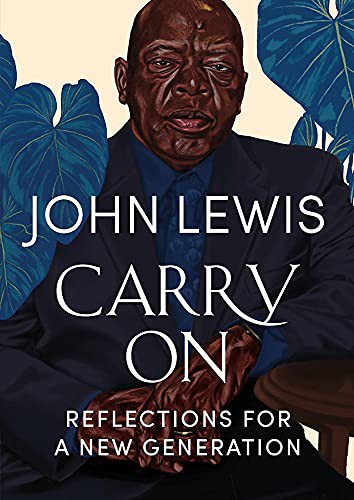
John Lewis
John Lewis was an American civil rights leader and United States Congressman whose life represented one of the most complete expressions of moral courage in modern American history. Born in 1940 in Pike County, Alabama, the son of sharecroppers, he grew up under the full weight of Jim Crow segregation and determined, as a young man inspired by the radio broadcasts of Martin Luther King Jr., to devote his life to its defeat. He was inspired by the Montgomery Bus Boycott and by King’s preaching of nonviolent resistance, and he traveled to Montgomery as a teenager to meet King, beginning a lifelong friendship and a lifetime of activism.
Lewis was a founding member and later chairman of the Student Nonviolent Coordinating Committee, one of the principal organizations of the civil rights movement, and participated in virtually every major campaign of the movement’s most intense years. He was one of the Freedom Riders, who challenged segregation on interstate bus lines in 1961, and was repeatedly beaten by hostile crowds and arrested by police. He was the youngest speaker at the 1963 March on Washington, delivering a speech that was controversial for its militancy even within the movement. On March 7, 1965 — Bloody Sunday — he led the march across the Edmund Pettus Bridge in Selma, Alabama, and was beaten so severely by state troopers that his skull was fractured. The images of that day, broadcast nationally, catalyzed the passage of the Voting Rights Act of 1965.
Lewis served in the United States Congress from 1987 until his death from pancreatic cancer in July 2020, representing Georgia’s Fifth Congressional District for thirty-three years. He was a consistent voice for civil rights, voting rights, immigrant rights, and human dignity, and was known across partisan lines as the conscience of the Congress. His autobiography, Walking with the Wind: A Memoir of the Movement (1998), reviewed on WritersReview, is one of the finest accounts of the civil rights movement written by a participant, combining personal memoir with historical narrative to convey both the fear and the courage that the movement demanded of its participants.
In collaboration with comic book writer Andrew Aydin and artist Nate Powell, Lewis also wrote the March trilogy, a graphic memoir of the civil rights movement that won the National Book Award and introduced his story to a new generation of young readers. His death in July 2020, during the summer of the largest racial justice demonstrations in American history, was mourned by people across the political spectrum as the passing of a living link to the movement that made modern America possible. John Lewis’s life and work represent an argument that individuals of ordinary background, armed with courage and conviction, can change history — an argument that he proved, repeatedly, with his own body.