William Dalrymple
William Dalrymple is one of the most celebrated writers on South Asia and the Islamic world working in English today, a Scottish historian and travel writer whose books combine the breadth of serious scholarship with the immediacy and narrative energy of the best literary journalism. Born in Scotland in 1965 and educated at Ampleforth and Trinity College, Cambridge, he has spent much of his adult life based in India — he lives on a farm outside Delhi — and this sustained physical and cultural immersion has given his work an authority and texture that distinguishes it sharply from the work of writers who approach these subjects from outside.
His early books, In Xanadu (1989) and City of Djinns (1993), established his reputation as a travel writer of exceptional gifts, but it was White Mughals: Love and Betrayal in Eighteenth-Century India (2002) — winner of the Wolfson History Prize — that revealed him as a major historian. Drawing on East India Company records and Hyderabadi court documents that had never been examined by Western historians, it told the story of James Achilles Kirkpatrick, the British Resident in Hyderabad who converted to Islam and married a Mughal princess, using their story to examine the permeable cultural boundaries of early colonial India before the hardening of racial categories that followed the 1857 uprising. His book reviewed on WritersReview continues his investigation of the Company period and its catastrophic consequences.
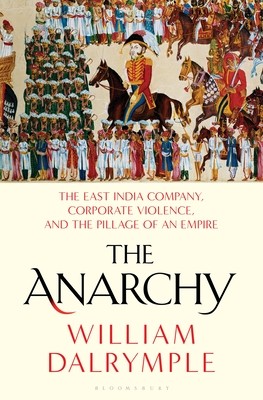
Dalrymple’s major recent achievement is The Anarchy: The East India Company, Corporate Violence, and the Pillage of an Empire (2019), widely considered his masterwork — a history of how the East India Company, a joint-stock corporation based in London, conquered and looted much of the Indian subcontinent over the course of the eighteenth century. Drawing on Persian, Marathi, and Company sources, it is simultaneously a gripping narrative of military and political events and a larger argument about the nature of corporate power that resonates powerfully in the contemporary world. The book won numerous prizes and was a bestseller on both sides of the Atlantic.
Dalrymple is also the co-founder of the Jaipur Literature Festival, which has grown since its founding in 2006 into the largest free literary festival in the world, and is a passionate advocate for Indian literature in English and for the literature of South Asia more broadly. His combination of scholarly depth, prose elegance, and cultural commitment represents the best tradition of British engagement with the subcontinent — genuinely curious, genuinely learned, and genuinely attentive to perspectives that colonial history has systematically marginalized. He is a writer whose importance grows with each successive book.