Masande Ntshanga
Masande Ntshanga is a South African author and poet whose fiction explores the fractured landscape of post-apartheid South Africa with a formal daring and emotional honesty that has established him as one of the most important young voices in contemporary African literature. Born in 1986 in East London, Eastern Cape, Ntshanga grew up in the complex aftermath of apartheid—in a society whose political transformation had not yet translated into economic or psychological liberation for the majority of its people. He studied at the University of Cape Town, where he later received a fellowship, and has also been the recipient of a Mellon Mays Fellowship. He writes in English, though his work is inflected by the linguistic and cultural landscape of the Eastern Cape.
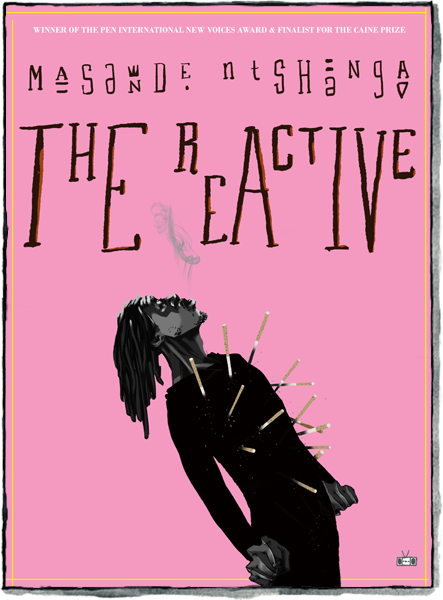
The Reactive (2014), featured on WritersReview, is Ntshanga’s debut novel and a striking achievement. Set in Cape Town in the early 2000s, it follows Lindanathi, a young HIV-positive man who sells antiretrovirals on the black market while haunted by guilt over his brother’s death. The novel moves between the fractured present of post-apartheid Cape Town—its poverty, its drug culture, its beautiful and indifferent landscape—and the weight of a personal history that Lindanathi cannot fully face. Written in prose that is at once spare and hallucinatory, the novel refuses the redemptive arc expected of AIDS narratives and instead occupies a space of unresolved grief and compromised survival. It won the PEN International New Voices Award and established Ntshanga as a writer of genuine distinction.
His second novel, Triangulum (2019), expanded his formal and thematic ambitions, weaving together multiple timelines—including a far future South Africa—through found documents to create a meditation on history, technology, and ecological collapse. The novel was longlisted for the Sunday Times Barry Ronge Fiction Prize and confirmed that Ntshanga was developing a distinctive vision, one informed by science fiction and speculative thinking as much as by social realism. His subsequent work, including the novella The Haunt (2022), has continued to push at the boundaries of what post-apartheid fiction can do and what it can say.
Ntshanga’s prose style is characterized by a deliberate flatness that occasionally opens without warning onto passages of great lyrical beauty—a technique that creates both unease and unexpected grace. He is a writer interested in the texture of numbed consciousness, the way trauma creates distance between a person and their own life, and the way that distance can itself become a form of survival.
He has received fellowships and residencies across South Africa and internationally, and is regarded as a defining voice of his generation—a writer who documents the specific conditions of contemporary South African life while reaching toward questions that transcend any single national context.