Zadie Smith
Zadie Smith is a British novelist, essayist, and critic whose work has made her one of the most celebrated and culturally influential literary figures of her generation. Born in 1975 in Brent, a borough of northwest London, to a Jamaican mother and an English father, Smith grew up in the multiracial, multicultural landscape of North London that would become the setting and subject of her first novel. She read English at King’s College, Cambridge, graduating in 1997, and sold her debut while still a student—a publishing event that generated unusual anticipation and was followed by a debut that more than justified it.
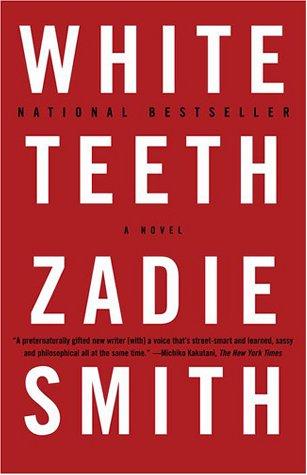
White Teeth (2000), featured on WritersReview, was published when Smith was twenty-four and immediately recognized as a landmark of contemporary British fiction. A sprawling, comic, intellectually exhilarating novel set across three generations of two North London families—one Bangladeshi, one English-Jamaican—it explored the collisions between immigrant and host culture, between the weight of historical accident and the desire for self-determination, between fundamentalism and assimilation. The novel won the Whitbread First Novel Award, the James Tait Black Memorial Prize, the Commonwealth Writers’ Prize, and numerous other awards, and was adapted for television. It established Smith as a defining voice of multicultural Britain and a novelist capable of combining social comedy with genuine philosophical seriousness.
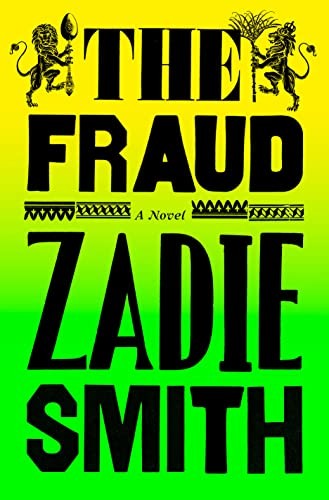
Her subsequent novels have each represented a conscious formal experiment. The Autograph Man (2002) explored celebrity culture and Jewish-English identity. On Beauty (2005), inspired by E.M. Forster’s Howards End, won the Orange Prize for Fiction. NW (2012) fractured its narrative into typographically experimental fragments to render the interiority of four characters in contemporary North London. Swing Time (2016) examined friendship, ambition, race, and fame through the story of two mixed-race girls connected by their love of dance. The Fraud (2023), also on WritersReview, is a Victorian historical novel centered on the Tichborne Claimant case, exploring questions of imposture, belief, and colonial justice through the eyes of a middle-aged woman writer.
Smith is also an exceptional essayist, and her collections—Changing My Mind (2009), Feel Free (2018)—demonstrate a critical intelligence that ranges freely across literature, film, philosophy, and culture. Her essays combine personal candor with rigorous intellectual engagement, and have made her one of the most important cultural commentators writing in English.
She has taught creative writing at New York University, where she is a professor of creative writing, and divides her time between London and New York. Over a career of twenty-five years, Smith has never repeated herself, consistently taking formal risks that lesser writers would avoid, and producing a body of work as wide and searching as the world it reflects.