
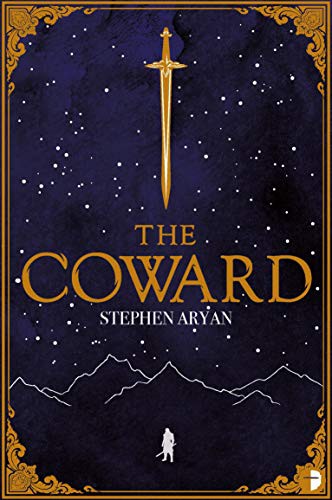
The Coward
Angry Robot · 2021 · 400 pages
ISBN: 9780857668882
Review Editor
Marcus Webb
The Coward opens with a premise that feels both familiar and quietly subversive. Kell Kressia, now a middle-aged farmer, was the sole survivor of a legendary quest that supposedly saved the world a decade ago. Everyone else on that quest died. Kell came home. He has spent the years since trying to forget everything that happened, and the world has largely let him, content to mythologize the dead and leave the living survivor to his crops.
Then the threat returns. The ice is moving again. The Frozen North is stirring. And the king decides that Kell, the last living member of the original quest, must lead a new group of warriors back into the same nightmare. Kell does not want to go. He has seen what waits up there. He knows what it costs. He knows that heroism is mostly just surviving when everyone around you does not. But he has no real choice, and so the novel becomes the story of a reluctant hero leading a team of eager young warriors who believe in him far more than he believes in himself.
The Coward is the first volume in Stephen Aryan’s Quest for Heroes trilogy, published by Angry Robot in June 2021. Aryan is a veteran of epic fantasy (his earlier Battlemage series ran to three volumes), and this book represents a deliberate pivot toward something more character-focused and deconstructive. The result is one of the more thoughtful takes on the reluctant hero archetype in recent fantasy.
Character Arcs and Development
Kell is the heart of the novel and its greatest strength. He is not a coward in any simple sense, which is part of the point the title is making. He survived the original quest not through cowardice but through a combination of pragmatism, luck, and a refusal to die heroically when surviving was an option. His reluctance to return is not fear of danger so much as a deeply earned understanding of what danger actually means, an understanding that the young warriors around him entirely lack.
Watching Kell navigate the tension between his own hard-won realism and the mythological expectations the others project onto him is the novel’s central pleasure. He cannot be the hero they need him to be because he knows that version of heroism is a lie. But he also cannot abandon them, because abandonment is its own kind of failure. Aryan handles this internal conflict with real skill.
The supporting cast is a mixed bag. Willow, a non-binary warrior from a foreign culture, is probably the best-developed of the secondary characters, with a background and value system that create interesting friction with the rest of the group. Several of the other warriors are thinner, defined more by their archetypes (the brash young knight, the skeptical veteran) than by individual psychology. This is partly a function of genre convention, and Aryan does enough with most of them to justify their presence, but a few feel like placeholders for development that may come in later volumes.
Pacing
The Coward takes its time establishing Kell’s settled life before disrupting it, which is the right choice. You need to understand what he has built and why he wants to protect it before his reluctance to throw it away makes emotional sense. The first act is deliberately quiet, even a little slow by the standards of epic fantasy, but that restraint pays dividends when the quest begins and the stakes are clear.
The middle section, as the group travels north and the dangers escalate, is well-paced and varied. Aryan avoids the trap of making every chapter a battle; the quieter stretches where characters talk, disagree, and reveal themselves are often more interesting than the action scenes. The final section moves quickly and reaches a satisfying conclusion while clearly positioning the story for its sequel. This is a novel that rewards patience in its early stages.
Deeper Thematic Exploration
At its core, The Coward is a novel about the gap between legend and reality, and about the psychological cost of surviving something that was supposed to kill you. Kell is dealing with what we would now recognize as trauma, though the novel does not use that language. He has nightmares. He drinks too much. He flinches at things other people do not notice. The original quest broke something in him, and the new quest forces him to confront whether that break is permanent.
Aryan is also interested in what heroism actually requires, as distinct from what stories say it requires. The legends around the first quest have smoothed out all its horror and randomness, turning survival into triumph and luck into virtue. Kell knows the truth. He knows the others who died were not less brave or less skilled; they were less lucky. This knowledge makes him simultaneously the most qualified person for the new quest (he has no illusions) and the most psychologically unsuited for it (he cannot manufacture the certainty the others need from him).
There is also a thread about community and responsibility running through the novel: the question of what we owe to people who believe in a version of us that we know to be false. Kell cannot simply unmask himself as a fraud, because the myth around him is what holds the group together. He has to perform a heroism he does not feel while quietly trying to keep everyone alive by non-heroic means.
Style and Voice
Aryan writes clean, functional prose that gets out of the way of the story. There is nothing showy about his style, which suits a novel that is making a case against showiness. The dialogue is natural and often revealing, and he has a good ear for the difference between how characters speak to each other in private versus in the performative moments the quest demands.
The world feels lived-in without being overexplained. Aryan trusts the reader to pick up the history and geography from context, and for the most part this works. There are occasional moments where the brevity of the worldbuilding leaves you slightly uncertain about the scale of events, but this is a manageable frustration in a novel that is clearly more interested in its characters than in its map.
Verdict
The Coward is exactly the kind of fantasy novel that the genre needs more of: a thoughtful, character-driven deconstruction of a familiar premise that takes its hero’s psychology seriously. Kell Kressia is one of the more memorable protagonists in recent British fantasy, and his journey from reluctant conscript to something harder to define is handled with intelligence and care.
The novel’s limitations are real: some supporting characters need more development, and the worldbuilding occasionally feels thin. But these are secondary concerns in a book primarily interested in asking what the hero archetype actually costs the person trapped inside it. If you enjoy fantasy that earns its emotional punches and treats the aftermath of violence as seriously as the violence itself, The Coward is a strong recommendation. Readers who enjoyed Joe Abercrombie’s First Law series, Robin Hobb’s Farseer trilogy, or Anna Smith Spark’s Empires of Dust will find it congenial territory.
Frequently Asked Questions about The Coward by Stephen Aryan
What is The Coward by Stephen Aryan about?
The Coward follows Kell Kressia, the sole survivor of a legendary quest that saved the world a decade ago. When the same threat returns, the king forces Kell to lead a new group of warriors back into the Frozen North. Kell knows the myth around him is false and the quest is deadly, but he has no choice. The novel follows his attempts to keep the group alive while confronting the trauma of what he survived the first time.
Is The Coward part of a series?
Yes. The Coward is the first book in the Quest for Heroes trilogy by Stephen Aryan, published by Angry Robot. It is followed by The Warrior (2022) and The Hero (2023). The trilogy follows Kell and his companions across three volumes. The Coward reaches a satisfying conclusion on its own terms while clearly setting up the next book.
What are the main themes in The Coward?
The novel explores the gap between heroic legend and psychological reality, the cost of surviving trauma, and the burden of living up to a myth you know to be false. It examines what heroism actually requires versus what stories say it requires, and asks what we owe to people who believe in a version of us that does not exist.
How does The Coward compare to Stephen Aryan’s Battlemage series?
The Battlemage trilogy (Battlemage, Chaosmage, Bloodmage) was more conventionally epic in scope, with multiple POV characters and large-scale military conflict at its center. The Coward is more focused and character-driven, following a smaller group of characters on a single quest. It is less interested in world-shaking events than in the psychology of the person leading the charge. Readers who found the Battlemage books too sweeping may prefer The Coward’s tighter focus.
Is The Coward appropriate for younger readers?
The Coward is written for adult readers. It contains violence, death, and a protagonist dealing with what is recognizably post-traumatic stress. The tone is serious throughout, and the deconstruction of heroism is aimed at readers who already have some familiarity with epic fantasy conventions. It is not a young adult novel.
How long is The Coward and is it a slow read?
The Coward is 400 pages. The opening act is deliberately paced as Aryan establishes Kell’s settled life before disrupting it. Once the quest begins, the novel moves more briskly. Most readers will find it absorbing rather than slow, though those who prefer action-heavy fantasy from page one may find the early chapters test their patience slightly.
Who would enjoy The Coward?
Readers who enjoyed Joe Abercrombie’s First Law series, Robin Hobb’s Farseer trilogy, or any fantasy that takes the psychological reality of heroism seriously will find The Coward congenial. It rewards readers who are interested in character over spectacle, and who find the question of what survival costs more interesting than the question of whether the hero will win.
Should I read The Coward?
If you enjoy character-driven fantasy that questions the heroism archetype and takes trauma seriously, The Coward is an excellent choice. Kell Kressia is a protagonist built for readers who are tired of unambiguous heroes, and Aryan handles the emotional complexity of his situation with real skill. It is not a flashy book, but it is a quietly affecting one that improves in memory.
Book Details
- Title
- The Coward
- Author
- Stephen Aryan
- Genre
- Science Fiction
- Publisher
- Angry Robot
- Year Published
- 2021
- Pages
- 400
- ISBN
- 9780857668882
- WritersReview Rating
- 4.0 / 5