
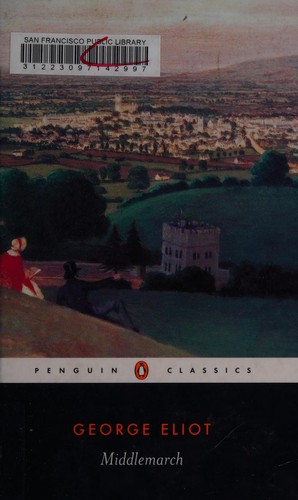
Middlemarch
Penguin Classics · 1871 · 904 pages
ISBN: 9780141439549
Review Editor
Eleanor Marsh
George Eliot published Middlemarch in eight installments between 1871 and 1872, and Virginia Woolf would later call it “one of the few English novels written for grown-up people.” That characterization has stuck, and it is accurate: Middlemarch is a novel for readers who have lived enough to understand that most human tragedy is quiet, undramatic, and entirely avoidable. It is also a novel of extraordinary intellectual generosity, written by one of the most formidably intelligent minds the Victorian novel produced.
Set in the fictional English Midlands town of Middlemarch in the years around the 1832 Reform Act, the novel follows multiple interlocking narratives, but its two central stories-Dorothea Brooke’s disastrous marriage to the dry scholar Casaubon and young Dr. Lydgate’s professional decline and marital catastrophe-provide its emotional spine. Both characters are idealists defeated by their environment and their own blindspots, and Eliot traces those defeats with compassion and without condescension.
The novel’s greatness is partly a matter of scale and density: it is a world fully imagined, populated by dozens of characters each with their own coherent psychology, social position, and private moral struggle. But it is also a matter of the narrator’s voice-philosophical, ironical, deeply humane-which creates the sense of being in the company of an intelligence vastly wiser than oneself. Eliot does not moralize; she illuminates.
The novel’s famous “Prelude” and “Finale” frame Dorothea’s story as a kind of failed epic-a life of unhistoric acts, unheroic goodness, contributing to the growing good of the world in ways that will leave no public monument. That framing is both elegiac and radical: it insists on taking seriously a life that the world did not.
Book Details
- Title
- Middlemarch
- Author
- George Eliot
- Genre
- Literary Fiction
- Publisher
- Penguin Classics
- Year Published
- 1871
- Pages
- 904
- ISBN
- 9780141439549
- WritersReview Rating
- 5.0 / 5