Peter Tieryas
Peter Tieryas is an American author and video game designer whose fiction occupies the intersection of alternate history, science fiction, and East Asian cultural experience in ways that are genuinely distinctive. He works in the video game industry and the influence of his gaming background — particularly his experience with the visual storytelling, world design, and moral ambiguity of role-playing games — is evident in the dense, layered world-building of his novels. He grew up in California and is of Korean heritage, and his personal and cultural background inflects his fiction’s engagement with questions of identity, assimilation, and historical memory.
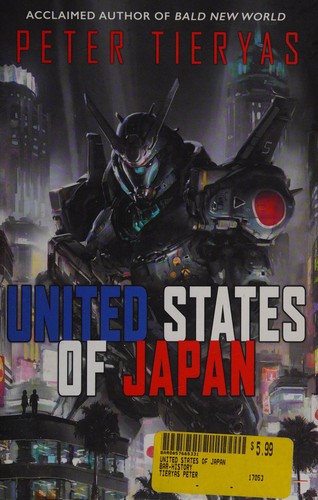
United States of Japan (2016), available on WritersReview, is an alternate history novel set in a Pacific Coast America that has been occupied by Imperial Japan since the 1940s — a mirror image of Philip K. Dick’s The Man in the High Castle, which is explicitly referenced and engaged with throughout the novel. The book follows two agents of the secret police investigating the distribution of a seditious video game that depicts an America where the Allies won World War II. Tieryas uses the genre premise to explore questions of loyalty, identity, collaboration, and resistance under occupation, drawing on his knowledge of both Japanese and Korean culture and history to create an alternate Pacific world of considerable complexity and moral ambiguity.
Tieryas’s writing combines the propulsive plot mechanics of popular science fiction with a genuinely literary interest in the psychology of people living under totalitarian systems — how they accommodate themselves to brutality, how they rationalise collaboration, and how they find small spaces of resistance or humanity within overwhelming constraint. His battle mechs and military technology are vivid and enthusiastically realised, but they serve a fiction that is primarily about people rather than machines. His follow-up novel, Mecha Samurai Empire (2018), expands the world and increases the scale of the action without sacrificing the personal and political dimensions that give the fiction its weight.
Tieryas has also published short fiction widely and has written about the relationship between gaming and literature, arguing that the interactive storytelling traditions of video games offer genuine narrative possibilities that literary fiction has been slow to recognise. His career stands at an interesting intersection: he is a genre writer with literary ambitions, a video game professional with a novelist’s sensibility, and an American author with a dual cultural inheritance that gives his work a perspective on American history and identity that is both critical and deeply engaged. His work is essential reading for anyone interested in the future directions of alternate history fiction.