
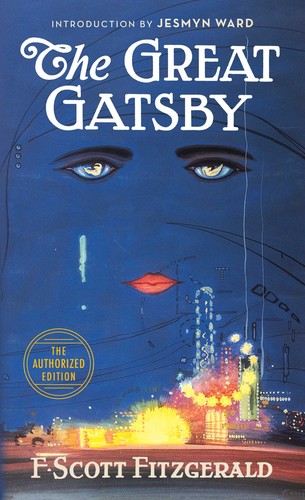
The Great Gatsby
Scribner · 1925 · 180 pages
ISBN: 9780743273565
Review Editor
Eleanor Marsh
F. Scott Fitzgerald published The Great Gatsby in 1925 to modest commercial reception and mixed reviews. He would not live to see it become what it is today: perhaps the single most taught, most argued-over, most cinematically adapted American novel ever written. That posthumous ascension is itself a kind of Gatsbyian story-the dream achieved too late, the recognition arriving after the dreamer is gone.
The novel’s surface is deceptively simple. Nick Carraway, a Yale-educated bond trader, moves to Long Island and finds himself neighbor to the mysterious Jay Gatsby, whose legendary parties conceal an obsessive devotion to a single woman: Daisy Buchanan, Nick’s cousin, now married to the brutish Tom. Fitzgerald uses this geometry of desire to diagram the entire mechanism of the American Dream: its seductive beauty, its essential fraudulence, its capacity for destruction.
What elevates the book beyond social satire is the prose itself, which remains among the most carefully wrought in American fiction. Fitzgerald’s sentences have a quality of lyric compression unusual for narrative prose-each one seems to carry more emotional freight than its length should permit. The novel’s final pages, with their meditation on boats against the current, borne ceaselessly back into the past, constitute a cadenza of extraordinary power.
The book’s weaknesses are real: its female characters remain decorative rather than fully imagined, and the racial attitudes that surface briefly in Tom Buchanan’s monologue, while satirically framed, still register uncomfortably. But these limitations are inseparable from Fitzgerald’s subject, which is precisely the moral rot beneath the glittering surface of a particular American moment.
The Great Gatsby is a novel that rewards rereading as few others do. What seems on first encounter a romantic tragedy reveals itself, upon return, as something colder and more corrosive: an autopsy of aspiration performed with a scalpel disguised as a champagne flute.
Book Details
- Title
- The Great Gatsby
- Author
- F. Scott Fitzgerald
- Genre
- Literary Fiction
- Publisher
- Scribner
- Year Published
- 1925
- Pages
- 180
- ISBN
- 9780743273565
- WritersReview Rating
- 5.0 / 5