Becky Chambers
Becky Chambers was born in 1985 in Livermore, California, and grew up in a family that fostered in her a love of space exploration — her mother worked as a space mission designer for NASA. She studied theatre arts and worked in various arts administration roles before turning to fiction writing full time. She is openly queer and identifies as non-binary, and her personal values — a commitment to inclusive community, care ethics, and the radical proposition that kindness is worth writing about — are inseparable from the fiction she produces. She lives with her wife in California.
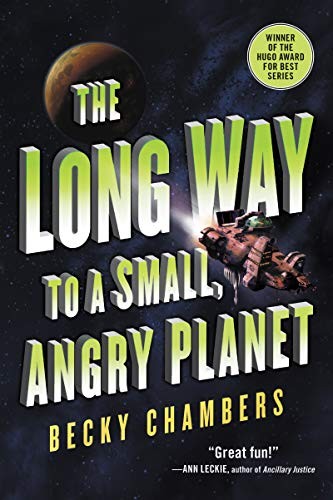
Chambers launched her career with The Long Way to a Small, Angry Planet (2014), initially self-published after a successful crowdfunding campaign. The novel follows the crew of a tunneling ship through deep space, and is structured less as a plot-driven adventure than as a series of character studies — an ensemble of humans and aliens with different physiologies, genders, family structures, and values learning to live and work together. The novel was picked up by Hodder and Stoughton after its self-published success and became a word-of-mouth phenomenon, beloved for its warmth, its diversity, and its explicit rejection of the grimdark aesthetic that had dominated science fiction.
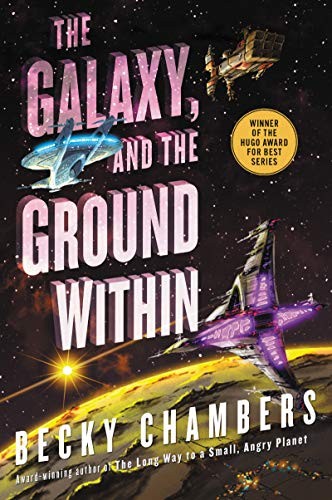
The Wayfarers series — five novels set in the same universe but not requiring sequential reading — includes A Closed and Common Orbit (2016), Record of a Spaceborn Few (2018), The Galaxy, and the Ground Within (2021), and A Prayer for the Crown-Shy (2022). Each novel focuses on different characters and explores different philosophical questions: what does it mean to have a body? What do we owe each other in community? What makes a life meaningful without crisis or conflict as its organizing principle? The Galaxy, and the Ground Within and A Psalm for the Wild-Built, both available on WritersReview, exemplify Chambers’ gift for creating narrative tension through character and idea rather than external threat.
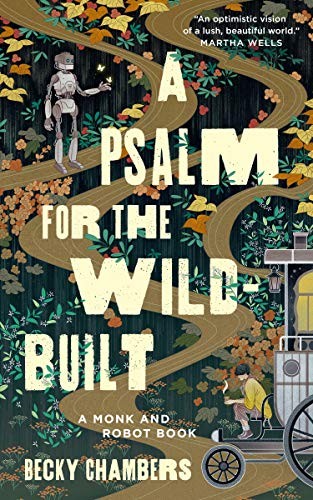
A Psalm for the Wild-Built (2021), the first book in the Monk and Robot series, follows a tea monk named Dex who leaves their comfortable life in search of something they cannot name, and encounters Mosscap, a robot from a civilization that voluntarily withdrew from human society centuries before. Their conversations about purpose, contentment, and the question of what people need form one of the most quietly profound dialogues in recent speculative fiction. The novella won the Hugo Award for Best Novella in 2022.
Chambers has been a defining figure in the movement sometimes called ‘hopepunk’ — fiction that insists on the value of hope, care, and cooperation not as naive sentimentality but as genuine political and ethical commitments. She has received multiple Hugo Awards and the Alex Award, and her work has attracted a readership that includes many people who do not normally read science fiction. She represents something unusual in the genre: a writer whose commercial success is built entirely on the proposition that gentleness, attention, and care are sufficient dramatic subjects.