Jeffrey Eugenides
Jeffrey Eugenides was born on March 8, 1960, in Detroit, Michigan, the son of a Greek American father and an Irish American mother. He grew up in Grosse Pointe, the affluent Detroit suburb that would provide the setting for The Virgin Suicides, and attended Brown University before completing an MFA in creative writing at Stanford University. His early career was marked by the slow, painstaking construction of his debut novel, which he worked on for over five years and which, upon its publication in 1993, immediately established him as one of the most significant new voices in American fiction.
The Virgin Suicides is a haunting and formally innovative novel about five beautiful sisters in a 1970s Detroit suburb who all commit suicide within a year. It is narrated in the first person plural by a group of neighborhood boys who, now middle-aged, are still trying to understand what happened, reconstructing the story from fragmentary evidence, memory, and obsessive speculation. The collective narrator device is handled with extraordinary skill, and the novel’s dreamy, melancholy atmosphere — somewhere between suburban realism and fairy tale — is wholly original. It was adapted into a celebrated 1999 film by Sofia Coppola.
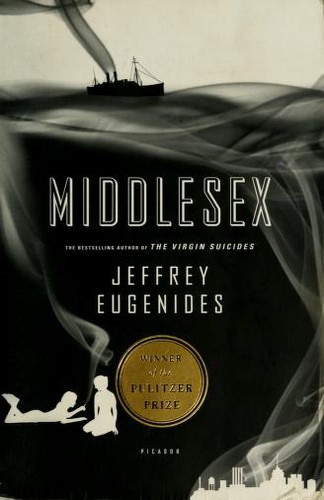
Middlesex, his second novel, published in 2002, is a more expansive and ambitious work: a multigenerational family epic that follows the Stephanides family from a village in Asia Minor through Prohibition-era Detroit and the 1967 race riots to present-day Berlin, while tracing the genetic inheritance of an intersex condition through three generations. Its narrator, Cal Stephanides, tells the story of his family and his own emergence as an intersex person with wit, intelligence, and a formal mastery that encompasses the immigrant saga, the coming-of-age story, and the philosophical meditation on identity and gender. Middlesex won the Pulitzer Prize for Fiction in 2003 and became an international bestseller.
Eugenides’s prose is elegant, intelligent, and inflected with a dark humor that prevents his difficult subjects from tipping into solemnity. He writes with a historian’s eye for social detail and a poet’s ear for the music of language, and his novels demonstrate a commitment to formal ambition combined with genuine narrative accessibility. He takes long gaps between books — his third novel, The Marriage Plot, arrived in 2011 — but each one has demonstrated significant growth and stylistic evolution.
Jeffrey Eugenides is one of the most important American novelists of his generation, a writer whose small but outstanding body of work has established his reputation as one of the most thoughtful and technically accomplished practitioners of the contemporary novel. His influence on younger American writers, particularly those drawn to the intersection of literary ambition and popular storytelling, has been considerable, and both The Virgin Suicides and Middlesex have achieved the status of modern classics.