Fyodor Dostoevsky
Fyodor Mikhailovich Dostoevsky was born on November 11, 1821, in Moscow, Russia, the second of seven children of a staff doctor at a Moscow hospital for the poor. His father, a strict and devout man who was later murdered by his own serfs, was a formative presence whose authoritarian religiosity both shaped and antagonized his son’s lifelong preoccupations with faith, guilt, and the nature of authority. Dostoevsky received a sound education and enrolled in the Military Engineering Academy in St. Petersburg, graduating in 1843, but he had no interest in engineering and devoted himself almost immediately to literature. His debut novella, Poor Folk (1846), was greeted with extraordinary enthusiasm by the critic Vissarion Belinsky, who declared the arrival of a great new talent.
Dostoevsky’s life was shaped by one of the most dramatic events in Russian literary history. In 1849, he was arrested for his participation in a utopian socialist discussion group, tried, and sentenced to death. He endured a mock execution — standing before the firing squad before a last-minute reprieve was announced — before being sentenced to four years of hard labor in a Siberian prison camp, followed by four more years of compulsory military service. This experience of near-death, imprisonment, and forced labor transformed him: he emerged a committed Christian and a fierce opponent of revolutionary socialism, and the suffering he witnessed among the convicts gave him an intimacy with the most degraded reaches of human experience that no amount of bourgeois life could have provided.
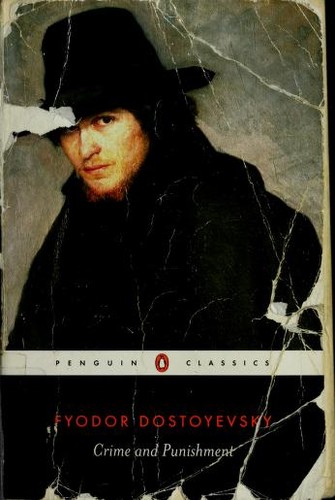
Crime and Punishment, published in 1866, was the first of the great novels of his mature period and is widely considered one of the most psychologically penetrating works in all of literature. It follows the impoverished student Raskolnikov, who murders a pawnbroker and her sister in accordance with a theory that extraordinary men are permitted to transgress ordinary moral law, and who then cannot escape the psychological consequences of his act. The novel is less a detective story than a sustained exploration of the psychology of guilt and the hunger for confession, rendered with a narrative urgency that reflects Dostoevsky’s own desperate financial circumstances — he dictated the final portions in a race against a publisher’s deadline.
Dostoevsky’s prose style is dense, passionate, and polyphonic in the sense theorized by the critic Mikhail Bakhtin: his novels give full, unironic voice to characters whose views Dostoevsky himself found repugnant, creating a genuine clash of ideological voices rather than a narrative in which the author’s own views are simply endorsed. His dialogue crackles with the intensity of debate, his narrative moves with the headlong pace of a thriller, and his rendering of psychological states — particularly extreme states of guilt, ecstasy, and degradation — is without equal in world literature.
Fyodor Dostoevsky died on February 9, 1881, in St. Petersburg, having completed The Brothers Karamazov just months before his death. His influence on world literature has been immeasurable: Nietzsche, Freud, Kafka, Camus, and virtually every serious novelist of the twentieth century acknowledged his transformative impact. His quartet of great novels — Crime and Punishment, The Idiot, Demons, and The Brothers Karamazov — constitute one of the supreme achievements in the history of fiction.