
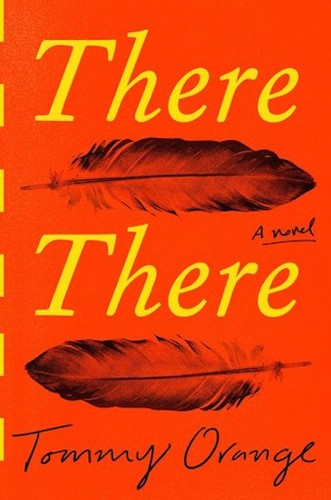
There There
Alfred A. Knopf · 2018 · 294 pages
ISBN: 9780525520375
Review Editor
Claire Beaumont
Summary
Tommy Orange’s debut novel There There, published in 2018, is one of the most significant works of American fiction of the past decade. Set in Oakland, California, it follows twelve Native American characters across a wide span of circumstances and histories, all converging on a single catastrophic event: a mass shooting at the Big Oakland Powwow. The characters include Orvil Red Feather, a teenager who has learned to dance from YouTube videos and is attending his first powwow; Dene Oxendene, a young man trying to collect video stories of urban Native experience as a tribute to his late uncle; Jacquie Red Feather, who is attending the same powwow for reasons of her own; and the three men planning the robbery that will end in violence.
The novel opens with a brilliant, angry, and erudite prologue that establishes its terms directly: a history of what has been done to Native Americans, what it means to belong to a people whose culture has been deliberately destroyed, and what it costs to grow up Native in a city where your presence is invisible and your history is constantly misrepresented. This prologue sets the intellectual and political context for everything that follows, and it is one of the most extraordinary pieces of nonfiction-inflected writing in recent American literature.
Orange grew up in Oakland, is a member of the Cheyenne and Arapaho Tribes of Oklahoma, and writes about urban Native experience with an authority and specificity that the subject has almost never received before. The novel was a finalist for the Pulitzer Prize, won the PEN/Hemingway Award for Debut Novel, and established Orange as one of the essential voices in contemporary American literature.
Character Arcs and Development
The twelve-character ensemble structure is one of the novel’s great achievements. Orange manages the large cast without losing any character in the noise: each person has a distinct voice, a specific history, and a recognizable interiority. What connects them is not just the powwow but the shared condition of being Native in a city, carrying the weight of a history of violence and dispossession while navigating the very different weight of contemporary urban poverty, addiction, and identity.
Orvil Red Feather is probably the character most readers find themselves most attached to: a teenager who has no cultural community around him, no one to teach him the dances, and who has nonetheless decided to learn and to appear at the powwow in the regalia he has found in a box in his grandmother’s closet. His decision is touching and reckless and entirely believable, and what happens to him is the novel’s most devastating moment.
Dene Oxendene’s project of collecting Native voices on video gives Orange a way to think about storytelling itself, about who gets to tell what stories and for whom, that runs through the novel without becoming schematic. His grief for his uncle and his sense of responsibility to something larger than himself are rendered with a quietness and dignity that make him one of the novel’s most compelling presences.
The men planning the robbery are handled with particular moral intelligence: Orange does not excuse what they are doing, but he traces the circumstances that have produced them with enough specificity that the violence, when it comes, feels like the culmination of a long chain of causes rather than a simple act of evil. This is harder to do than it sounds, and Orange does it with real care.
Pacing
The novel’s structure builds deliberately toward its violent conclusion. The first two thirds establish the twelve characters separately, weaving between their perspectives with a rhythm that feels unhurried even as it accumulates momentum. Orange is in no hurry to get to the powwow: the time spent with each character before the convergence is the moral and emotional substance of the novel, and shortchanging it would undermine everything that follows.
When the powwow arrives and the shooting begins, the novel’s pace changes register entirely. The violence is rendered with an awful immediacy that earns its horror because of everything that has preceded it. Orange does not linger on violence for its own sake: he shows what it costs, what it destroys, and what it leaves behind. The ending, which refuses both resolution and despair, is exactly right.
Deeper Thematic Exploration
The central question There There asks is what it means to be Native in America today, specifically in an urban America that has absorbed and largely erased the populations it displaced. The reservation is not the setting of this novel: the setting is Oakland, and the experience it describes is the experience of people who grew up in a city, who are Native but have no community around them that reflects that identity, and who must figure out what their heritage means when it has been largely stripped from them.
The title comes from Gertrude Stein’s remark about Oakland: “There is no there there.” Orange takes this as an epigraph and transforms it: there is a there there, but you have to know how to look for it. The novel is, in part, about the work of finding and making identity when the structures that should support it have been deliberately dismantled. The powwow is not a casual event for these characters: it represents something genuine and important about belonging, and the violence that erupts there is not just a crime but a desecration.
The novel also thinks carefully about addiction and its role in the destruction of Native communities. Several characters are dealing with the consequences of their own or their parents’ addiction, and Orange treats this not as a character flaw but as a consequence of specific historical trauma: the deliberate destruction of culture, community, and economic possibility across generations. The connection between historical violence and contemporary individual suffering is drawn with precision rather than sentimentality.
Style and Voice
Orange writes in twelve distinct first-person and close third-person voices, and the achievement of giving each voice its own texture and rhythm while maintaining a consistent authorial sensibility is remarkable for a debut novel. The voices range from Orvil’s adolescent uncertainty to Dene’s more literary self-consciousness to the hard, flat affect of the men planning the robbery. All twelve feel inhabited rather than constructed.
The prologue is a departure from the novel’s fictional mode: it is a direct address, a statement of history and argument, written in a voice that is plainly Orange’s own rather than any character’s. This prologue is one of the most accomplished pieces of American literary nonfiction I have read in years, and its presence at the beginning of a novel is a formal choice that announces from the first pages that There There is not interested in the comfortable conventions of historical or social realism. It is a novel that knows what it is doing and why.
Verdict
There There is the kind of debut that announces a writer who has nothing left to prove. Tommy Orange arrived fully formed, with a subject he knows completely, a formal intelligence that matches his ambition, and an emotional honesty that never tips into manipulation. The novel has things to say about American history, urban life, identity, and violence that have not been said this way before, and it says them with the confidence of a writer who has been carrying them for a long time.
This is required reading for anyone interested in contemporary American literature, and it is required reading for anyone who wants to understand something about the country they live in that most American fiction does not address. It is difficult in the best sense: it asks you to hold more in your head at once than comfortable fiction asks, and it rewards that effort with something that changes how you see.
Frequently Asked Questions about There There
What is There There by Tommy Orange about?
There There follows twelve Native American characters in Oakland, California, all converging on the Big Oakland Powwow, where a planned robbery ends in a mass shooting. The characters include teenagers attending their first powwow, a young man collecting Native stories on video, family members searching for connection, and the men planning the robbery. The novel opens with a prologue that directly addresses the history of what has been done to Native Americans and what it means to be Native in an urban America that has absorbed and largely erased the people it displaced.
Is There There by Tommy Orange based on a true story?
There There is a work of fiction, but it is grounded in Tommy Orange’s own experience of growing up as a Native American in Oakland and his deep knowledge of urban Native communities. The Big Oakland Powwow in the novel is fictional, though Oakland does host powwows. The violence that ends the novel is invented, but the circumstances that produce it, the poverty, addiction, fractured identity, and historical trauma experienced by urban Native Americans, are drawn from real conditions that Orange writes about with great authority.
What does the title There There mean?
The title refers to Gertrude Stein’s famous remark about her hometown of Oakland: “There is no there there,” meaning that the Oakland of her childhood no longer existed when she returned. Orange takes this as an epigraph and reframes it: there is a there there in Oakland for Native Americans, a real community and history and presence, but it has been rendered invisible by the dominant culture. The title is also a refusal of the dismissive gesture the phrase suggests: the novel insists on the reality and significance of what Stein’s remark would erase.
What awards did There There win?
There There won the PEN/Hemingway Award for Debut Novel, the American Book Award, the Lannan Literary Award for Fiction, and the John Leonard Prize from the National Book Critics Circle. It was also a finalist for the Pulitzer Prize for Fiction and the National Book Award. This breadth of recognition for a debut novel is exceptional and reflects the novel’s significance as a landmark work in contemporary American literature.
How many characters are in There There and how do they connect?
There There follows twelve characters, all of whom converge on the Big Oakland Powwow. Some are related by blood or history: the Red Feather brothers, their grandmother Jacquie, and other family connections run through the novel. Others are connected by the urban Native community or by circumstance. The three men planning the robbery form a separate thread that converges violently with the others at the powwow. Orange manages this large ensemble with remarkable skill, giving each character a distinct voice and enough development that their convergence carries full emotional weight.
Is There There difficult to read because of its structure?
There There is not technically difficult to read, but its twelve-character structure requires attention. Each new section introduces a new perspective, and keeping track of all twelve characters and their relationships demands active engagement from the reader. Orange helps by giving each character a distinct voice and enough specific detail to be memorable. The payoff of this structural investment is significant: when all twelve characters converge at the powwow, the emotional weight of their connection is fully felt because of the groundwork laid in the preceding sections.
What does There There say about Native American identity today?
The novel argues, among other things, that Native American identity is not confined to reservations or to particular cultural practices, and that the experience of urban Natives, people who grew up in cities without community structures to transmit culture, is as valid and as important as any other form of Native experience. It also addresses the specific ways that colonialism has damaged this identity: through the forced removal of culture, language, and community; through the creation of conditions that lead to addiction and poverty; and through the erasure of urban Native presence from the dominant culture’s understanding of what Native life looks like.
What other books are similar to There There by Tommy Orange?
Readers who respond to There There’s ensemble structure, its urban setting, and its engagement with communities whose experience is underrepresented in American literary fiction often find similar pleasures in Colson Whitehead’s The Intuitionist or Zone One. Louise Erdrich’s novels, particularly The Round House and Love Medicine, offer a different but equally serious engagement with Native American experience and community. For the specific combination of ensemble cast, convergent structure, and social realism, Jennifer Egan’s A Visit from the Goon Squad is a natural companion, as is Edward P. Jones’s The Known World.
Book Details
- Title
- There There
- Author
- Tommy Orange
- Genre
- Literary Fiction
- Publisher
- Alfred A. Knopf
- Year Published
- 2018
- Pages
- 294
- ISBN
- 9780525520375
- WritersReview Rating
- 5.0 / 5