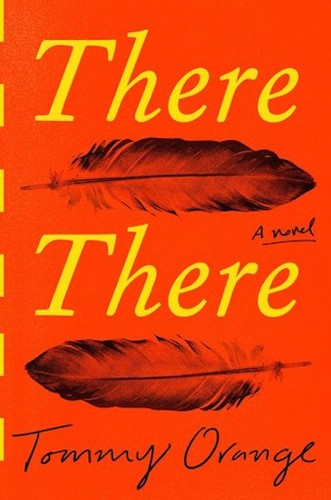
Tommy Orange
Tommy Orange was born in 1982 in Oakland, California, to a Cheyenne and Arapaho father and a white mother. He grew up in Oakland, a city with one of the largest and most underrepresented urban Native American populations in the country, and attended the Institute of American Indian Arts in Santa Fe, New Mexico, where he earned his MFA in Creative Writing. This background — caught between urban Native life and institutional literary training, between Oakland’s gritty multiplicity and the particular weight of Indigenous history — shaped everything about his debut novel.
Orange worked on There There for several years before its publication in 2018. The novel opens with a devastating prologue that traces the history of violence against Indigenous Americans from first contact to the present, reframes that history through the lens of urban displacement, and ends with the declaration that there is, for Native people in America, nowhere to go back to — a critique of both romantic primitivism and the impulse to send Native people back to a land-based past that no longer exists for most of them. This prologue, ferocious and formally precise, sets the terms for everything that follows.
The body of There There, available on WritersReview, follows twelve characters — all Native, all with their own histories of addiction, loss, longing, and partial recovery — converging on a powwow at the Oakland Coliseum where several men plan to rob the prize money. Orange moves between these voices with remarkable control, giving each character a distinct interiority without allowing the novel to dissolve into mere polyphony. The powwow, with its profound cultural significance and its simultaneous vulnerability to exploitation, functions as both literal event and overarching symbol. The novel’s ending is violent and irreversible, and it earns that violence through the depth of investment it has demanded from the reader.
There There was a finalist for the Pulitzer Prize for Fiction, won the PEN/Hemingway Award for Debut Novel, the American Book Award, and the Addison M. Metcalf Award from the American Academy of Arts and Letters. It was named a best book of the year by dozens of publications and established Orange as one of the most important new voices in American literature. The novel has been widely taught in schools and universities and has done significant cultural work in making urban Native American experience visible to mainstream literary culture.
Orange’s second novel, Wandering Stars (2024), continues the story of Orvil Red Feather, a survivor of the powwow shooting, as he grapples with opioid addiction, trauma, and the question of what survival means when you have been shaped by so much inherited loss. Orange’s work is marked by formal confidence, political urgency, and a willingness to look directly at pain without offering easy comfort. He is one of the essential American writers of his generation.