Franz Kafka
Franz Kafka was born on July 3, 1883, in Prague, then part of the Austro-Hungarian Empire, the eldest son of a self-made Jewish merchant, Hermann Kafka, whose forceful, domineering personality would cast a long shadow over his son’s life and imagination. Franz grew up in German-speaking Jewish Prague, a world defined by multiple overlapping identities — German-speaking in a Czech city, Jewish in a predominantly Christian society, bourgeois by aspiration if not always by circumstance — and by the profound sense of not quite belonging that these overlapping margins produced. He studied law at the German University in Prague, earning his doctorate in 1906, and then worked for most of his adult life at the Workers’ Accident Insurance Institute, a position he found suffocating but could not abandon for financial reasons.
Kafka’s literary life was conducted almost entirely in the margins of his official existence: early mornings, late evenings, long insomniac nights. He was a perfectionist who destroyed much of what he wrote, and he famously instructed his friend and literary executor Max Brod to burn all his manuscripts on his death. Brod, fortunately, refused. During his lifetime, Kafka published only a small body of work, including the stories ‘The Metamorphosis’ (1915), ‘In the Penal Colony’ (1919), and the collections A Country Doctor and A Hunger Artist. His three novels — Amerika, The Trial, and The Castle — were all left unfinished and were published posthumously by Brod.
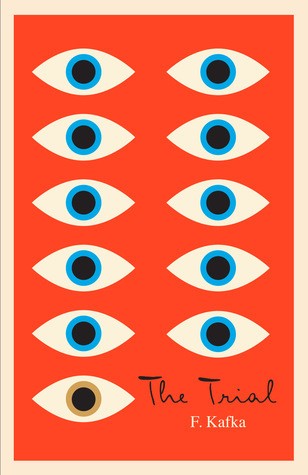
The Trial, written in 1914-15 and published in 1925, is Kafka’s most tightly structured and disturbing novel. It follows Josef K., a bank official who is arrested on an unspecified charge by an unspecified authority and subjected to an increasingly nightmarish legal process that he can neither understand nor escape. The novel is a masterpiece of existential anxiety: its bureaucratic labyrinth, its logic that is always internally consistent but never rationally explicable, its protagonist’s oscillation between compliance and resistance, capture with devastating precision the experience of the individual confronted by institutional power that claims total authority while refusing all accountability.
Kafka’s prose style is deceptively plain, written in a clear, precise German that maintains an almost bureaucratic neutrality even as the events it describes become increasingly surreal. This disjunction between the matter-of-fact tone and the nightmarish content is central to the Kafkaesque effect: the horror is not melodramatic but procedural, not exceptional but systemic. He writes as though the extraordinary were ordinary, and the effect is more disturbing than any amount of Gothic machinery.
Franz Kafka died of tuberculosis on June 3, 1924, aged forty. His influence on twentieth-century literature has been incalculable: the word ‘Kafkaesque’ has entered the general vocabulary as a descriptor for any situation in which bureaucratic or institutional logic crushes the individual, and his vision of modern alienation anticipated totalitarianism, the surveillance state, and the existential disorientation of modern life with uncanny accuracy. He is now recognized as one of the most important writers of the twentieth century.