F. Scott Fitzgerald
Francis Scott Key Fitzgerald was born on September 24, 1896, in St. Paul, Minnesota, the son of an unsuccessful businessman and a doting mother whose family money supplemented the household income. Named after a distant relative, the author of the National Anthem, Fitzgerald grew up with a keen awareness of the class distinctions that shaped American life, particularly the gulf between those born to money and those who aspired to it. He attended Princeton University, where he was more interested in writing for the Triangle Club and submitting stories to literary magazines than in his academic work, and where he formed the literary ambitions and the sense of social inadequacy that would animate his finest fiction. He left Princeton without graduating to join the Army during the First World War, though he never saw combat.
Stationed at Camp Sheridan in Alabama, Fitzgerald fell in love with Zelda Sayre, a beautiful and spirited Southern belle who refused to marry him until he could prove himself financially. This conditional love became a transformative pressure: Fitzgerald revised his first novel with desperate urgency, and when This Side of Paradise was accepted by Scribner’s in 1919, he and Zelda married almost immediately. The novel was a sensation, making Fitzgerald famous at twenty-three and inaugurating the most glittering period of his life. He became the laureate of the Jazz Age, celebrated on both sides of the Atlantic as the voice of a generation defined by energy, excess, and a beguiling moral emptiness.
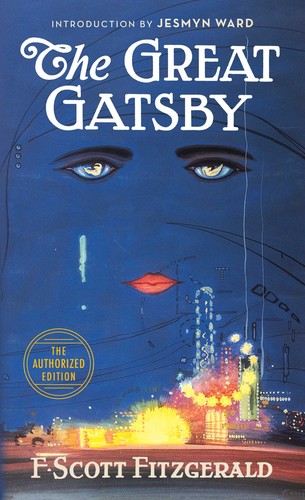
The Great Gatsby, published in 1925, is his masterpiece: a slim, perfectly constructed novel in which the narrator Nick Carraway observes his neighbor Jay Gatsby’s doomed attempt to recapture the past in the form of the married Daisy Buchanan, whom he loved before the war. Set on Long Island Sound in the summer of 1922, the novel uses the parties, the valley of ashes, the green light at the end of Daisy’s dock, and the eyes of Doctor T.J. Eckleburg to create a sustained meditation on the American Dream — its intoxicating allure, its fundamental fraudulence, and the wreckage it leaves behind. The novel sold modestly on first publication but has since become arguably the most widely read American novel of the twentieth century.
Fitzgerald’s prose style is among the most beautiful in American literature: lyrical, elegiac, and extraordinarily precise in its rendering of atmosphere and feeling. His sentences have a musical quality, rising and falling with the emotional temperature of his narrative, and his imagery — the green light, the golden girl, the valley of ashes — achieves the resonance of myth. He wrote with the romantic’s awareness of time and loss, and his best work is suffused with the bittersweet knowledge that the most beautiful moments are already passing as they are lived.
F. Scott Fitzgerald died on December 21, 1940, aged forty-four, having seen his reputation decline sharply during the 1930s as his drinking deepened and his productive output diminished. He died believing himself forgotten. The revival of his reputation after his death, driven in part by the distribution of The Great Gatsby to American troops during the Second World War, was one of the great posthumous rehabilitations in literary history. He is now recognized as one of the essential American writers, and The Great Gatsby endures as the definitive literary examination of the national mythology.